new

Get trending papers in your email inbox!

Subscribe

Daily Papers

byAK and the research community

Dec 11

Using Offline Data to Speed-up Reinforcement Learning in Procedurally Generated Environments

One of the key challenges of Reinforcement Learning (RL) is the ability of agents to generalise their learned policy to unseen settings. Moreover, training RL agents requires large numbers of interactions with the environment. Motivated by the recent success of Offline RL and Imitation Learning (IL), we conduct a study to investigate whether agents can leverage offline data in the form of trajectories to improve the sample-efficiency in procedurally generated environments. We consider two settings of using IL from offline data for RL: (1) pre-training a policy before online RL training and (2) concurrently training a policy with online RL and IL from offline data. We analyse the impact of the quality (optimality of trajectories) and diversity (number of trajectories and covered level) of available offline trajectories on the effectiveness of both approaches. Across four well-known sparse reward tasks in the MiniGrid environment, we find that using IL for pre-training and concurrently during online RL training both consistently improve the sample-efficiency while converging to optimal policies. Furthermore, we show that pre-training a policy from as few as two trajectories can make the difference between learning an optimal policy at the end of online training and not learning at all. Our findings motivate the widespread adoption of IL for pre-training and concurrent IL in procedurally generated environments whenever offline trajectories are available or can be generated.

  • 5 authors
·
Apr 18, 2023

Meta Automatic Curriculum Learning

A major challenge in the Deep RL (DRL) community is to train agents able to generalize their control policy over situations never seen in training. Training on diverse tasks has been identified as a key ingredient for good generalization, which pushed researchers towards using rich procedural task generation systems controlled through complex continuous parameter spaces. In such complex task spaces, it is essential to rely on some form of Automatic Curriculum Learning (ACL) to adapt the task sampling distribution to a given learning agent, instead of randomly sampling tasks, as many could end up being either trivial or unfeasible. Since it is hard to get prior knowledge on such task spaces, many ACL algorithms explore the task space to detect progress niches over time, a costly tabula-rasa process that needs to be performed for each new learning agents, although they might have similarities in their capabilities profiles. To address this limitation, we introduce the concept of Meta-ACL, and formalize it in the context of black-box RL learners, i.e. algorithms seeking to generalize curriculum generation to an (unknown) distribution of learners. In this work, we present AGAIN, a first instantiation of Meta-ACL, and showcase its benefits for curriculum generation over classical ACL in multiple simulated environments including procedurally generated parkour environments with learners of varying morphologies. Videos and code are available at https://sites.google.com/view/meta-acl .

  • 4 authors
·
Nov 16, 2020

Measuring Physical-World Privacy Awareness of Large Language Models: An Evaluation Benchmark

The deployment of Large Language Models (LLMs) in embodied agents creates an urgent need to measure their privacy awareness in the physical world. Existing evaluation methods, however, are confined to natural language based scenarios. To bridge this gap, we introduce EAPrivacy, a comprehensive evaluation benchmark designed to quantify the physical-world privacy awareness of LLM-powered agents. EAPrivacy utilizes procedurally generated scenarios across four tiers to test an agent's ability to handle sensitive objects, adapt to changing environments, balance task execution with privacy constraints, and resolve conflicts with social norms. Our measurements reveal a critical deficit in current models. The top-performing model, Gemini 2.5 Pro, achieved only 59\% accuracy in scenarios involving changing physical environments. Furthermore, when a task was accompanied by a privacy request, models prioritized completion over the constraint in up to 86\% of cases. In high-stakes situations pitting privacy against critical social norms, leading models like GPT-4o and Claude-3.5-haiku disregarded the social norm over 15\% of the time. These findings, demonstrated by our benchmark, underscore a fundamental misalignment in LLMs regarding physically grounded privacy and establish the need for more robust, physically-aware alignment. Codes and datasets will be available at https://github.com/Graph-COM/EAPrivacy.

UrbanVerse: Scaling Urban Simulation by Watching City-Tour Videos

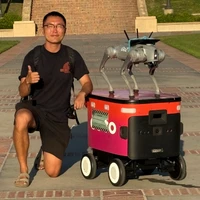
Urban embodied AI agents, ranging from delivery robots to quadrupeds, are increasingly populating our cities, navigating chaotic streets to provide last-mile connectivity. Training such agents requires diverse, high-fidelity urban environments to scale, yet existing human-crafted or procedurally generated simulation scenes either lack scalability or fail to capture real-world complexity. We introduce UrbanVerse, a data-driven real-to-sim system that converts crowd-sourced city-tour videos into physics-aware, interactive simulation scenes. UrbanVerse consists of: (i) UrbanVerse-100K, a repository of 100k+ annotated urban 3D assets with semantic and physical attributes, and (ii) UrbanVerse-Gen, an automatic pipeline that extracts scene layouts from video and instantiates metric-scale 3D simulations using retrieved assets. Running in IsaacSim, UrbanVerse offers 160 high-quality constructed scenes from 24 countries, along with a curated benchmark of 10 artist-designed test scenes. Experiments show that UrbanVerse scenes preserve real-world semantics and layouts, achieving human-evaluated realism comparable to manually crafted scenes. In urban navigation, policies trained in UrbanVerse exhibit scaling power laws and strong generalization, improving success by +6.3% in simulation and +30.1% in zero-shot sim-to-real transfer comparing to prior methods, accomplishing a 300 m real-world mission with only two interventions.

  • 5 authors
·
Oct 16

Words as Beacons: Guiding RL Agents with High-Level Language Prompts

Sparse reward environments in reinforcement learning (RL) pose significant challenges for exploration, often leading to inefficient or incomplete learning processes. To tackle this issue, this work proposes a teacher-student RL framework that leverages Large Language Models (LLMs) as "teachers" to guide the agent's learning process by decomposing complex tasks into subgoals. Due to their inherent capability to understand RL environments based on a textual description of structure and purpose, LLMs can provide subgoals to accomplish the task defined for the environment in a similar fashion to how a human would do. In doing so, three types of subgoals are proposed: positional targets relative to the agent, object representations, and language-based instructions generated directly by the LLM. More importantly, we show that it is possible to query the LLM only during the training phase, enabling agents to operate within the environment without any LLM intervention. We assess the performance of this proposed framework by evaluating three state-of-the-art open-source LLMs (Llama, DeepSeek, Qwen) eliciting subgoals across various procedurally generated environment of the MiniGrid benchmark. Experimental results demonstrate that this curriculum-based approach accelerates learning and enhances exploration in complex tasks, achieving up to 30 to 200 times faster convergence in training steps compared to recent baselines designed for sparse reward environments.

  • 4 authors
·
Oct 11, 2024

Open-Ended Learning Leads to Generally Capable Agents

In this work we create agents that can perform well beyond a single, individual task, that exhibit much wider generalisation of behaviour to a massive, rich space of challenges. We define a universe of tasks within an environment domain and demonstrate the ability to train agents that are generally capable across this vast space and beyond. The environment is natively multi-agent, spanning the continuum of competitive, cooperative, and independent games, which are situated within procedurally generated physical 3D worlds. The resulting space is exceptionally diverse in terms of the challenges posed to agents, and as such, even measuring the learning progress of an agent is an open research problem. We propose an iterative notion of improvement between successive generations of agents, rather than seeking to maximise a singular objective, allowing us to quantify progress despite tasks being incomparable in terms of achievable rewards. We show that through constructing an open-ended learning process, which dynamically changes the training task distributions and training objectives such that the agent never stops learning, we achieve consistent learning of new behaviours. The resulting agent is able to score reward in every one of our humanly solvable evaluation levels, with behaviour generalising to many held-out points in the universe of tasks. Examples of this zero-shot generalisation include good performance on Hide and Seek, Capture the Flag, and Tag. Through analysis and hand-authored probe tasks we characterise the behaviour of our agent, and find interesting emergent heuristic behaviours such as trial-and-error experimentation, simple tool use, option switching, and cooperation. Finally, we demonstrate that the general capabilities of this agent could unlock larger scale transfer of behaviour through cheap finetuning.

  • 18 authors
·
Jul 27, 2021

Unbounded: A Generative Infinite Game of Character Life Simulation

We introduce the concept of a generative infinite game, a video game that transcends the traditional boundaries of finite, hard-coded systems by using generative models. Inspired by James P. Carse's distinction between finite and infinite games, we leverage recent advances in generative AI to create Unbounded: a game of character life simulation that is fully encapsulated in generative models. Specifically, Unbounded draws inspiration from sandbox life simulations and allows you to interact with your autonomous virtual character in a virtual world by feeding, playing with and guiding it - with open-ended mechanics generated by an LLM, some of which can be emergent. In order to develop Unbounded, we propose technical innovations in both the LLM and visual generation domains. Specifically, we present: (1) a specialized, distilled large language model (LLM) that dynamically generates game mechanics, narratives, and character interactions in real-time, and (2) a new dynamic regional image prompt Adapter (IP-Adapter) for vision models that ensures consistent yet flexible visual generation of a character across multiple environments. We evaluate our system through both qualitative and quantitative analysis, showing significant improvements in character life simulation, user instruction following, narrative coherence, and visual consistency for both characters and the environments compared to traditional related approaches.

  • 8 authors
·
Oct 24, 2024 2

ChatGPT4PCG 2 Competition: Prompt Engineering for Science Birds Level Generation

This paper presents the second ChatGPT4PCG competition at the 2024 IEEE Conference on Games. In this edition of the competition, we follow the first edition, but make several improvements and changes. We introduce a new evaluation metric along with allowing a more flexible format for participants' submissions and making several improvements to the evaluation pipeline. Continuing from the first edition, we aim to foster and explore the realm of prompt engineering (PE) for procedural content generation (PCG). While the first competition saw success, it was hindered by various limitations; we aim to mitigate these limitations in this edition. We introduce diversity as a new metric to discourage submissions aimed at producing repetitive structures. Furthermore, we allow submission of a Python program instead of a prompt text file for greater flexibility in implementing advanced PE approaches, which may require control flow, including conditions and iterations. We also make several improvements to the evaluation pipeline with a better classifier for similarity evaluation and better-performing function signatures. We thoroughly evaluate the effectiveness of the new metric and the improved classifier. Additionally, we perform an ablation study to select a function signature to instruct ChatGPT for level generation. Finally, we provide implementation examples of various PE techniques in Python and evaluate their preliminary performance. We hope this competition serves as a resource and platform for learning about PE and PCG in general.

  • 8 authors
·
Mar 4, 2024

3D Scene Generation: A Survey

3D scene generation seeks to synthesize spatially structured, semantically meaningful, and photorealistic environments for applications such as immersive media, robotics, autonomous driving, and embodied AI. Early methods based on procedural rules offered scalability but limited diversity. Recent advances in deep generative models (e.g., GANs, diffusion models) and 3D representations (e.g., NeRF, 3D Gaussians) have enabled the learning of real-world scene distributions, improving fidelity, diversity, and view consistency. Recent advances like diffusion models bridge 3D scene synthesis and photorealism by reframing generation as image or video synthesis problems. This survey provides a systematic overview of state-of-the-art approaches, organizing them into four paradigms: procedural generation, neural 3D-based generation, image-based generation, and video-based generation. We analyze their technical foundations, trade-offs, and representative results, and review commonly used datasets, evaluation protocols, and downstream applications. We conclude by discussing key challenges in generation capacity, 3D representation, data and annotations, and evaluation, and outline promising directions including higher fidelity, physics-aware and interactive generation, and unified perception-generation models. This review organizes recent advances in 3D scene generation and highlights promising directions at the intersection of generative AI, 3D vision, and embodied intelligence. To track ongoing developments, we maintain an up-to-date project page: https://github.com/hzxie/Awesome-3D-Scene-Generation.

  • 5 authors
·
May 8 2

Holodeck: Language Guided Generation of 3D Embodied AI Environments

3D simulated environments play a critical role in Embodied AI, but their creation requires expertise and extensive manual effort, restricting their diversity and scope. To mitigate this limitation, we present Holodeck, a system that generates 3D environments to match a user-supplied prompt fully automatedly. Holodeck can generate diverse scenes, e.g., arcades, spas, and museums, adjust the designs for styles, and can capture the semantics of complex queries such as "apartment for a researcher with a cat" and "office of a professor who is a fan of Star Wars". Holodeck leverages a large language model (GPT-4) for common sense knowledge about what the scene might look like and uses a large collection of 3D assets from Objaverse to populate the scene with diverse objects. To address the challenge of positioning objects correctly, we prompt GPT-4 to generate spatial relational constraints between objects and then optimize the layout to satisfy those constraints. Our large-scale human evaluation shows that annotators prefer Holodeck over manually designed procedural baselines in residential scenes and that Holodeck can produce high-quality outputs for diverse scene types. We also demonstrate an exciting application of Holodeck in Embodied AI, training agents to navigate in novel scenes like music rooms and daycares without human-constructed data, which is a significant step forward in developing general-purpose embodied agents.

  • 14 authors
·
Dec 14, 2023 2

HOLODECK 2.0: Vision-Language-Guided 3D World Generation with Editing

3D scene generation plays a crucial role in gaming, artistic creation, virtual reality and many other domains. However, current 3D scene design still relies heavily on extensive manual effort from creators, and existing automated methods struggle to generate open-domain scenes or support flexible editing. As a result, generating 3D worlds directly from text has garnered increasing attention. In this paper, we introduce HOLODECK 2.0, an advanced vision-language-guided framework for 3D world generation with support for interactive scene editing based on human feedback. HOLODECK 2.0 can generate diverse and stylistically rich 3D scenes (e.g., realistic, cartoon, anime, and cyberpunk styles) that exhibit high semantic fidelity to fine-grained input descriptions, suitable for both indoor and open-domain environments. HOLODECK 2.0 leverages vision-language models (VLMs) to identify and parse the objects required in a scene and generates corresponding high-quality assets via state-of-the-art 3D generative models. It then iteratively applies spatial constraints derived from the VLMs to achieve semantically coherent and physically plausible layouts. Human evaluations and CLIP-based assessments demonstrate that HOLODECK 2.0 effectively generates high-quality scenes closely aligned with detailed textual descriptions, consistently outperforming baselines across indoor and open-domain scenarios. Additionally, we provide editing capabilities that flexibly adapt to human feedback, supporting layout refinement and style-consistent object edits. Finally, we present a practical application of HOLODECK 2.0 in procedural game modeling, generating visually rich and immersive environments, potentially boosting efficiency.

  • 4 authors
·
Aug 7

Generative Agents: Interactive Simulacra of Human Behavior

Believable proxies of human behavior can empower interactive applications ranging from immersive environments to rehearsal spaces for interpersonal communication to prototyping tools. In this paper, we introduce generative agents--computational software agents that simulate believable human behavior. Generative agents wake up, cook breakfast, and head to work; artists paint, while authors write; they form opinions, notice each other, and initiate conversations; they remember and reflect on days past as they plan the next day. To enable generative agents, we describe an architecture that extends a large language model to store a complete record of the agent's experiences using natural language, synthesize those memories over time into higher-level reflections, and retrieve them dynamically to plan behavior. We instantiate generative agents to populate an interactive sandbox environment inspired by The Sims, where end users can interact with a small town of twenty five agents using natural language. In an evaluation, these generative agents produce believable individual and emergent social behaviors: for example, starting with only a single user-specified notion that one agent wants to throw a Valentine's Day party, the agents autonomously spread invitations to the party over the next two days, make new acquaintances, ask each other out on dates to the party, and coordinate to show up for the party together at the right time. We demonstrate through ablation that the components of our agent architecture--observation, planning, and reflection--each contribute critically to the believability of agent behavior. By fusing large language models with computational, interactive agents, this work introduces architectural and interaction patterns for enabling believable simulations of human behavior.

  • 6 authors
·
Apr 6, 2023 3

Deep Policy Networks for NPC Behaviors that Adapt to Changing Design Parameters in Roguelike Games

Recent advances in Deep Reinforcement Learning (DRL) have largely focused on improving the performance of agents with the aim of replacing humans in known and well-defined environments. The use of these techniques as a game design tool for video game production, where the aim is instead to create Non-Player Character (NPC) behaviors, has received relatively little attention until recently. Turn-based strategy games like Roguelikes, for example, present unique challenges to DRL. In particular, the categorical nature of their complex game state, composed of many entities with different attributes, requires agents able to learn how to compare and prioritize these entities. Moreover, this complexity often leads to agents that overfit to states seen during training and that are unable to generalize in the face of design changes made during development. In this paper we propose two network architectures which, when combined with a procedural loot generation system, are able to better handle complex categorical state spaces and to mitigate the need for retraining forced by design decisions. The first is based on a dense embedding of the categorical input space that abstracts the discrete observation model and renders trained agents more able to generalize. The second proposed architecture is more general and is based on a Transformer network able to reason relationally about input and input attributes. Our experimental evaluation demonstrates that new agents have better adaptation capacity with respect to a baseline architecture, making this framework more robust to dynamic gameplay changes during development. Based on the results shown in this paper, we believe that these solutions represent a step forward towards making DRL more accessible to the gaming industry.

  • 3 authors
·
Dec 7, 2020

3D-GPT: Procedural 3D Modeling with Large Language Models

In the pursuit of efficient automated content creation, procedural generation, leveraging modifiable parameters and rule-based systems, emerges as a promising approach. Nonetheless, it could be a demanding endeavor, given its intricate nature necessitating a deep understanding of rules, algorithms, and parameters. To reduce workload, we introduce 3D-GPT, a framework utilizing large language models~(LLMs) for instruction-driven 3D modeling. 3D-GPT positions LLMs as proficient problem solvers, dissecting the procedural 3D modeling tasks into accessible segments and appointing the apt agent for each task. 3D-GPT integrates three core agents: the task dispatch agent, the conceptualization agent, and the modeling agent. They collaboratively achieve two objectives. First, it enhances concise initial scene descriptions, evolving them into detailed forms while dynamically adapting the text based on subsequent instructions. Second, it integrates procedural generation, extracting parameter values from enriched text to effortlessly interface with 3D software for asset creation. Our empirical investigations confirm that 3D-GPT not only interprets and executes instructions, delivering reliable results but also collaborates effectively with human designers. Furthermore, it seamlessly integrates with Blender, unlocking expanded manipulation possibilities. Our work highlights the potential of LLMs in 3D modeling, offering a basic framework for future advancements in scene generation and animation.

  • 6 authors
·
Oct 19, 2023 2

Model as a Game: On Numerical and Spatial Consistency for Generative Games

Recent advances in generative models have significantly impacted game generation. However, despite producing high-quality graphics and adequately receiving player input, existing models often fail to maintain fundamental game properties such as numerical and spatial consistency. Numerical consistency ensures gameplay mechanics correctly reflect score changes and other quantitative elements, while spatial consistency prevents jarring scene transitions, providing seamless player experiences. In this paper, we revisit the paradigm of generative games to explore what truly constitutes a Model as a Game (MaaG) with a well-developed mechanism. We begin with an empirical study on ``Traveler'', a 2D game created by an LLM featuring minimalist rules yet challenging generative models in maintaining consistency. Based on the DiT architecture, we design two specialized modules: (1) a numerical module that integrates a LogicNet to determine event triggers, with calculations processed externally as conditions for image generation; and (2) a spatial module that maintains a map of explored areas, retrieving location-specific information during generation and linking new observations to ensure continuity. Experiments across three games demonstrate that our integrated modules significantly enhance performance on consistency metrics compared to baselines, while incurring minimal time overhead during inference.

  • 8 authors
·
Mar 27

VideoGameBench: Can Vision-Language Models complete popular video games?

Vision-language models (VLMs) have achieved strong results on coding and math benchmarks that are challenging for humans, yet their ability to perform tasks that come naturally to humans--such as perception, spatial navigation, and memory management--remains understudied. Real video games are crafted to be intuitive for humans to learn and master by leveraging innate inductive biases, making them an ideal testbed for evaluating such capabilities in VLMs. To this end, we introduce VideoGameBench, a benchmark consisting of 10 popular video games from the 1990s that VLMs directly interact with in real-time. VideoGameBench challenges models to complete entire games with access to only raw visual inputs and a high-level description of objectives and controls, a significant departure from existing setups that rely on game-specific scaffolding and auxiliary information. We keep three of the games secret to encourage solutions that generalize to unseen environments. Our experiments show that frontier vision-language models struggle to progress beyond the beginning of each game. We find inference latency to be a major limitation of frontier models in the real-time setting; therefore, we introduce VideoGameBench Lite, a setting where the game pauses while waiting for the LM's next action. The best performing model, Gemini 2.5 Pro, completes only 0.48% of VideoGameBench and 1.6% of VideoGameBench Lite. We hope that the formalization of the human skills mentioned above into this benchmark motivates progress in these research directions.

  • 4 authors
·
May 23 3

STARLING: Self-supervised Training of Text-based Reinforcement Learning Agent with Large Language Models

Interactive fiction games have emerged as an important application to improve the generalization capabilities of language-based reinforcement learning (RL) agents. Existing environments for interactive fiction games are domain-specific or time-consuming to generate and do not train the RL agents to master a specific set of skills. In this work, we introduce an interactive environment for self-supervised RL, STARLING, for text-based games that bootstraps the text-based RL agents with automatically generated games (based on the seed set of game ideas) to boost the performance and generalization capabilities to reach a goal of the target environment. These games let the agent hone their skills on a predefined set of tasks. We create and test an environment with 100 games, generated using this automated framework that uses large language models (GPT-3) and an interactive fiction game engine (based on Inform7) to provide the user with the ability to generate more games under minimal human supervision. Experimental results based on both the human participants and baseline text-based RL agents reveal that current state-of-the-art text-based RL agents cannot use previously learned skills in new situations at the level humans can. These results enforce STARLING's potential to serve as a sandbox environment for further research in self-supervised text-based RL.

  • 3 authors
·
Jun 9, 2024

OMNI-EPIC: Open-endedness via Models of human Notions of Interestingness with Environments Programmed in Code

Open-ended and AI-generating algorithms aim to continuously generate and solve increasingly complex tasks indefinitely, offering a promising path toward more general intelligence. To accomplish this grand vision, learning must occur within a vast array of potential tasks. Existing approaches to automatically generating environments are constrained within manually predefined, often narrow distributions of environment, limiting their ability to create any learning environment. To address this limitation, we introduce a novel framework, OMNI-EPIC, that augments previous work in Open-endedness via Models of human Notions of Interestingness (OMNI) with Environments Programmed in Code (EPIC). OMNI-EPIC leverages foundation models to autonomously generate code specifying the next learnable (i.e., not too easy or difficult for the agent's current skill set) and interesting (e.g., worthwhile and novel) tasks. OMNI-EPIC generates both environments (e.g., an obstacle course) and reward functions (e.g., progress through the obstacle course quickly without touching red objects), enabling it, in principle, to create any simulatable learning task. We showcase the explosive creativity of OMNI-EPIC, which continuously innovates to suggest new, interesting learning challenges. We also highlight how OMNI-EPIC can adapt to reinforcement learning agents' learning progress, generating tasks that are of suitable difficulty. Overall, OMNI-EPIC can endlessly create learnable and interesting environments, further propelling the development of self-improving AI systems and AI-Generating Algorithms. Project website with videos: https://dub.sh/omniepic

  • 4 authors
·
May 24, 2024

Ctrl-Room: Controllable Text-to-3D Room Meshes Generation with Layout Constraints

Text-driven 3D indoor scene generation could be useful for gaming, film industry, and AR/VR applications. However, existing methods cannot faithfully capture the room layout, nor do they allow flexible editing of individual objects in the room. To address these problems, we present Ctrl-Room, which is able to generate convincing 3D rooms with designer-style layouts and high-fidelity textures from just a text prompt. Moreover, Ctrl-Room enables versatile interactive editing operations such as resizing or moving individual furniture items. Our key insight is to separate the modeling of layouts and appearance. %how to model the room that takes into account both scene texture and geometry at the same time. To this end, Our proposed method consists of two stages, a `Layout Generation Stage' and an `Appearance Generation Stage'. The `Layout Generation Stage' trains a text-conditional diffusion model to learn the layout distribution with our holistic scene code parameterization. Next, the `Appearance Generation Stage' employs a fine-tuned ControlNet to produce a vivid panoramic image of the room guided by the 3D scene layout and text prompt. In this way, we achieve a high-quality 3D room with convincing layouts and lively textures. Benefiting from the scene code parameterization, we can easily edit the generated room model through our mask-guided editing module, without expensive editing-specific training. Extensive experiments on the Structured3D dataset demonstrate that our method outperforms existing methods in producing more reasonable, view-consistent, and editable 3D rooms from natural language prompts.

  • 4 authors
·
Oct 5, 2023

Open-Universe Indoor Scene Generation using LLM Program Synthesis and Uncurated Object Databases

We present a system for generating indoor scenes in response to text prompts. The prompts are not limited to a fixed vocabulary of scene descriptions, and the objects in generated scenes are not restricted to a fixed set of object categories -- we call this setting indoor scene generation. Unlike most prior work on indoor scene generation, our system does not require a large training dataset of existing 3D scenes. Instead, it leverages the world knowledge encoded in pre-trained large language models (LLMs) to synthesize programs in a domain-specific layout language that describe objects and spatial relations between them. Executing such a program produces a specification of a constraint satisfaction problem, which the system solves using a gradient-based optimization scheme to produce object positions and orientations. To produce object geometry, the system retrieves 3D meshes from a database. Unlike prior work which uses databases of category-annotated, mutually-aligned meshes, we develop a pipeline using vision-language models (VLMs) to retrieve meshes from massive databases of un-annotated, inconsistently-aligned meshes. Experimental evaluations show that our system outperforms generative models trained on 3D data for traditional, closed-universe scene generation tasks; it also outperforms a recent LLM-based layout generation method on open-universe scene generation.

  • 10 authors
·
Feb 4, 2024

Creative Agents: Empowering Agents with Imagination for Creative Tasks

We study building embodied agents for open-ended creative tasks. While existing methods build instruction-following agents that can perform diverse open-ended tasks, none of them demonstrates creativity -- the ability to give novel and diverse task solutions implicit in the language instructions. This limitation comes from their inability to convert abstract language instructions into concrete task goals in the environment and perform long-horizon planning for such complicated goals. Given the observation that humans perform creative tasks with the help of imagination, we propose a class of solutions for creative agents, where the controller is enhanced with an imaginator that generates detailed imaginations of task outcomes conditioned on language instructions. We introduce several approaches to implementing the components of creative agents. We implement the imaginator with either a large language model for textual imagination or a diffusion model for visual imagination. The controller can either be a behavior-cloning policy learned from data or a pre-trained foundation model generating executable codes in the environment. We benchmark creative tasks with the challenging open-world game Minecraft, where the agents are asked to create diverse buildings given free-form language instructions. In addition, we propose novel evaluation metrics for open-ended creative tasks utilizing GPT-4V, which holds many advantages over existing metrics. We perform a detailed experimental analysis of creative agents, showing that creative agents are the first AI agents accomplishing diverse building creation in the survival mode of Minecraft. Our benchmark and models are open-source for future research on creative agents (https://github.com/PKU-RL/Creative-Agents).

  • 5 authors
·
Dec 5, 2023

ImmerseGen: Agent-Guided Immersive World Generation with Alpha-Textured Proxies

Automatic creation of 3D scenes for immersive VR presence has been a significant research focus for decades. However, existing methods often rely on either high-poly mesh modeling with post-hoc simplification or massive 3D Gaussians, resulting in a complex pipeline or limited visual realism. In this paper, we demonstrate that such exhaustive modeling is unnecessary for achieving compelling immersive experience. We introduce ImmerseGen, a novel agent-guided framework for compact and photorealistic world modeling. ImmerseGen represents scenes as hierarchical compositions of lightweight geometric proxies, i.e., simplified terrain and billboard meshes, and generates photorealistic appearance by synthesizing RGBA textures onto these proxies. Specifically, we propose terrain-conditioned texturing for user-centric base world synthesis, and RGBA asset texturing for midground and foreground scenery. This reformulation offers several advantages: (i) it simplifies modeling by enabling agents to guide generative models in producing coherent textures that integrate seamlessly with the scene; (ii) it bypasses complex geometry creation and decimation by directly synthesizing photorealistic textures on proxies, preserving visual quality without degradation; (iii) it enables compact representations suitable for real-time rendering on mobile VR headsets. To automate scene creation from text prompts, we introduce VLM-based modeling agents enhanced with semantic grid-based analysis for improved spatial reasoning and accurate asset placement. ImmerseGen further enriches scenes with dynamic effects and ambient audio to support multisensory immersion. Experiments on scene generation and live VR showcases demonstrate that ImmerseGen achieves superior photorealism, spatial coherence and rendering efficiency compared to prior methods. Project webpage: https://immersegen.github.io.

  • 9 authors
·
Jun 17 2

APT: Architectural Planning and Text-to-Blueprint Construction Using Large Language Models for Open-World Agents

We present APT, an advanced Large Language Model (LLM)-driven framework that enables autonomous agents to construct complex and creative structures within the Minecraft environment. Unlike previous approaches that primarily concentrate on skill-based open-world tasks or rely on image-based diffusion models for generating voxel-based structures, our method leverages the intrinsic spatial reasoning capabilities of LLMs. By employing chain-of-thought decomposition along with multimodal inputs, the framework generates detailed architectural layouts and blueprints that the agent can execute under zero-shot or few-shot learning scenarios. Our agent incorporates both memory and reflection modules to facilitate lifelong learning, adaptive refinement, and error correction throughout the building process. To rigorously evaluate the agent's performance in this emerging research area, we introduce a comprehensive benchmark consisting of diverse construction tasks designed to test creativity, spatial reasoning, adherence to in-game rules, and the effective integration of multimodal instructions. Experimental results using various GPT-based LLM backends and agent configurations demonstrate the agent's capacity to accurately interpret extensive instructions involving numerous items, their positions, and orientations. The agent successfully produces complex structures complete with internal functionalities such as Redstone-powered systems. A/B testing indicates that the inclusion of a memory module leads to a significant increase in performance, emphasizing its role in enabling continuous learning and the reuse of accumulated experience. Additionally, the agent's unexpected emergence of scaffolding behavior highlights the potential of future LLM-driven agents to utilize subroutine planning and leverage the emergence ability of LLMs to autonomously develop human-like problem-solving techniques.

  • 2 authors
·
Nov 26, 2024

WebArena: A Realistic Web Environment for Building Autonomous Agents

With generative AI advances, the exciting potential for autonomous agents to manage daily tasks via natural language commands has emerged. However, cur rent agents are primarily created and tested in simplified synthetic environments, substantially limiting real-world scenario representation. In this paper, we build an environment for agent command and control that is highly realistic and reproducible. Specifically, we focus on agents that perform tasks on websites, and we create an environment with fully functional websites from four common domains: e-commerce, social forum discussions, collaborative software development, and content management. Our environment is enriched with tools (e.g., a map) and external knowledge bases (e.g., user manuals) to encourage human-like task-solving. Building upon our environment, we release a set of benchmark tasks focusing on evaluating the functional correctness of task completions. The tasks in our benchmark are diverse, long-horizon, and are designed to emulate tasks that humans routinely perform on the internet. We design and implement several autonomous agents, integrating recent techniques such as reasoning before acting. The results demonstrate that solving complex tasks is challenging: our best GPT-4-based agent only achieves an end-to-end task success rate of 10.59%. These results highlight the need for further development of robust agents, that current state-of-the-art LMs are far from perfect performance in these real-life tasks, and that WebArena can be used to measure such progress. Our code, data, environment reproduction resources, and video demonstrations are publicly available at https://webarena.dev/.

  • 11 authors
·
Jul 25, 2023 4

Preference-conditioned Pixel-based AI Agent For Game Testing

The game industry is challenged to cope with increasing growth in demand and game complexity while maintaining acceptable quality standards for released games. Classic approaches solely depending on human efforts for quality assurance and game testing do not scale effectively in terms of time and cost. Game-testing AI agents that learn by interaction with the environment have the potential to mitigate these challenges with good scalability properties on time and costs. However, most recent work in this direction depends on game state information for the agent's state representation, which limits generalization across different game scenarios. Moreover, game test engineers usually prefer exploring a game in a specific style, such as exploring the golden path. However, current game testing AI agents do not provide an explicit way to satisfy such a preference. This paper addresses these limitations by proposing an agent design that mainly depends on pixel-based state observations while exploring the environment conditioned on a user's preference specified by demonstration trajectories. In addition, we propose an imitation learning method that couples self-supervised and supervised learning objectives to enhance the quality of imitation behaviors. Our agent significantly outperforms state-of-the-art pixel-based game testing agents over exploration coverage and test execution quality when evaluated on a complex open-world environment resembling many aspects of real AAA games.

  • 3 authors
·
Aug 18, 2023

Describe, Explain, Plan and Select: Interactive Planning with Large Language Models Enables Open-World Multi-Task Agents

In this paper, we study the problem of planning in Minecraft, a popular, democratized yet challenging open-ended environment for developing multi-task embodied agents. We've found two primary challenges of empowering such agents with planning: 1) planning in an open-ended world like Minecraft requires precise and multi-step reasoning due to the long-term nature of the tasks, and 2) as vanilla planners do not consider the proximity to the current agent when ordering parallel sub-goals within a complicated plan, the resulting plan could be inefficient. To this end, we propose "Describe, Explain, Plan and Select" (DEPS), an interactive planning approach based on Large Language Models (LLMs). Our approach helps with better error correction from the feedback during the long-haul planning, while also bringing the sense of proximity via goal Selector, a learnable module that ranks parallel sub-goals based on the estimated steps of completion and improves the original plan accordingly. Our experiments mark the milestone of the first multi-task agent that can robustly accomplish 70+ Minecraft tasks and nearly doubles the overall performances. Finally, the ablation and exploratory studies detail how our design beats the counterparts and provide a promising update on the ObtainDiamond grand challenge with our approach. The code is released at https://github.com/CraftJarvis/MC-Planner.

  • 5 authors
·
Feb 3, 2023

MINDSTORES: Memory-Informed Neural Decision Synthesis for Task-Oriented Reinforcement in Embodied Systems

While large language models (LLMs) have shown promising capabilities as zero-shot planners for embodied agents, their inability to learn from experience and build persistent mental models limits their robustness in complex open-world environments like Minecraft. We introduce MINDSTORES, an experience-augmented planning framework that enables embodied agents to build and leverage mental models through natural interaction with their environment. Drawing inspiration from how humans construct and refine cognitive mental models, our approach extends existing zero-shot LLM planning by maintaining a database of past experiences that informs future planning iterations. The key innovation is representing accumulated experiences as natural language embeddings of (state, task, plan, outcome) tuples, which can then be efficiently retrieved and reasoned over by an LLM planner to generate insights and guide plan refinement for novel states and tasks. Through extensive experiments in the MineDojo environment, a simulation environment for agents in Minecraft that provides low-level controls for Minecraft, we find that MINDSTORES learns and applies its knowledge significantly better than existing memory-based LLM planners while maintaining the flexibility and generalization benefits of zero-shot approaches, representing an important step toward more capable embodied AI systems that can learn continuously through natural experience.

  • 5 authors
·
Jan 31

RLAD: Training LLMs to Discover Abstractions for Solving Reasoning Problems

Reasoning requires going beyond pattern matching or memorization of solutions to identify and implement "algorithmic procedures" that can be used to deduce answers to hard problems. Doing so requires realizing the most relevant primitives, intermediate results, or shared procedures, and building upon them. While RL post-training on long chains of thought ultimately aims to uncover this kind of algorithmic behavior, most reasoning traces learned by large models fail to consistently capture or reuse procedures, instead drifting into verbose and degenerate exploration. To address more effective reasoning, we introduce reasoning abstractions: concise natural language descriptions of procedural and factual knowledge that guide the model toward learning successful reasoning. We train models to be capable of proposing multiple abstractions given a problem, followed by RL that incentivizes building a solution while using the information provided by these abstractions. This results in a two-player RL training paradigm, abbreviated as RLAD, that jointly trains an abstraction generator and a solution generator. This setup effectively enables structured exploration, decouples learning signals of abstraction proposal and solution generation, and improves generalization to harder problems. We also show that allocating more test-time compute to generating abstractions is more beneficial for performance than generating more solutions at large test budgets, illustrating the role of abstractions in guiding meaningful exploration.

SpaceBlender: Creating Context-Rich Collaborative Spaces Through Generative 3D Scene Blending

There is increased interest in using generative AI to create 3D spaces for Virtual Reality (VR) applications. However, today's models produce artificial environments, falling short of supporting collaborative tasks that benefit from incorporating the user's physical context. To generate environments that support VR telepresence, we introduce SpaceBlender, a novel pipeline that utilizes generative AI techniques to blend users' physical surroundings into unified virtual spaces. This pipeline transforms user-provided 2D images into context-rich 3D environments through an iterative process consisting of depth estimation, mesh alignment, and diffusion-based space completion guided by geometric priors and adaptive text prompts. In a preliminary within-subjects study, where 20 participants performed a collaborative VR affinity diagramming task in pairs, we compared SpaceBlender with a generic virtual environment and a state-of-the-art scene generation framework, evaluating its ability to create virtual spaces suitable for collaboration. Participants appreciated the enhanced familiarity and context provided by SpaceBlender but also noted complexities in the generative environments that could detract from task focus. Drawing on participant feedback, we propose directions for improving the pipeline and discuss the value and design of blended spaces for different scenarios.

  • 5 authors
·
Sep 20, 2024 2

Sketch2Scene: Automatic Generation of Interactive 3D Game Scenes from User's Casual Sketches

3D Content Generation is at the heart of many computer graphics applications, including video gaming, film-making, virtual and augmented reality, etc. This paper proposes a novel deep-learning based approach for automatically generating interactive and playable 3D game scenes, all from the user's casual prompts such as a hand-drawn sketch. Sketch-based input offers a natural, and convenient way to convey the user's design intention in the content creation process. To circumvent the data-deficient challenge in learning (i.e. the lack of large training data of 3D scenes), our method leverages a pre-trained 2D denoising diffusion model to generate a 2D image of the scene as the conceptual guidance. In this process, we adopt the isometric projection mode to factor out unknown camera poses while obtaining the scene layout. From the generated isometric image, we use a pre-trained image understanding method to segment the image into meaningful parts, such as off-ground objects, trees, and buildings, and extract the 2D scene layout. These segments and layouts are subsequently fed into a procedural content generation (PCG) engine, such as a 3D video game engine like Unity or Unreal, to create the 3D scene. The resulting 3D scene can be seamlessly integrated into a game development environment and is readily playable. Extensive tests demonstrate that our method can efficiently generate high-quality and interactive 3D game scenes with layouts that closely follow the user's intention.

  • 8 authors
·
Aug 8, 2024 2

SIMS: Simulating Stylized Human-Scene Interactions with Retrieval-Augmented Script Generation

Simulating stylized human-scene interactions (HSI) in physical environments is a challenging yet fascinating task. Prior works emphasize long-term execution but fall short in achieving both diverse style and physical plausibility. To tackle this challenge, we introduce a novel hierarchical framework named SIMS that seamlessly bridges highlevel script-driven intent with a low-level control policy, enabling more expressive and diverse human-scene interactions. Specifically, we employ Large Language Models with Retrieval-Augmented Generation (RAG) to generate coherent and diverse long-form scripts, providing a rich foundation for motion planning. A versatile multicondition physics-based control policy is also developed, which leverages text embeddings from the generated scripts to encode stylistic cues, simultaneously perceiving environmental geometries and accomplishing task goals. By integrating the retrieval-augmented script generation with the multi-condition controller, our approach provides a unified solution for generating stylized HSI motions. We further introduce a comprehensive planning dataset produced by RAG and a stylized motion dataset featuring diverse locomotions and interactions. Extensive experiments demonstrate SIMS's effectiveness in executing various tasks and generalizing across different scenarios, significantly outperforming previous methods.

  • 10 authors
·
Nov 29, 2024

Can LLMs Generate Human-Like Wayfinding Instructions? Towards Platform-Agnostic Embodied Instruction Synthesis

We present a novel approach to automatically synthesize "wayfinding instructions" for an embodied robot agent. In contrast to prior approaches that are heavily reliant on human-annotated datasets designed exclusively for specific simulation platforms, our algorithm uses in-context learning to condition an LLM to generate instructions using just a few references. Using an LLM-based Visual Question Answering strategy, we gather detailed information about the environment which is used by the LLM for instruction synthesis. We implement our approach on multiple simulation platforms including Matterport3D, AI Habitat and ThreeDWorld, thereby demonstrating its platform-agnostic nature. We subjectively evaluate our approach via a user study and observe that 83.3% of users find the synthesized instructions accurately capture the details of the environment and show characteristics similar to those of human-generated instructions. Further, we conduct zero-shot navigation with multiple approaches on the REVERIE dataset using the generated instructions, and observe very close correlation with the baseline on standard success metrics (< 1% change in SR), quantifying the viability of generated instructions in replacing human-annotated data. We finally discuss the applicability of our approach in enabling a generalizable evaluation of embodied navigation policies. To the best of our knowledge, ours is the first LLM-driven approach capable of generating "human-like" instructions in a platform-agnostic manner, without training.

  • 3 authors
·
Mar 18, 2024

GUI Exploration Lab: Enhancing Screen Navigation in Agents via Multi-Turn Reinforcement Learning

With the rapid development of Large Vision Language Models, the focus of Graphical User Interface (GUI) agent tasks shifts from single-screen tasks to complex screen navigation challenges. However, real-world GUI environments, such as PC software and mobile Apps, are often complex and proprietary, making it difficult to obtain the comprehensive environment information needed for agent training and evaluation. This limitation hinders systematic investigation and benchmarking of agent navigation capabilities. To address this limitation, we introduce GUI Exploration Lab, a simulation environment engine for GUI agent navigation research that enables flexible definition and composition of screens, icons, and navigation graphs, while providing full access to environment information for comprehensive agent training and evaluation. Through extensive experiments, we find that supervised fine-tuning enables effective memorization of fundamental knowledge, serving as a crucial foundation for subsequent training. Building on this, single-turn reinforcement learning further enhances generalization to unseen scenarios. Finally, multi-turn reinforcement learning encourages the development of exploration strategies through interactive trial and error, leading to further improvements in screen navigation performance. We validate our methods on both static and interactive benchmarks, demonstrating that our findings generalize effectively to real-world scenarios. These findings demonstrate the advantages of reinforcement learning approaches in GUI navigation and offer practical guidance for building more capable and generalizable GUI agents.

Think in Games: Learning to Reason in Games via Reinforcement Learning with Large Language Models

Large language models (LLMs) excel at complex reasoning tasks such as mathematics and coding, yet they frequently struggle with simple interactive tasks that young children perform effortlessly. This discrepancy highlights a critical gap between declarative knowledge (knowing about something) and procedural knowledge (knowing how to do something). Although traditional reinforcement learning (RL) agents can acquire procedural knowledge through environmental interaction, they often operate as black boxes and require substantial training data. In contrast, LLMs possess extensive world knowledge and reasoning capabilities, but are unable to effectively convert this static knowledge into dynamic decision-making in interactive settings. To address this challenge, we propose Think in Games (TiG), a novel framework that empowers LLMs to develop procedural understanding through direct interaction with game environments, while retaining their inherent reasoning and explanatory abilities. Specifically, TiG reformulates RL-based decision-making as a language modeling task: LLMs generate language-guided policies, which are refined iteratively through online reinforcement learning based on environmental feedback. Our experimental results show that TiG successfully bridges the gap between declarative and procedural knowledge, achieving competitive performance with dramatically lower data and computational demands compared to conventional RL methods. Moreover, TiG provides step-by-step natural language explanations for its decisions, greatly improving transparency and interpretability in complex interactive tasks.

  • 8 authors
·
Aug 29 3

Simulating the Visual World with Artificial Intelligence: A Roadmap

The landscape of video generation is shifting, from a focus on generating visually appealing clips to building virtual environments that support interaction and maintain physical plausibility. These developments point toward the emergence of video foundation models that function not only as visual generators but also as implicit world models, models that simulate the physical dynamics, agent-environment interactions, and task planning that govern real or imagined worlds. This survey provides a systematic overview of this evolution, conceptualizing modern video foundation models as the combination of two core components: an implicit world model and a video renderer. The world model encodes structured knowledge about the world, including physical laws, interaction dynamics, and agent behavior. It serves as a latent simulation engine that enables coherent visual reasoning, long-term temporal consistency, and goal-driven planning. The video renderer transforms this latent simulation into realistic visual observations, effectively producing videos as a "window" into the simulated world. We trace the progression of video generation through four generations, in which the core capabilities advance step by step, ultimately culminating in a world model, built upon a video generation model, that embodies intrinsic physical plausibility, real-time multimodal interaction, and planning capabilities spanning multiple spatiotemporal scales. For each generation, we define its core characteristics, highlight representative works, and examine their application domains such as robotics, autonomous driving, and interactive gaming. Finally, we discuss open challenges and design principles for next-generation world models, including the role of agent intelligence in shaping and evaluating these systems. An up-to-date list of related works is maintained at this link.

  • 6 authors
·
Nov 11 3

Emergent Complexity and Zero-shot Transfer via Unsupervised Environment Design

A wide range of reinforcement learning (RL) problems - including robustness, transfer learning, unsupervised RL, and emergent complexity - require specifying a distribution of tasks or environments in which a policy will be trained. However, creating a useful distribution of environments is error prone, and takes a significant amount of developer time and effort. We propose Unsupervised Environment Design (UED) as an alternative paradigm, where developers provide environments with unknown parameters, and these parameters are used to automatically produce a distribution over valid, solvable environments. Existing approaches to automatically generating environments suffer from common failure modes: domain randomization cannot generate structure or adapt the difficulty of the environment to the agent's learning progress, and minimax adversarial training leads to worst-case environments that are often unsolvable. To generate structured, solvable environments for our protagonist agent, we introduce a second, antagonist agent that is allied with the environment-generating adversary. The adversary is motivated to generate environments which maximize regret, defined as the difference between the protagonist and antagonist agent's return. We call our technique Protagonist Antagonist Induced Regret Environment Design (PAIRED). Our experiments demonstrate that PAIRED produces a natural curriculum of increasingly complex environments, and PAIRED agents achieve higher zero-shot transfer performance when tested in highly novel environments.

  • 7 authors
·
Dec 3, 2020

Controllable Navigation Instruction Generation with Chain of Thought Prompting

Instruction generation is a vital and multidisciplinary research area with broad applications. Existing instruction generation models are limited to generating instructions in a single style from a particular dataset, and the style and content of generated instructions cannot be controlled. Moreover, most existing instruction generation methods also disregard the spatial modeling of the navigation environment. Leveraging the capabilities of Large Language Models (LLMs), we propose C-Instructor, which utilizes the chain-of-thought-style prompt for style-controllable and content-controllable instruction generation. Firstly, we propose a Chain of Thought with Landmarks (CoTL) mechanism, which guides the LLM to identify key landmarks and then generate complete instructions. CoTL renders generated instructions more accessible to follow and offers greater controllability over the manipulation of landmark objects. Furthermore, we present a Spatial Topology Modeling Task to facilitate the understanding of the spatial structure of the environment. Finally, we introduce a Style-Mixed Training policy, harnessing the prior knowledge of LLMs to enable style control for instruction generation based on different prompts within a single model instance. Extensive experiments demonstrate that instructions generated by C-Instructor outperform those generated by previous methods in text metrics, navigation guidance evaluation, and user studies.

  • 7 authors
·
Jul 10, 2024

Odyssey: Empowering Agents with Open-World Skills

Recent studies have delved into constructing generalist agents for open-world embodied environments like Minecraft. Despite the encouraging results, existing efforts mainly focus on solving basic programmatic tasks, e.g., material collection and tool-crafting following the Minecraft tech-tree, treating the ObtainDiamond task as the ultimate goal. This limitation stems from the narrowly defined set of actions available to agents, requiring them to learn effective long-horizon strategies from scratch. Consequently, discovering diverse gameplay opportunities in the open world becomes challenging. In this work, we introduce ODYSSEY, a new framework that empowers Large Language Model (LLM)-based agents with open-world skills to explore the vast Minecraft world. ODYSSEY comprises three key parts: (1) An interactive agent with an open-world skill library that consists of 40 primitive skills and 183 compositional skills. (2) A fine-tuned LLaMA-3 model trained on a large question-answering dataset with 390k+ instruction entries derived from the Minecraft Wiki. (3) A new open-world benchmark includes thousands of long-term planning tasks, tens of dynamic-immediate planning tasks, and one autonomous exploration task. Extensive experiments demonstrate that the proposed ODYSSEY framework can effectively evaluate the planning and exploration capabilities of agents. All datasets, model weights, and code are publicly available to motivate future research on more advanced autonomous agent solutions.

  • 8 authors
·
Jul 21, 2024

SPRING: GPT-4 Out-performs RL Algorithms by Studying Papers and Reasoning

Open-world survival games pose significant challenges for AI algorithms due to their multi-tasking, deep exploration, and goal prioritization requirements. Despite reinforcement learning (RL) being popular for solving games, its high sample complexity limits its effectiveness in complex open-world games like Crafter or Minecraft. We propose a novel approach, SPRING, to read the game's original academic paper and use the knowledge learned to reason and play the game through a large language model (LLM). Prompted with the LaTeX source as game context and a description of the agent's current observation, our SPRING framework employs a directed acyclic graph (DAG) with game-related questions as nodes and dependencies as edges. We identify the optimal action to take in the environment by traversing the DAG and calculating LLM responses for each node in topological order, with the LLM's answer to final node directly translating to environment actions. In our experiments, we study the quality of in-context "reasoning" induced by different forms of prompts under the setting of the Crafter open-world environment. Our experiments suggest that LLMs, when prompted with consistent chain-of-thought, have great potential in completing sophisticated high-level trajectories. Quantitatively, SPRING with GPT-4 outperforms all state-of-the-art RL baselines, trained for 1M steps, without any training. Finally, we show the potential of games as a test bed for LLMs.

  • 8 authors
·
May 24, 2023

HLG: Comprehensive 3D Room Construction via Hierarchical Layout Generation

Realistic 3D indoor scene generation is crucial for virtual reality, interior design, embodied intelligence, and scene understanding. While existing methods have made progress in coarse-scale furniture arrangement, they struggle to capture fine-grained object placements, limiting the realism and utility of generated environments. This gap hinders immersive virtual experiences and detailed scene comprehension for embodied AI applications. To address these issues, we propose Hierarchical Layout Generation (HLG), a novel method for fine-grained 3D scene generation. HLG is the first to adopt a coarse-to-fine hierarchical approach, refining scene layouts from large-scale furniture placement to intricate object arrangements. Specifically, our fine-grained layout alignment module constructs a hierarchical layout through vertical and horizontal decoupling, effectively decomposing complex 3D indoor scenes into multiple levels of granularity. Additionally, our trainable layout optimization network addresses placement issues, such as incorrect positioning, orientation errors, and object intersections, ensuring structurally coherent and physically plausible scene generation. We demonstrate the effectiveness of our approach through extensive experiments, showing superior performance in generating realistic indoor scenes compared to existing methods. This work advances the field of scene generation and opens new possibilities for applications requiring detailed 3D environments. We will release our code upon publication to encourage future research.

  • 5 authors
·
Aug 25

GameFactory: Creating New Games with Generative Interactive Videos

Generative game engines have the potential to revolutionize game development by autonomously creating new content and reducing manual workload. However, existing video-based game generation methods fail to address the critical challenge of scene generalization, limiting their applicability to existing games with fixed styles and scenes. In this paper, we present GameFactory, a framework focused on exploring scene generalization in game video generation. To enable the creation of entirely new and diverse games, we leverage pre-trained video diffusion models trained on open-domain video data. To bridge the domain gap between open-domain priors and small-scale game dataset, we propose a multi-phase training strategy that decouples game style learning from action control, preserving open-domain generalization while achieving action controllability. Using Minecraft as our data source, we release GF-Minecraft, a high-quality and diversity action-annotated video dataset for research. Furthermore, we extend our framework to enable autoregressive action-controllable game video generation, allowing the production of unlimited-length interactive game videos. Experimental results demonstrate that GameFactory effectively generates open-domain, diverse, and action-controllable game videos, representing a significant step forward in AI-driven game generation. Our dataset and project page are publicly available at https://vvictoryuki.github.io/gamefactory/.

  • 6 authors
·
Jan 14 3

LL3M: Large Language 3D Modelers

We present LL3M, a multi-agent system that leverages pretrained large language models (LLMs) to generate 3D assets by writing interpretable Python code in Blender. We break away from the typical generative approach that learns from a collection of 3D data. Instead, we reformulate shape generation as a code-writing task, enabling greater modularity, editability, and integration with artist workflows. Given a text prompt, LL3M coordinates a team of specialized LLM agents to plan, retrieve, write, debug, and refine Blender scripts that generate and edit geometry and appearance. The generated code works as a high-level, interpretable, human-readable, well-documented representation of scenes and objects, making full use of sophisticated Blender constructs (e.g. B-meshes, geometry modifiers, shader nodes) for diverse, unconstrained shapes, materials, and scenes. This code presents many avenues for further agent and human editing and experimentation via code tweaks or procedural parameters. This medium naturally enables a co-creative loop in our system: agents can automatically self-critique using code and visuals, while iterative user instructions provide an intuitive way to refine assets. A shared code context across agents enables awareness of previous attempts, and a retrieval-augmented generation knowledge base built from Blender API documentation, BlenderRAG, equips agents with examples, types, and functions empowering advanced modeling operations and code correctness. We demonstrate the effectiveness of LL3M across diverse shape categories, style and material edits, and user-driven refinements. Our experiments showcase the power of code as a generative and interpretable medium for 3D asset creation. Our project page is at https://threedle.github.io/ll3m.

  • 6 authors
·
Aug 11 1