Get trending papers in your email inbox once a day!
Get trending papers in your email inbox!
Subscribe
Temporal Reasoning Transfer from Text to Video
Video Large Language Models (Video LLMs) have shown promising capabilities in video comprehension, yet they struggle with tracking temporal changes and reasoning about temporal relationships. While previous research attributed this limitation to the ineffective temporal encoding of visual inputs, our diagnostic study reveals that video representations contain sufficient information for even small probing classifiers to achieve perfect accuracy. Surprisingly, we find that the key bottleneck in Video LLMs' temporal reasoning capability stems from the underlying LLM's inherent difficulty with temporal concepts, as evidenced by poor performance on textual temporal question-answering tasks. Building on this discovery, we introduce the Textual Temporal reasoning Transfer (T3). T3 synthesizes diverse temporal reasoning tasks in pure text format from existing image-text datasets, addressing the scarcity of video samples with complex temporal scenarios. Remarkably, without using any video data, T3 enhances LongVA-7B's temporal understanding, yielding a 5.3 absolute accuracy improvement on the challenging TempCompass benchmark, which enables our model to outperform ShareGPT4Video-8B trained on 28,000 video samples. Additionally, the enhanced LongVA-7B model achieves competitive performance on comprehensive video benchmarks. For example, it achieves a 49.7 accuracy on the Temporal Reasoning task of Video-MME, surpassing powerful large-scale models such as InternVL-Chat-V1.5-20B and VILA1.5-40B. Further analysis reveals a strong correlation between textual and video temporal task performance, validating the efficacy of transferring temporal reasoning abilities from text to video domains.





Context Cascade Compression: Exploring the Upper Limits of Text Compression
Million-level token inputs in long-context tasks pose significant computational and memory challenges for Large Language Models (LLMs). Recently, DeepSeek-OCR conducted research into the feasibility of Contexts Optical Compression and achieved preliminary results. Inspired by this, we introduce Context Cascade Compression C3 to explore the upper limits of text compression. Our method cascades two LLMs of different sizes to handle the compression and decoding tasks. Specifically, a small LLM, acting as the first stage, performs text compression by condensing a long context into a set of latent tokens (e.g., 32 or 64 in length), achieving a high ratio of text tokens to latent tokens. A large LLM, as the second stage, then executes the decoding task on this compressed context. Experiments show that at a 20x compression ratio (where the number of text tokens is 20 times the number of latent tokens), our model achieves 98% decoding accuracy, compared to approximately 60% for DeepSeek-OCR. When we further increase the compression ratio to 40x, the accuracy is maintained at around 93%. This indicates that in the domain of context compression, C3 Compression demonstrates superior performance and feasibility over optical character compression. C3 uses a simpler, pure-text pipeline that ignores factors like layout, color, and information loss from a visual encoder. This also suggests a potential upper bound for compression ratios in future work on optical character compression, OCR, and related fields. Codes and model weights are publicly accessible at https://github.com/liufanfanlff/C3-Context-Cascade-Compression
Words or Vision: Do Vision-Language Models Have Blind Faith in Text?
Vision-Language Models (VLMs) excel in integrating visual and textual information for vision-centric tasks, but their handling of inconsistencies between modalities is underexplored. We investigate VLMs' modality preferences when faced with visual data and varied textual inputs in vision-centered settings. By introducing textual variations to four vision-centric tasks and evaluating ten Vision-Language Models (VLMs), we discover a ``blind faith in text'' phenomenon: VLMs disproportionately trust textual data over visual data when inconsistencies arise, leading to significant performance drops under corrupted text and raising safety concerns. We analyze factors influencing this text bias, including instruction prompts, language model size, text relevance, token order, and the interplay between visual and textual certainty. While certain factors, such as scaling up the language model size, slightly mitigate text bias, others like token order can exacerbate it due to positional biases inherited from language models. To address this issue, we explore supervised fine-tuning with text augmentation and demonstrate its effectiveness in reducing text bias. Additionally, we provide a theoretical analysis suggesting that the blind faith in text phenomenon may stem from an imbalance of pure text and multi-modal data during training. Our findings highlight the need for balanced training and careful consideration of modality interactions in VLMs to enhance their robustness and reliability in handling multi-modal data inconsistencies.


Unconstrained Open Vocabulary Image Classification: Zero-Shot Transfer from Text to Image via CLIP Inversion
We introduce NOVIC, an innovative real-time uNconstrained Open Vocabulary Image Classifier that uses an autoregressive transformer to generatively output classification labels as language. Leveraging the extensive knowledge of CLIP models, NOVIC harnesses the embedding space to enable zero-shot transfer from pure text to images. Traditional CLIP models, despite their ability for open vocabulary classification, require an exhaustive prompt of potential class labels, restricting their application to images of known content or context. To address this, we propose an "object decoder" model that is trained on a large-scale 92M-target dataset of templated object noun sets and LLM-generated captions to always output the object noun in question. This effectively inverts the CLIP text encoder and allows textual object labels from essentially the entire English language to be generated directly from image-derived embedding vectors, without requiring any a priori knowledge of the potential content of an image, and without any label biases. The trained decoders are tested on a mix of manually and web-curated datasets, as well as standard image classification benchmarks, and achieve fine-grained prompt-free prediction scores of up to 87.5%, a strong result considering the model must work for any conceivable image and without any contextual clues.
OmniCorpus: A Unified Multimodal Corpus of 10 Billion-Level Images Interleaved with Text
Image-text interleaved data, consisting of multiple images and texts arranged in a natural document format, aligns with the presentation paradigm of internet data and closely resembles human reading habits. Recent studies have shown that such data aids multimodal in-context learning and maintains the capabilities of large language models during multimodal fine-tuning. However, the limited scale and diversity of current image-text interleaved data restrict the development of multimodal large language models. In this paper, we introduce OmniCorpus, a 10 billion-scale image-text interleaved dataset. Using an efficient data engine, we filter and extract large-scale high-quality documents, which contain 8.6 billion images and 1,696 billion text tokens. Compared to counterparts (e.g., MMC4, OBELICS), our dataset 1) has 15 times larger scales while maintaining good data quality; 2) features more diverse sources, including both English and non-English websites as well as video-centric websites; 3) is more flexible, easily degradable from an image-text interleaved format to pure text corpus and image-text pairs. Through comprehensive analysis and experiments, we validate the quality, usability, and effectiveness of the proposed dataset. We hope this could provide a solid data foundation for future multimodal model research. Code and data are released at https://github.com/OpenGVLab/OmniCorpus.




Scaling Autonomous Agents via Automatic Reward Modeling And Planning
Large language models (LLMs) have demonstrated remarkable capabilities across a range of text-generation tasks. However, LLMs still struggle with problems requiring multi-step decision-making and environmental feedback, such as online shopping, scientific reasoning, and mathematical problem-solving. Unlike pure text data, collecting large-scale decision-making data is challenging. Moreover, many powerful LLMs are only accessible through APIs, which hinders their fine-tuning for agent tasks due to cost and complexity. To address LLM agents' limitations, we propose a framework that can automatically learn a reward model from the environment without human annotations. This model can be used to evaluate the action trajectories of LLM agents and provide heuristics for task planning. Specifically, our approach involves employing one LLM-based agent to navigate an environment randomly, generating diverse action trajectories. Subsequently, a separate LLM is leveraged to assign a task intent and synthesize a negative response alongside the correct response for each trajectory. These triplets (task intent, positive response, and negative response) are then utilized as training data to optimize a reward model capable of scoring action trajectories. The effectiveness and generalizability of our framework are demonstrated through evaluations conducted on different agent benchmarks. In conclusion, our proposed framework represents a significant advancement in enhancing LLM agents' decision-making capabilities. By automating the learning of reward models, we overcome the challenges of data scarcity and API limitations, potentially revolutionizing the application of LLMs in complex and interactive environments. This research paves the way for more sophisticated AI agents capable of tackling a wide range of real-world problems requiring multi-step decision-making.


GTR: Graph-Table-RAG for Cross-Table Question Answering
Beyond pure text, a substantial amount of knowledge is stored in tables. In real-world scenarios, user questions often require retrieving answers that are distributed across multiple tables. GraphRAG has recently attracted much attention for enhancing LLMs' reasoning capabilities by organizing external knowledge to address ad-hoc and complex questions, exemplifying a promising direction for cross-table question answering. In this paper, to address the current gap in available data, we first introduce a multi-table benchmark, MutliTableQA, comprising 60k tables and 25k user queries collected from real-world sources. Then, we propose the first Graph-Table-RAG framework, namely GTR, which reorganizes table corpora into a heterogeneous graph, employs a hierarchical coarse-to-fine retrieval process to extract the most relevant tables, and integrates graph-aware prompting for downstream LLMs' tabular reasoning. Extensive experiments show that GTR exhibits superior cross-table question-answering performance while maintaining high deployment efficiency, demonstrating its real-world practical applicability.

Scene Graph as Pivoting: Inference-time Image-free Unsupervised Multimodal Machine Translation with Visual Scene Hallucination
In this work, we investigate a more realistic unsupervised multimodal machine translation (UMMT) setup, inference-time image-free UMMT, where the model is trained with source-text image pairs, and tested with only source-text inputs. First, we represent the input images and texts with the visual and language scene graphs (SG), where such fine-grained vision-language features ensure a holistic understanding of the semantics. To enable pure-text input during inference, we devise a visual scene hallucination mechanism that dynamically generates pseudo visual SG from the given textual SG. Several SG-pivoting based learning objectives are introduced for unsupervised translation training. On the benchmark Multi30K data, our SG-based method outperforms the best-performing baseline by significant BLEU scores on the task and setup, helping yield translations with better completeness, relevance and fluency without relying on paired images. Further in-depth analyses reveal how our model advances in the task setting.

Learning to Match Jobs with Resumes from Sparse Interaction Data using Multi-View Co-Teaching Network
With the ever-increasing growth of online recruitment data, job-resume matching has become an important task to automatically match jobs with suitable resumes. This task is typically casted as a supervised text matching problem. Supervised learning is powerful when the labeled data is sufficient. However, on online recruitment platforms, job-resume interaction data is sparse and noisy, which affects the performance of job-resume match algorithms. To alleviate these problems, in this paper, we propose a novel multi-view co-teaching network from sparse interaction data for job-resume matching. Our network consists of two major components, namely text-based matching model and relation-based matching model. The two parts capture semantic compatibility in two different views, and complement each other. In order to address the challenges from sparse and noisy data, we design two specific strategies to combine the two components. First, two components share the learned parameters or representations, so that the original representations of each component can be enhanced. More importantly, we adopt a co-teaching mechanism to reduce the influence of noise in training data. The core idea is to let the two components help each other by selecting more reliable training instances. The two strategies focus on representation enhancement and data enhancement, respectively. Compared with pure text-based matching models, the proposed approach is able to learn better data representations from limited or even sparse interaction data, which is more resistible to noise in training data. Experiment results have demonstrated that our model is able to outperform state-of-the-art methods for job-resume matching.

Think with 3D: Geometric Imagination Grounded Spatial Reasoning from Limited Views
Though recent advances in vision-language models (VLMs) have achieved remarkable progress across a wide range of multimodal tasks, understanding 3D spatial relationships from limited views remains a significant challenge. Previous reasoning methods typically rely on pure text (e.g., topological cognitive maps) or on 2D visual cues. However, their limited representational capacity hinders performance in specific tasks that require 3D spatial imagination. To address this limitation, we propose 3DThinker, a framework that can effectively exploits the rich geometric information embedded within images while reasoning, like humans do. Our framework is the first to enable 3D mentaling during reasoning without any 3D prior input, and it does not rely on explicitly labeled 3D data for training. Specifically, our training consists of two stages. First, we perform supervised training to align the 3D latent generated by VLM while reasoning with that of a 3D foundation model (e.g., VGGT). Then, we optimize the entire reasoning trajectory solely based on outcome signals, thereby refining the underlying 3D mentaling. Extensive experiments across multiple benchmarks show that 3DThinker consistently outperforms strong baselines and offers a new perspective toward unifying 3D representations into multimodal reasoning. Our code will be available at https://github.com/zhangquanchen/3DThinker.
Large Language Models on Graphs: A Comprehensive Survey
Large language models (LLMs), such as ChatGPT and LLaMA, are creating significant advancements in natural language processing, due to their strong text encoding/decoding ability and newly found emergent capability (e.g., reasoning). While LLMs are mainly designed to process pure texts, there are many real-world scenarios where text data are associated with rich structure information in the form of graphs (e.g., academic networks, and e-commerce networks) or scenarios where graph data are paired with rich textual information (e.g., molecules with descriptions). Besides, although LLMs have shown their pure text-based reasoning ability, it is underexplored whether such ability can be generalized to graph scenarios (i.e., graph-based reasoning). In this paper, we provide a systematic review of scenarios and techniques related to large language models on graphs. We first summarize potential scenarios of adopting LLMs on graphs into three categories, namely pure graphs, text-rich graphs, and text-paired graphs. We then discuss detailed techniques for utilizing LLMs on graphs, including LLM as Predictor, LLM as Encoder, and LLM as Aligner, and compare the advantages and disadvantages of different schools of models. Furthermore, we mention the real-world applications of such methods and summarize open-source codes and benchmark datasets. Finally, we conclude with potential future research directions in this fast-growing field. The related source can be found at https://github.com/PeterGriffinJin/Awesome-Language-Model-on-Graphs.




Non-Sequential Graph Script Induction via Multimedia Grounding
Online resources such as WikiHow compile a wide range of scripts for performing everyday tasks, which can assist models in learning to reason about procedures. However, the scripts are always presented in a linear manner, which does not reflect the flexibility displayed by people executing tasks in real life. For example, in the CrossTask Dataset, 64.5% of consecutive step pairs are also observed in the reverse order, suggesting their ordering is not fixed. In addition, each step has an average of 2.56 frequent next steps, demonstrating "branching". In this paper, we propose the new challenging task of non-sequential graph script induction, aiming to capture optional and interchangeable steps in procedural planning. To automate the induction of such graph scripts for given tasks, we propose to take advantage of loosely aligned videos of people performing the tasks. In particular, we design a multimodal framework to ground procedural videos to WikiHow textual steps and thus transform each video into an observed step path on the latent ground truth graph script. This key transformation enables us to train a script knowledge model capable of both generating explicit graph scripts for learnt tasks and predicting future steps given a partial step sequence. Our best model outperforms the strongest pure text/vision baselines by 17.52% absolute gains on F1@3 for next step prediction and 13.8% absolute gains on Acc@1 for partial sequence completion. Human evaluation shows our model outperforming the WikiHow linear baseline by 48.76% absolute gains in capturing sequential and non-sequential step relationships.

Prompting Is Programming: A Query Language for Large Language Models
Large language models have demonstrated outstanding performance on a wide range of tasks such as question answering and code generation. On a high level, given an input, a language model can be used to automatically complete the sequence in a statistically-likely way. Based on this, users prompt these models with language instructions or examples, to implement a variety of downstream tasks. Advanced prompting methods can even imply interaction between the language model, a user, and external tools such as calculators. However, to obtain state-of-the-art performance or adapt language models for specific tasks, complex task- and model-specific programs have to be implemented, which may still require ad-hoc interaction. Based on this, we present the novel idea of Language Model Programming (LMP). LMP generalizes language model prompting from pure text prompts to an intuitive combination of text prompting and scripting. Additionally, LMP allows constraints to be specified over the language model output. This enables easy adaption to many tasks while abstracting language model internals and providing high-level semantics. To enable LMP, we implement LMQL(short for Language Model Query Language), which leverages the constraints and control flow from an LMP prompt to generate an efficient inference procedure that minimizes the number of expensive calls to the underlying language model. We show that LMQL can capture a wide range of state-of-the-art prompting methods in an intuitive way, especially facilitating interactive flows that are challenging to implement with existing high-level APIs. Our evaluation shows that we retain or increase the accuracy on several downstream tasks, while also significantly reducing the required amount of computation or cost in the case of pay-to-use APIs (26-85% cost savings).
Qwen3-VL Technical Report
We introduce Qwen3-VL, the most capable vision-language model in the Qwen series to date, achieving superior performance across a broad range of multimodal benchmarks. It natively supports interleaved contexts of up to 256K tokens, seamlessly integrating text, images, and video. The model family includes both dense (2B/4B/8B/32B) and mixture-of-experts (30B-A3B/235B-A22B) variants to accommodate diverse latency-quality trade-offs. Qwen3-VL delivers three core pillars: (i) markedly stronger pure-text understanding, surpassing comparable text-only backbones in several cases; (ii) robust long-context comprehension with a native 256K-token window for both text and interleaved multimodal inputs, enabling faithful retention, retrieval, and cross-referencing across long documents and videos; and (iii) advanced multimodal reasoning across single-image, multi-image, and video tasks, demonstrating leading performance on comprehensive evaluations such as MMMU and visual-math benchmarks (e.g., MathVista and MathVision). Architecturally, we introduce three key upgrades: (i) an enhanced interleaved-MRoPE for stronger spatial-temporal modeling across images and video; (ii) DeepStack integration, which effectively leverages multi-level ViT features to tighten vision-language alignment; and (iii) text-based time alignment for video, evolving from T-RoPE to explicit textual timestamp alignment for more precise temporal grounding. Under comparable token budgets and latency constraints, Qwen3-VL achieves superior performance in both dense and Mixture-of-Experts (MoE) architectures. We envision Qwen3-VL serving as a foundational engine for image-grounded reasoning, agentic decision-making, and multimodal code intelligence in real-world workflows.

ChatMusician: Understanding and Generating Music Intrinsically with LLM
While Large Language Models (LLMs) demonstrate impressive capabilities in text generation, we find that their ability has yet to be generalized to music, humanity's creative language. We introduce ChatMusician, an open-source LLM that integrates intrinsic musical abilities. It is based on continual pre-training and finetuning LLaMA2 on a text-compatible music representation, ABC notation, and the music is treated as a second language. ChatMusician can understand and generate music with a pure text tokenizer without any external multi-modal neural structures or tokenizers. Interestingly, endowing musical abilities does not harm language abilities, even achieving a slightly higher MMLU score. Our model is capable of composing well-structured, full-length music, conditioned on texts, chords, melodies, motifs, musical forms, etc, surpassing GPT-4 baseline. On our meticulously curated college-level music understanding benchmark, MusicTheoryBench, ChatMusician surpasses LLaMA2 and GPT-3.5 on zero-shot setting by a noticeable margin. Our work reveals that LLMs can be an excellent compressor for music, but there remains significant territory to be conquered. We release our 4B token music-language corpora MusicPile, the collected MusicTheoryBench, code, model and demo in GitHub.



Understanding Tool-Integrated Reasoning
We study why Tool-Integrated Reasoning (TIR) makes Large Language Models (LLMs) more capable. While LLMs integrated with tools like Python code interpreters show great promise, a principled theory explaining why this paradigm is effective has been missing. This work provides the first formal proof that TIR fundamentally expands an LLM's capabilities. We demonstrate that tools enable a strict expansion of the model's empirical and feasible support, breaking the capability ceiling of pure-text models by unlocking problem-solving strategies that are otherwise impossible or intractably verbose. To guide model behavior without compromising training stability and performance, we also introduce Advantage Shaping Policy Optimization (ASPO), a novel algorithm that directly modifies the advantage function to guide the policy behavior. We conduct comprehensive experiments on challenging mathematical benchmarks, leveraging a Python interpreter as the external tool. Our results show that the TIR model decisively outperforms its pure-text counterpart on the pass@k metric. Crucially, this advantage is not confined to computationally-intensive problems but extends to those requiring significant abstract insight. We further identify the emergent cognitive patterns that illustrate how models learn to think with tools. Finally, we report improved tool usage behavior with early code invocation and much more interactive turns with ASPO. Overall, our work provides the first principled explanation for TIR's success, shifting the focus from the mere fact that tools work to why and how they enable more powerful reasoning.

BlueLM-2.5-3B Technical Report
We present BlueLM-2.5-3B, a compact and unified dense Multimodal Large Language Model (MLLM) designed for efficient edge-device deployment, offering strong general-purpose and reasoning capabilities. To the best of our knowledge, this is the first 3B-scale MLLM to support both thinking and non-thinking modes, while also enabling explicit control over thinking token budget. BlueLM-2.5-3B is developed through diversified data curation, key data resampling, hybrid heterogeneous reinforcement learning, and a high-performance training infrastructure. Our model achieves superior multimodal capacity while preserving competitive pure-text performance with only 2.9 billion parameters. We conduct comprehensive evaluations across a broad range of multimodal and text-only benchmarks. In thinking mode, BlueLM-2.5-3B achieves comparable performance to Qwen3-4B on text-only benchmarks, and trails the larger Kimi-VL-A3B-16B by only about 5% on average across multimodal evaluations. In non-thinking mode, it outperforms Qwen2.5-VL-3B on the majority of multimodal benchmarks. Additionally, BlueLM-2.5-3B exhibits exceptional data efficiency. All of the aforementioned performance is achieved with substantially less total training data than Qwen2.5-VL-3B and Qwen3-4B. We hope our work contributes to the advancement of high-performance, on-device MLLMs and provides meaningful insights to the research community.
FoodLMM: A Versatile Food Assistant using Large Multi-modal Model
Large Multi-modal Models (LMMs) have made impressive progress in many vision-language tasks. Nevertheless, the performance of general LMMs in specific domains is still far from satisfactory. This paper proposes FoodLMM, a versatile food assistant based on LMMs with various capabilities, including food recognition, ingredient recognition, recipe generation, nutrition estimation, food segmentation and multi-round conversation. To facilitate FoodLMM to deal with tasks beyond pure text output, we introduce a series of novel task-specific tokens and heads, enabling the model to predict food nutritional values and multiple segmentation masks. We adopt a two-stage training strategy. In the first stage, we utilize multiple public food benchmarks for multi-task learning by leveraging the instruct-following paradigm. In the second stage, we construct a multi-round conversation dataset and a reasoning segmentation dataset to fine-tune the model, enabling it to conduct professional dialogues and generate segmentation masks based on complex reasoning in the food domain. Our fine-tuned FoodLMM achieves state-of-the-art results across several food benchmarks. We will make our code, models and datasets publicly available.
InternVL3: Exploring Advanced Training and Test-Time Recipes for Open-Source Multimodal Models
We introduce InternVL3, a significant advancement in the InternVL series featuring a native multimodal pre-training paradigm. Rather than adapting a text-only large language model (LLM) into a multimodal large language model (MLLM) that supports visual inputs, InternVL3 jointly acquires multimodal and linguistic capabilities from both diverse multimodal data and pure-text corpora during a single pre-training stage. This unified training paradigm effectively addresses the complexities and alignment challenges commonly encountered in conventional post-hoc training pipelines for MLLMs. To further improve performance and scalability, InternVL3 incorporates variable visual position encoding (V2PE) to support extended multimodal contexts, employs advanced post-training techniques such as supervised fine-tuning (SFT) and mixed preference optimization (MPO), and adopts test-time scaling strategies alongside an optimized training infrastructure. Extensive empirical evaluations demonstrate that InternVL3 delivers superior performance across a wide range of multi-modal tasks. In particular, InternVL3-78B achieves a score of 72.2 on the MMMU benchmark, setting a new state-of-the-art among open-source MLLMs. Its capabilities remain highly competitive with leading proprietary models, including ChatGPT-4o, Claude 3.5 Sonnet, and Gemini 2.5 Pro, while also maintaining strong pure-language proficiency. In pursuit of open-science principles, we will publicly release both the training data and model weights to foster further research and development in next-generation MLLMs.



Visual Planning: Let's Think Only with Images
Recent advancements in Large Language Models (LLMs) and their multimodal extensions (MLLMs) have substantially enhanced machine reasoning across diverse tasks. However, these models predominantly rely on pure text as the medium for both expressing and structuring reasoning, even when visual information is present. In this work, we argue that language may not always be the most natural or effective modality for reasoning, particularly in tasks involving spatial and geometrical information. Motivated by this, we propose a new paradigm, Visual Planning, which enables planning through purely visual representations, independent of text. In this paradigm, planning is executed via sequences of images that encode step-by-step inference in the visual domain, akin to how humans sketch or visualize future actions. We introduce a novel reinforcement learning framework, Visual Planning via Reinforcement Learning (VPRL), empowered by GRPO for post-training large vision models, leading to substantial improvements in planning in a selection of representative visual navigation tasks, FrozenLake, Maze, and MiniBehavior. Our visual planning paradigm outperforms all other planning variants that conduct reasoning in the text-only space. Our results establish Visual Planning as a viable and promising alternative to language-based reasoning, opening new avenues for tasks that benefit from intuitive, image-based inference.





OpenVLThinker: An Early Exploration to Complex Vision-Language Reasoning via Iterative Self-Improvement
Recent advancements demonstrated by DeepSeek-R1 have shown that complex reasoning abilities in large language models (LLMs), including sophisticated behaviors such as self-verification and self-correction, can be achieved by RL with verifiable rewards and significantly improves model performance on challenging tasks such as AIME. Motivated by these findings, our study investigates whether similar reasoning capabilities can be successfully integrated into large vision-language models (LVLMs) and assesses their impact on challenging multimodal reasoning tasks. We consider an approach that iteratively leverages supervised fine-tuning (SFT) on lightweight training data and Reinforcement Learning (RL) to further improve model generalization. Initially, reasoning capabilities were distilled from pure-text R1 models by generating reasoning steps using high-quality captions of the images sourced from diverse visual datasets. Subsequently, iterative RL training further enhance reasoning skills, with each iteration's RL-improved model generating refined SFT datasets for the next round. This iterative process yielded OpenVLThinker, a LVLM exhibiting consistently improved reasoning performance on challenging benchmarks such as MathVista, MathVerse, and MathVision, demonstrating the potential of our strategy for robust vision-language reasoning. The code, model and data are held at https://github.com/yihedeng9/OpenVLThinker.



Document Haystack: A Long Context Multimodal Image/Document Understanding Vision LLM Benchmark
The proliferation of multimodal Large Language Models has significantly advanced the ability to analyze and understand complex data inputs from different modalities. However, the processing of long documents remains under-explored, largely due to a lack of suitable benchmarks. To address this, we introduce Document Haystack, a comprehensive benchmark designed to evaluate the performance of Vision Language Models (VLMs) on long, visually complex documents. Document Haystack features documents ranging from 5 to 200 pages and strategically inserts pure text or multimodal text+image "needles" at various depths within the documents to challenge VLMs' retrieval capabilities. Comprising 400 document variants and a total of 8,250 questions, it is supported by an objective, automated evaluation framework. We detail the construction and characteristics of the Document Haystack dataset, present results from prominent VLMs and discuss potential research avenues in this area.
Diagnosing and Mitigating Modality Interference in Multimodal Large Language Models
Multimodal Large Language Models have demonstrated impressive capabilities across tasks, yet they often exhibit difficulty in distinguishing task-relevant from irrelevant signals -- particularly in tasks like Visual Question Answering -- which can lead to susceptibility to misleading or spurious inputs. We refer to this broader limitation as the Cross-Modality Competency Problem -- the model's inability to fairly evaluate all modalities. This vulnerability becomes more evident in modality-specific tasks -- such as image classification or pure text question answering -- where models are expected to rely solely on one modality. In such tasks, spurious information from irrelevant modalities often leads to significant performance degradation. We refer to this failure as Modality Interference, which serves as a concrete and measurable instance of the cross-modality competency problem, and we further design a perturbation-based causal diagnostic experiment to verify and quantify this problem. To mitigate modality interference, we propose a novel framework to finetune MLLMs, including perturbation-based data augmentations with both heuristic perturbations and adversarial perturbations, and a consistency regularization strategy applying on model outputs with original and perturbed inputs. Experiments on multiple benchmark datasets (image-heavy, text-heavy and multimodal tasks) and multiple model families with different scales demonstrate significant improvements in robustness and cross-modality competency, indicating our method's effectiveness in boosting unimodal reasoning ability while enhancing performance on multimodal tasks.
M2-omni: Advancing Omni-MLLM for Comprehensive Modality Support with Competitive Performance
We present M2-omni, a cutting-edge, open-source omni-MLLM that achieves competitive performance to GPT-4o. M2-omni employs a unified multimodal sequence modeling framework, which empowers Large Language Models(LLMs) to acquire comprehensive cross-modal understanding and generation capabilities. Specifically, M2-omni can process arbitrary combinations of audio, video, image, and text modalities as input, generating multimodal sequences interleaving with audio, image, or text outputs, thereby enabling an advanced and interactive real-time experience. The training of such an omni-MLLM is challenged by significant disparities in data quantity and convergence rates across modalities. To address these challenges, we propose a step balance strategy during pre-training to handle the quantity disparities in modality-specific data. Additionally, a dynamically adaptive balance strategy is introduced during the instruction tuning stage to synchronize the modality-wise training progress, ensuring optimal convergence. Notably, we prioritize preserving strong performance on pure text tasks to maintain the robustness of M2-omni's language understanding capability throughout the training process. To our best knowledge, M2-omni is currently a very competitive open-source model to GPT-4o, characterized by its comprehensive modality and task support, as well as its exceptional performance. We expect M2-omni will advance the development of omni-MLLMs, thus facilitating future research in this domain.


AIM: Let Any Multi-modal Large Language Models Embrace Efficient In-Context Learning
In-context learning (ICL) facilitates Large Language Models (LLMs) exhibiting emergent ability on downstream tasks without updating billions of parameters. However, in the area of multi-modal Large Language Models (MLLMs), two problems hinder the application of multi-modal ICL: (1) Most primary MLLMs are only trained on single-image datasets, making them unable to read multi-modal demonstrations. (2) With the demonstrations increasing, thousands of visual tokens highly challenge hardware and degrade ICL performance. During preliminary explorations, we discovered that the inner LLM tends to focus more on the linguistic modality within multi-modal demonstrations to generate responses. Therefore, we propose a general and light-weighted framework AIM to tackle the mentioned problems through Aggregating Image information of Multimodal demonstrations to the dense latent space of the corresponding linguistic part. Specifically, AIM first uses the frozen backbone MLLM to read each image-text demonstration and extracts the vector representations on top of the text. These vectors naturally fuse the information of the image-text pair, and AIM transforms them into fused virtual tokens acceptable for the inner LLM via a trainable projection layer. Ultimately, these fused tokens function as variants of multi-modal demonstrations, fed into the MLLM to direct its response to the current query as usual. Because these fused tokens stem from the textual component of the image-text pair, a multi-modal demonstration is nearly reduced to a pure textual demonstration, thus seamlessly applying to any MLLMs. With its de facto MLLM frozen, AIM is parameter-efficient and we train it on public multi-modal web corpora which have nothing to do with downstream test tasks.

UniGoal: Towards Universal Zero-shot Goal-oriented Navigation
In this paper, we propose a general framework for universal zero-shot goal-oriented navigation. Existing zero-shot methods build inference framework upon large language models (LLM) for specific tasks, which differs a lot in overall pipeline and fails to generalize across different types of goal. Towards the aim of universal zero-shot navigation, we propose a uniform graph representation to unify different goals, including object category, instance image and text description. We also convert the observation of agent into an online maintained scene graph. With this consistent scene and goal representation, we preserve most structural information compared with pure text and are able to leverage LLM for explicit graph-based reasoning. Specifically, we conduct graph matching between the scene graph and goal graph at each time instant and propose different strategies to generate long-term goal of exploration according to different matching states. The agent first iteratively searches subgraph of goal when zero-matched. With partial matching, the agent then utilizes coordinate projection and anchor pair alignment to infer the goal location. Finally scene graph correction and goal verification are applied for perfect matching. We also present a blacklist mechanism to enable robust switch between stages. Extensive experiments on several benchmarks show that our UniGoal achieves state-of-the-art zero-shot performance on three studied navigation tasks with a single model, even outperforming task-specific zero-shot methods and supervised universal methods.



SMAR: Soft Modality-Aware Routing Strategy for MoE-based Multimodal Large Language Models Preserving Language Capabilities
Mixture of Experts (MoE) architectures have become a key approach for scaling large language models, with growing interest in extending them to multimodal tasks. Existing methods to build multimodal MoE models either incur high training costs or suffer from degraded language capabilities when adapting pretrained models. To address this, we propose Soft ModalityAware Routing (SMAR), a novel regularization technique that uses Kullback Leibler divergence to control routing probability distributions across modalities, encouraging expert specialization without modifying model architecture or heavily relying on textual data. Experiments on visual instruction tuning show that SMAR preserves language ability at 86.6% retention with only 2.5% pure text, outperforming baselines while maintaining strong multimodal performance. Our approach offers a practical and efficient solution to balance modality differentiation and language capabilities in multimodal MoE models.
mPLUG-Owl2: Revolutionizing Multi-modal Large Language Model with Modality Collaboration
Multi-modal Large Language Models (MLLMs) have demonstrated impressive instruction abilities across various open-ended tasks. However, previous methods primarily focus on enhancing multi-modal capabilities. In this work, we introduce a versatile multi-modal large language model, mPLUG-Owl2, which effectively leverages modality collaboration to improve performance in both text and multi-modal tasks. mPLUG-Owl2 utilizes a modularized network design, with the language decoder acting as a universal interface for managing different modalities. Specifically, mPLUG-Owl2 incorporates shared functional modules to facilitate modality collaboration and introduces a modality-adaptive module that preserves modality-specific features. Extensive experiments reveal that mPLUG-Owl2 is capable of generalizing both text tasks and multi-modal tasks and achieving state-of-the-art performances with a single generic model. Notably, mPLUG-Owl2 is the first MLLM model that demonstrates the modality collaboration phenomenon in both pure-text and multi-modal scenarios, setting a pioneering path in the development of future multi-modal foundation models.




GME: Improving Universal Multimodal Retrieval by Multimodal LLMs
Universal Multimodal Retrieval (UMR) aims to enable search across various modalities using a unified model, where queries and candidates can consist of pure text, images, or a combination of both. Previous work has attempted to adopt multimodal large language models (MLLMs) to realize UMR using only text data. However, our preliminary experiments demonstrate that more diverse multimodal training data can further unlock the potential of MLLMs. Despite its effectiveness, the existing multimodal training data is highly imbalanced in terms of modality, which motivates us to develop a training data synthesis pipeline and construct a large-scale, high-quality fused-modal training dataset. Based on the synthetic training data, we develop the General Multimodal Embedder (GME), an MLLM-based dense retriever designed for UMR. Furthermore, we construct a comprehensive UMR Benchmark (UMRB) to evaluate the effectiveness of our approach. Experimental results show that our method achieves state-of-the-art performance among existing UMR methods. Last, we provide in-depth analyses of model scaling, training strategies, and perform ablation studies on both the model and synthetic data.

VELOCITI: Benchmarking Video-Language Compositional Reasoning with Strict Entailment
A fundamental aspect of compositional reasoning in a video is associating people and their actions across time. Recent years have seen great progress in general-purpose vision or video models and a move towards long-video understanding. While exciting, we take a step back and ask: are current models good at compositional reasoning on short videos? To this end, we introduce VELOCITI, a benchmark to study Video-LLMs by disentangling and assessing the comprehension of agents, actions, and their associations across multiple events. We adopt the Video-Language Entailment setup and propose StrictVLE that requires correct classification (rather than ranking) of the positive and negative caption. We evaluate several models and observe that even the best, LLaVA-OneVision (44.5%) and Gemini-1.5-Pro (49.3%), are far from human accuracy at 93.0%. Results show that action understanding lags behind agents, and negative captions created using entities appearing in the video perform worse than those obtained from pure text manipulation. We also present challenges with ClassicVLE and multiple-choice (MC) evaluation, strengthening our preference for StrictVLE. Finally, we validate that our benchmark requires visual inputs of multiple frames making it ideal to study video-language compositional reasoning.



Reconstructive Visual Instruction Tuning
This paper introduces reconstructive visual instruction tuning (ROSS), a family of Large Multimodal Models (LMMs) that exploit vision-centric supervision signals. In contrast to conventional visual instruction tuning approaches that exclusively supervise text outputs, ROSS prompts LMMs to supervise visual outputs via reconstructing input images. By doing so, it capitalizes on the inherent richness and detail present within input images themselves, which are often lost in pure text supervision. However, producing meaningful feedback from natural images is challenging due to the heavy spatial redundancy of visual signals. To address this issue, ROSS employs a denoising objective to reconstruct latent representations of input images, avoiding directly regressing exact raw RGB values. This intrinsic activation design inherently encourages LMMs to maintain image detail, thereby enhancing their fine-grained comprehension capabilities and reducing hallucinations. Empirically, ROSS consistently brings significant improvements across different visual encoders and language models. In comparison with extrinsic assistance state-of-the-art alternatives that aggregate multiple visual experts, ROSS delivers competitive performance with a single SigLIP visual encoder, demonstrating the efficacy of our vision-centric supervision tailored for visual outputs.

AgentRE: An Agent-Based Framework for Navigating Complex Information Landscapes in Relation Extraction
The relation extraction (RE) in complex scenarios faces challenges such as diverse relation types and ambiguous relations between entities within a single sentence, leading to the poor performance of pure "text-in, text-out" language models (LMs). To address these challenges, in this paper, we propose an agent-based RE framework, namely AgentRE, which fully leverages the potential of large language models (LLMs) including memory, retrieval and reflection, to achieve RE in complex scenarios. Specifically, three major modules are built in AgentRE serving as the tools to help the agent acquire and process various useful information, thereby obtaining improved RE performance. Our extensive experimental results upon two datasets in English and Chinese demonstrate our AgentRE's superior performance, especially in low-resource scenarios. Additionally, the trajectories generated by AgentRE can be refined to construct a high-quality training dataset incorporating different reasoning methods, which can be used to fine-tune smaller models. Code is available at https://github.com/Lightblues/AgentRE.

Vision-Language Instruction Tuning: A Review and Analysis
Instruction tuning is an essential supervised training phase for Large Language Models (LLMs), with the goal of enhancing LLMs' capacity to generalize instruction execution and adapt to user preferences. With the growing incorporation of multi-modal data into LLMs, there is an increasing interest in the performance of vision-language instruction tuning which presents more complex features in comparison to pure text instructions. In this paper, we systematically review the latest vision-language instruction tuning settings and datasets in multi-modal LLMs and summarize the characteristics that high-quality vision-language tuning data should have. We consider these characteristics as the foundational principles for constructing vision-language instruction data and propose a complete construction pipeline consisting of data collection, instruction generation, and quality control modules that incorporate meticulously designed instruction property evaluation indicators. We perform vision-language instruction tuning on three widely used multi-modal LLMs based on the instruction data we constructed and conduct extensive experiments on the corresponding metrics to demonstrate the rationality of the construction principles proposed in this paper. The code and dataset related to this paper have been open-sourced at https://github.com/palchenli/VL-Instruction-Tuning.

Wiki-LLaVA: Hierarchical Retrieval-Augmented Generation for Multimodal LLMs
Multimodal LLMs are the natural evolution of LLMs, and enlarge their capabilities so as to work beyond the pure textual modality. As research is being carried out to design novel architectures and vision-and-language adapters, in this paper we concentrate on endowing such models with the capability of answering questions that require external knowledge. Our approach, termed Wiki-LLaVA, aims at integrating an external knowledge source of multimodal documents, which is accessed through a hierarchical retrieval pipeline. Relevant passages, using this approach, are retrieved from the external knowledge source and employed as additional context for the LLM, augmenting the effectiveness and precision of generated dialogues. We conduct extensive experiments on datasets tailored for visual question answering with external data and demonstrate the appropriateness of our approach.

Intensive Vision-guided Network for Radiology Report Generation
Automatic radiology report generation is booming due to its huge application potential for the healthcare industry. However, existing computer vision and natural language processing approaches to tackle this problem are limited in two aspects. First, when extracting image features, most of them neglect multi-view reasoning in vision and model single-view structure of medical images, such as space-view or channel-view. However, clinicians rely on multi-view imaging information for comprehensive judgment in daily clinical diagnosis. Second, when generating reports, they overlook context reasoning with multi-modal information and focus on pure textual optimization utilizing retrieval-based methods. We aim to address these two issues by proposing a model that better simulates clinicians' perspectives and generates more accurate reports. Given the above limitation in feature extraction, we propose a Globally-intensive Attention (GIA) module in the medical image encoder to simulate and integrate multi-view vision perception. GIA aims to learn three types of vision perception: depth view, space view, and pixel view. On the other hand, to address the above problem in report generation, we explore how to involve multi-modal signals to generate precisely matched reports, i.e., how to integrate previously predicted words with region-aware visual content in next word prediction. Specifically, we design a Visual Knowledge-guided Decoder (VKGD), which can adaptively consider how much the model needs to rely on visual information and previously predicted text to assist next word prediction. Hence, our final Intensive Vision-guided Network (IVGN) framework includes a GIA-guided Visual Encoder and the VKGD. Experiments on two commonly-used datasets IU X-Ray and MIMIC-CXR demonstrate the superior ability of our method compared with other state-of-the-art approaches.
ProofNet: Autoformalizing and Formally Proving Undergraduate-Level Mathematics
We introduce ProofNet, a benchmark for autoformalization and formal proving of undergraduate-level mathematics. The ProofNet benchmarks consists of 371 examples, each consisting of a formal theorem statement in Lean 3, a natural language theorem statement, and a natural language proof. The problems are primarily drawn from popular undergraduate pure mathematics textbooks and cover topics such as real and complex analysis, linear algebra, abstract algebra, and topology. We intend for ProofNet to be a challenging benchmark that will drive progress in autoformalization and automatic theorem proving. We report baseline results on statement autoformalization via in-context learning. Moreover, we introduce two novel statement autoformalization methods: prompt retrieval and distilled backtranslation.



A Study of Generative Large Language Model for Medical Research and Healthcare
There is enormous enthusiasm and concerns in using large language models (LLMs) in healthcare, yet current assumptions are all based on general-purpose LLMs such as ChatGPT. This study develops a clinical generative LLM, GatorTronGPT, using 277 billion words of mixed clinical and English text with a GPT-3 architecture of 20 billion parameters. GatorTronGPT improves biomedical natural language processing for medical research. Synthetic NLP models trained using GatorTronGPT generated text outperform NLP models trained using real-world clinical text. Physicians Turing test using 1 (worst) to 9 (best) scale shows that there is no significant difference in linguistic readability (p = 0.22; 6.57 of GatorTronGPT compared with 6.93 of human) and clinical relevance (p = 0.91; 7.0 of GatorTronGPT compared with 6.97 of human) and that physicians cannot differentiate them (p < 0.001). This study provides insights on the opportunities and challenges of LLMs for medical research and healthcare.

OmniParser for Pure Vision Based GUI Agent
The recent success of large vision language models shows great potential in driving the agent system operating on user interfaces. However, we argue that the power multimodal models like GPT-4V as a general agent on multiple operating systems across different applications is largely underestimated due to the lack of a robust screen parsing technique capable of: 1) reliably identifying interactable icons within the user interface, and 2) understanding the semantics of various elements in a screenshot and accurately associate the intended action with the corresponding region on the screen. To fill these gaps, we introduce OmniParser, a comprehensive method for parsing user interface screenshots into structured elements, which significantly enhances the ability of GPT-4V to generate actions that can be accurately grounded in the corresponding regions of the interface. We first curated an interactable icon detection dataset using popular webpages and an icon description dataset. These datasets were utilized to fine-tune specialized models: a detection model to parse interactable regions on the screen and a caption model to extract the functional semantics of the detected elements. OmniParser significantly improves GPT-4V's performance on ScreenSpot benchmark. And on Mind2Web and AITW benchmark, OmniParser with screenshot only input outperforms the GPT-4V baselines requiring additional information outside of screenshot.



Are Vision Language Models Texture or Shape Biased and Can We Steer Them?
Vision language models (VLMs) have drastically changed the computer vision model landscape in only a few years, opening an exciting array of new applications from zero-shot image classification, over to image captioning, and visual question answering. Unlike pure vision models, they offer an intuitive way to access visual content through language prompting. The wide applicability of such models encourages us to ask whether they also align with human vision - specifically, how far they adopt human-induced visual biases through multimodal fusion, or whether they simply inherit biases from pure vision models. One important visual bias is the texture vs. shape bias, or the dominance of local over global information. In this paper, we study this bias in a wide range of popular VLMs. Interestingly, we find that VLMs are often more shape-biased than their vision encoders, indicating that visual biases are modulated to some extent through text in multimodal models. If text does indeed influence visual biases, this suggests that we may be able to steer visual biases not just through visual input but also through language: a hypothesis that we confirm through extensive experiments. For instance, we are able to steer shape bias from as low as 49% to as high as 72% through prompting alone. For now, the strong human bias towards shape (96%) remains out of reach for all tested VLMs.


SPF-Portrait: Towards Pure Portrait Customization with Semantic Pollution-Free Fine-tuning
Fine-tuning a pre-trained Text-to-Image (T2I) model on a tailored portrait dataset is the mainstream method for text-driven customization of portrait attributes. Due to Semantic Pollution during fine-tuning, existing methods struggle to maintain the original model's behavior and achieve incremental learning while customizing target attributes. To address this issue, we propose SPF-Portrait, a pioneering work to purely understand customized semantics while eliminating semantic pollution in text-driven portrait customization. In our SPF-Portrait, we propose a dual-path pipeline that introduces the original model as a reference for the conventional fine-tuning path. Through contrastive learning, we ensure adaptation to target attributes and purposefully align other unrelated attributes with the original portrait. We introduce a novel Semantic-Aware Fine Control Map, which represents the precise response regions of the target semantics, to spatially guide the alignment process between the contrastive paths. This alignment process not only effectively preserves the performance of the original model but also avoids over-alignment. Furthermore, we propose a novel response enhancement mechanism to reinforce the performance of target attributes, while mitigating representation discrepancy inherent in direct cross-modal supervision. Extensive experiments demonstrate that SPF-Portrait achieves state-of-the-art performance. Project webpage: https://spf-portrait.github.io/SPF-Portrait/


Learning Visual Generative Priors without Text
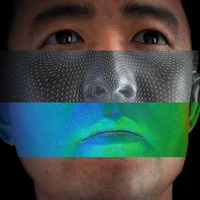
Although text-to-image (T2I) models have recently thrived as visual generative priors, their reliance on high-quality text-image pairs makes scaling up expensive. We argue that grasping the cross-modality alignment is not a necessity for a sound visual generative prior, whose focus should be on texture modeling. Such a philosophy inspires us to study image-to-image (I2I) generation, where models can learn from in-the-wild images in a self-supervised manner. We first develop a pure vision-based training framework, Lumos, and confirm the feasibility and the scalability of learning I2I models. We then find that, as an upstream task of T2I, our I2I model serves as a more foundational visual prior and achieves on-par or better performance than existing T2I models using only 1/10 text-image pairs for fine-tuning. We further demonstrate the superiority of I2I priors over T2I priors on some text-irrelevant visual generative tasks, like image-to-3D and image-to-video.
Aguvis: Unified Pure Vision Agents for Autonomous GUI Interaction
Graphical User Interfaces (GUIs) are critical to human-computer interaction, yet automating GUI tasks remains challenging due to the complexity and variability of visual environments. Existing approaches often rely on textual representations of GUIs, which introduce limitations in generalization, efficiency, and scalability. In this paper, we introduce Aguvis, a unified pure vision-based framework for autonomous GUI agents that operates across various platforms. Our approach leverages image-based observations, and grounding instructions in natural language to visual elements, and employs a consistent action space to ensure cross-platform generalization. To address the limitations of previous work, we integrate explicit planning and reasoning within the model, enhancing its ability to autonomously navigate and interact with complex digital environments. We construct a large-scale dataset of GUI agent trajectories, incorporating multimodal reasoning and grounding, and employ a two-stage training pipeline that first focuses on general GUI grounding, followed by planning and reasoning. Through comprehensive experiments, we demonstrate that Aguvis surpasses previous state-of-the-art methods in both offline and real-world online scenarios, achieving, to our knowledge, the first fully autonomous pure vision GUI agent capable of performing tasks independently without collaboration with external closed-source models. We open-sourced all datasets, models, and training recipes to facilitate future research at https://aguvis-project.github.io/.


Knowledge-enhanced Agents for Interactive Text Games
Communication via natural language is a crucial aspect of intelligence, and it requires computational models to learn and reason about world concepts, with varying levels of supervision. While there has been significant progress made on fully-supervised non-interactive tasks, such as question-answering and procedural text understanding, much of the community has turned to various sequential interactive tasks, as in semi-Markov text-based games, which have revealed limitations of existing approaches in terms of coherence, contextual awareness, and their ability to learn effectively from the environment. In this paper, we propose a framework for enabling improved functional grounding of agents in text-based games. Specifically, we consider two forms of domain knowledge that we inject into learning-based agents: memory of previous correct actions and affordances of relevant objects in the environment. Our framework supports three representative model classes: `pure' reinforcement learning (RL) agents, RL agents enhanced with knowledge graphs, and agents equipped with language models. Furthermore, we devise multiple injection strategies for the above domain knowledge types and agent architectures, including injection via knowledge graphs and augmentation of the existing input encoding strategies. We perform all experiments on the ScienceWorld text-based game environment, to illustrate the performance of various model configurations in challenging science-related instruction-following tasks. Our findings provide crucial insights on the development of effective natural language processing systems for interactive contexts.


PuLID: Pure and Lightning ID Customization via Contrastive Alignment
We propose Pure and Lightning ID customization (PuLID), a novel tuning-free ID customization method for text-to-image generation. By incorporating a Lightning T2I branch with a standard diffusion one, PuLID introduces both contrastive alignment loss and accurate ID loss, minimizing disruption to the original model and ensuring high ID fidelity. Experiments show that PuLID achieves superior performance in both ID fidelity and editability. Another attractive property of PuLID is that the image elements (e.g., background, lighting, composition, and style) before and after the ID insertion are kept as consistent as possible. Codes and models will be available at https://github.com/ToTheBeginning/PuLID


DoPTA: Improving Document Layout Analysis using Patch-Text Alignment
The advent of multimodal learning has brought a significant improvement in document AI. Documents are now treated as multimodal entities, incorporating both textual and visual information for downstream analysis. However, works in this space are often focused on the textual aspect, using the visual space as auxiliary information. While some works have explored pure vision based techniques for document image understanding, they require OCR identified text as input during inference, or do not align with text in their learning procedure. Therefore, we present a novel image-text alignment technique specially designed for leveraging the textual information in document images to improve performance on visual tasks. Our document encoder model DoPTA - trained with this technique demonstrates strong performance on a wide range of document image understanding tasks, without requiring OCR during inference. Combined with an auxiliary reconstruction objective, DoPTA consistently outperforms larger models, while using significantly lesser pre-training compute. DoPTA also sets new state-of-the art results on D4LA, and FUNSD, two challenging document visual analysis benchmarks.

GottBERT: a pure German Language Model
Lately, pre-trained language models advanced the field of natural language processing (NLP). The introduction of Bidirectional Encoders for Transformers (BERT) and its optimized version RoBERTa have had significant impact and increased the relevance of pre-trained models. First, research in this field mainly started on English data followed by models trained with multilingual text corpora. However, current research shows that multilingual models are inferior to monolingual models. Currently, no German single language RoBERTa model is yet published, which we introduce in this work (GottBERT). The German portion of the OSCAR data set was used as text corpus. In an evaluation we compare its performance on the two Named Entity Recognition (NER) tasks Conll 2003 and GermEval 2014 as well as on the text classification tasks GermEval 2018 (fine and coarse) and GNAD with existing German single language BERT models and two multilingual ones. GottBERT was pre-trained related to the original RoBERTa model using fairseq. All downstream tasks were trained using hyperparameter presets taken from the benchmark of German BERT. The experiments were setup utilizing FARM. Performance was measured by the F_{1} score. GottBERT was successfully pre-trained on a 256 core TPU pod using the RoBERTa BASE architecture. Even without extensive hyper-parameter optimization, in all NER and one text classification task, GottBERT already outperformed all other tested German and multilingual models. In order to support the German NLP field, we publish GottBERT under the AGPLv3 license.
GTA: Supervised-Guided Reinforcement Learning for Text Classification with Large Language Models
In natural language processing tasks, pure reinforcement learning (RL) fine-tuning methods often suffer from inefficient exploration and slow convergence; while supervised fine-tuning (SFT) methods, although efficient in training, have limited performance ceiling and less solid theoretical foundation compared to RL. To address efficiency-capability trade-off, we propose the Guess-Think-Answer (GTA) framework that combines the efficiency of SFT with the capability gains of RL in a unified training paradigm. GTA works by having the model first produce a provisional guess (optimized via cross-entropy loss), then reflect on this guess before generating the final answer, with RL rewards shaping both the final output and the format of the entire GTA structure. This hybrid approach achieves both faster convergence than pure RL and higher performance ceiling than pure SFT. To mitigate gradient conflicts between the two training signals, we employ loss masking and gradient constraints. Empirical results on four text classification benchmarks demonstrate that GTA substantially accelerates convergence while outperforming both standalone SFT and RL baselines.
TGAVC: Improving Autoencoder Voice Conversion with Text-Guided and Adversarial Training
Non-parallel many-to-many voice conversion remains an interesting but challenging speech processing task. Recently, AutoVC, a conditional autoencoder based method, achieved excellent conversion results by disentangling the speaker identity and the speech content using information-constraining bottlenecks. However, due to the pure autoencoder training method, it is difficult to evaluate the separation effect of content and speaker identity. In this paper, a novel voice conversion framework, named boldsymbol Text boldsymbol Guided boldsymbol AutoVC(TGAVC), is proposed to more effectively separate content and timbre from speech, where an expected content embedding produced based on the text transcriptions is designed to guide the extraction of voice content. In addition, the adversarial training is applied to eliminate the speaker identity information in the estimated content embedding extracted from speech. Under the guidance of the expected content embedding and the adversarial training, the content encoder is trained to extract speaker-independent content embedding from speech. Experiments on AIShell-3 dataset show that the proposed model outperforms AutoVC in terms of naturalness and similarity of converted speech.

Efficient Scaling of Diffusion Transformers for Text-to-Image Generation
We empirically study the scaling properties of various Diffusion Transformers (DiTs) for text-to-image generation by performing extensive and rigorous ablations, including training scaled DiTs ranging from 0.3B upto 8B parameters on datasets up to 600M images. We find that U-ViT, a pure self-attention based DiT model provides a simpler design and scales more effectively in comparison with cross-attention based DiT variants, which allows straightforward expansion for extra conditions and other modalities. We identify a 2.3B U-ViT model can get better performance than SDXL UNet and other DiT variants in controlled setting. On the data scaling side, we investigate how increasing dataset size and enhanced long caption improve the text-image alignment performance and the learning efficiency.
Text-Guided Video Masked Autoencoder
Recent video masked autoencoder (MAE) works have designed improved masking algorithms focused on saliency. These works leverage visual cues such as motion to mask the most salient regions. However, the robustness of such visual cues depends on how often input videos match underlying assumptions. On the other hand, natural language description is an information dense representation of video that implicitly captures saliency without requiring modality-specific assumptions, and has not been explored yet for video MAE. To this end, we introduce a novel text-guided masking algorithm (TGM) that masks the video regions with highest correspondence to paired captions. Without leveraging any explicit visual cues for saliency, our TGM is competitive with state-of-the-art masking algorithms such as motion-guided masking. To further benefit from the semantics of natural language for masked reconstruction, we next introduce a unified framework for joint MAE and masked video-text contrastive learning. We show that across existing masking algorithms, unifying MAE and masked video-text contrastive learning improves downstream performance compared to pure MAE on a variety of video recognition tasks, especially for linear probe. Within this unified framework, our TGM achieves the best relative performance on five action recognition and one egocentric datasets, highlighting the complementary nature of natural language for masked video modeling.

TOSS:High-quality Text-guided Novel View Synthesis from a Single Image
In this paper, we present TOSS, which introduces text to the task of novel view synthesis (NVS) from just a single RGB image. While Zero-1-to-3 has demonstrated impressive zero-shot open-set NVS capability, it treats NVS as a pure image-to-image translation problem. This approach suffers from the challengingly under-constrained nature of single-view NVS: the process lacks means of explicit user control and often results in implausible NVS generations. To address this limitation, TOSS uses text as high-level semantic information to constrain the NVS solution space. TOSS fine-tunes text-to-image Stable Diffusion pre-trained on large-scale text-image pairs and introduces modules specifically tailored to image and camera pose conditioning, as well as dedicated training for pose correctness and preservation of fine details. Comprehensive experiments are conducted with results showing that our proposed TOSS outperforms Zero-1-to-3 with more plausible, controllable and multiview-consistent NVS results. We further support these results with comprehensive ablations that underscore the effectiveness and potential of the introduced semantic guidance and architecture design.



Transformers are Short Text Classifiers: A Study of Inductive Short Text Classifiers on Benchmarks and Real-world Datasets
Short text classification is a crucial and challenging aspect of Natural Language Processing. For this reason, there are numerous highly specialized short text classifiers. However, in recent short text research, State of the Art (SOTA) methods for traditional text classification, particularly the pure use of Transformers, have been unexploited. In this work, we examine the performance of a variety of short text classifiers as well as the top performing traditional text classifier. We further investigate the effects on two new real-world short text datasets in an effort to address the issue of becoming overly dependent on benchmark datasets with a limited number of characteristics. Our experiments unambiguously demonstrate that Transformers achieve SOTA accuracy on short text classification tasks, raising the question of whether specialized short text techniques are necessary.

Multi-Granularity Prediction for Scene Text Recognition
Scene text recognition (STR) has been an active research topic in computer vision for years. To tackle this challenging problem, numerous innovative methods have been successively proposed and incorporating linguistic knowledge into STR models has recently become a prominent trend. In this work, we first draw inspiration from the recent progress in Vision Transformer (ViT) to construct a conceptually simple yet powerful vision STR model, which is built upon ViT and outperforms previous state-of-the-art models for scene text recognition, including both pure vision models and language-augmented methods. To integrate linguistic knowledge, we further propose a Multi-Granularity Prediction strategy to inject information from the language modality into the model in an implicit way, i.e. , subword representations (BPE and WordPiece) widely-used in NLP are introduced into the output space, in addition to the conventional character level representation, while no independent language model (LM) is adopted. The resultant algorithm (termed MGP-STR) is able to push the performance envelop of STR to an even higher level. Specifically, it achieves an average recognition accuracy of 93.35% on standard benchmarks. Code is available at https://github.com/AlibabaResearch/AdvancedLiterateMachinery/tree/main/OCR/MGP-STR.
ABINet++: Autonomous, Bidirectional and Iterative Language Modeling for Scene Text Spotting
Scene text spotting is of great importance to the computer vision community due to its wide variety of applications. Recent methods attempt to introduce linguistic knowledge for challenging recognition rather than pure visual classification. However, how to effectively model the linguistic rules in end-to-end deep networks remains a research challenge. In this paper, we argue that the limited capacity of language models comes from 1) implicit language modeling; 2) unidirectional feature representation; and 3) language model with noise input. Correspondingly, we propose an autonomous, bidirectional and iterative ABINet++ for scene text spotting. Firstly, the autonomous suggests enforcing explicitly language modeling by decoupling the recognizer into vision model and language model and blocking gradient flow between both models. Secondly, a novel bidirectional cloze network (BCN) as the language model is proposed based on bidirectional feature representation. Thirdly, we propose an execution manner of iterative correction for the language model which can effectively alleviate the impact of noise input. Finally, to polish ABINet++ in long text recognition, we propose to aggregate horizontal features by embedding Transformer units inside a U-Net, and design a position and content attention module which integrates character order and content to attend to character features precisely. ABINet++ achieves state-of-the-art performance on both scene text recognition and scene text spotting benchmarks, which consistently demonstrates the superiority of our method in various environments especially on low-quality images. Besides, extensive experiments including in English and Chinese also prove that, a text spotter that incorporates our language modeling method can significantly improve its performance both in accuracy and speed compared with commonly used attention-based recognizers.

ViTamin: Designing Scalable Vision Models in the Vision-Language Era
Recent breakthroughs in vision-language models (VLMs) start a new page in the vision community. The VLMs provide stronger and more generalizable feature embeddings compared to those from ImageNet-pretrained models, thanks to the training on the large-scale Internet image-text pairs. However, despite the amazing achievement from the VLMs, vanilla Vision Transformers (ViTs) remain the default choice for the image encoder. Although pure transformer proves its effectiveness in the text encoding area, it remains questionable whether it is also the case for image encoding, especially considering that various types of networks are proposed on the ImageNet benchmark, which, unfortunately, are rarely studied in VLMs. Due to small data/model scale, the original conclusions of model design on ImageNet can be limited and biased. In this paper, we aim at building an evaluation protocol of vision models in the vision-language era under the contrastive language-image pretraining (CLIP) framework. We provide a comprehensive way to benchmark different vision models, covering their zero-shot performance and scalability in both model and training data sizes. To this end, we introduce ViTamin, a new vision models tailored for VLMs. ViTamin-L significantly outperforms ViT-L by 2.0% ImageNet zero-shot accuracy, when using the same publicly available DataComp-1B dataset and the same OpenCLIP training scheme. ViTamin-L presents promising results on 60 diverse benchmarks, including classification, retrieval, open-vocabulary detection and segmentation, and large multi-modal models. When further scaling up the model size, our ViTamin-XL with only 436M parameters attains 82.9% ImageNet zero-shot accuracy, surpassing 82.0% achieved by EVA-E that has ten times more parameters (4.4B).

AlphaAlign: Incentivizing Safety Alignment with Extremely Simplified Reinforcement Learning
Large language models (LLMs), despite possessing latent safety understanding from their vast pretraining data, remain vulnerable to generating harmful content and exhibit issues such as over-refusal and utility degradation after safety alignment. Current safety alignment methods often result in superficial refusal shortcuts or rely on intensive supervision for reasoning-based approaches, failing to fully leverage the model's intrinsic safety self-awareness. We propose AlphaAlign, a simple yet effective pure reinforcement learning (RL) framework with verifiable safety reward designed to incentivize this latent safety awareness through proactive safety reasoning.} AlphaAlign employs a dual-reward system: a verifiable safety reward encourages correctly formatted and explicitly justified refusals for harmful queries while penalizing over-refusals, and a normalized helpfulness reward guides high-quality responses to benign inputs. This allows the model to develop proactive safety reasoning capabilities without depending on supervised safety-specific reasoning data. AlphaAlign demonstrates three key advantages: (1) Simplicity and efficiency, requiring only binary prompt safety labels and minimal RL steps for substantial improvements. (2) Breaking the safety-utility trade-off, by enhancing refusal of harmful content and reducing over-refusals, while simultaneously maintaining or even improving general task performance and robustness to unseen jailbreaks. (3) Deep alignment, fostering proactive safety reasoning that generates explicit safety rationales rather than relying on shallow refusal patterns.
EVA: Exploring the Limits of Masked Visual Representation Learning at Scale
We launch EVA, a vision-centric foundation model to explore the limits of visual representation at scale using only publicly accessible data. EVA is a vanilla ViT pre-trained to reconstruct the masked out image-text aligned vision features conditioned on visible image patches. Via this pretext task, we can efficiently scale up EVA to one billion parameters, and sets new records on a broad range of representative vision downstream tasks, such as image recognition, video action recognition, object detection, instance segmentation and semantic segmentation without heavy supervised training. Moreover, we observe quantitative changes in scaling EVA result in qualitative changes in transfer learning performance that are not present in other models. For instance, EVA takes a great leap in the challenging large vocabulary instance segmentation task: our model achieves almost the same state-of-the-art performance on LVISv1.0 dataset with over a thousand categories and COCO dataset with only eighty categories. Beyond a pure vision encoder, EVA can also serve as a vision-centric, multi-modal pivot to connect images and text. We find initializing the vision tower of a giant CLIP from EVA can greatly stabilize the training and outperform the training from scratch counterpart with much fewer samples and less compute, providing a new direction for scaling up and accelerating the costly training of multi-modal foundation models. To facilitate future research, we release all the code and models at https://github.com/baaivision/EVA.


SciReasoner: Laying the Scientific Reasoning Ground Across Disciplines
We present a scientific reasoning foundation model that aligns natural language with heterogeneous scientific representations. The model is pretrained on a 206B-token corpus spanning scientific text, pure sequences, and sequence-text pairs, then aligned via SFT on 40M instructions, annealed cold-start bootstrapping to elicit long-form chain-of-thought, and reinforcement learning with task-specific reward shaping, which instills deliberate scientific reasoning. It supports four capability families, covering up to 103 tasks across workflows: (i) faithful translation between text and scientific formats, (ii) text/knowledge extraction, (iii) property prediction, (iv) property classification, (v) unconditional and conditional sequence generation and design. Compared with specialist systems, our approach broadens instruction coverage, improves cross-domain generalization, and enhances fidelity. We detail data curation and training and show that cross-discipline learning strengthens transfer and downstream reliability. The model, instruct tuning datasets and the evaluation code are open-sourced at https://huggingface.co/SciReason and https://github.com/open-sciencelab/SciReason.





Image-and-Language Understanding from Pixels Only
Multimodal models are becoming increasingly effective, in part due to unified components, such as the Transformer architecture. However, multimodal models still often consist of many task- and modality-specific pieces and training procedures. For example, CLIP (Radford et al., 2021) trains independent text and image towers via a contrastive loss. We explore an additional unification: the use of a pure pixel-based model to perform image, text, and multimodal tasks. Our model is trained with contrastive loss alone, so we call it CLIP-Pixels Only (CLIPPO). CLIPPO uses a single encoder that processes both regular images and text rendered as images. CLIPPO performs image-based tasks such as retrieval and zero-shot image classification almost as well as CLIP, with half the number of parameters and no text-specific tower or embedding. When trained jointly via image-text contrastive learning and next-sentence contrastive learning, CLIPPO can perform well on natural language understanding tasks, without any word-level loss (language modelling or masked language modelling), outperforming pixel-based prior work. Surprisingly, CLIPPO can obtain good accuracy in visual question answering, simply by rendering the question and image together. Finally, we exploit the fact that CLIPPO does not require a tokenizer to show that it can achieve strong performance on multilingual multimodal retrieval without
MambaEye: A Size-Agnostic Visual Encoder with Causal Sequential Processing
Despite decades of progress, a truly input-size agnostic visual encoder-a fundamental characteristic of human vision-has remained elusive. We address this limitation by proposing MambaEye, a novel, causal sequential encoder that leverages the low complexity and causal-process based pure Mamba2 backbone. Unlike previous Mamba-based vision encoders that often employ bidirectional processing, our strictly unidirectional approach preserves the inherent causality of State Space Models, enabling the model to generate a prediction at any point in its input sequence. A core innovation is our use of relative move embedding, which encodes the spatial shift between consecutive patches, providing a strong inductive bias for translation invariance and making the model inherently adaptable to arbitrary image resolutions and scanning patterns. To achieve this, we introduce a novel diffusion-inspired loss function that provides dense, step-wise supervision, training the model to build confidence as it gathers more visual evidence. We demonstrate that MambaEye exhibits robust performance across a wide range of image resolutions, especially at higher resolutions such as 1536^2 on the ImageNet-1K classification task. This feat is achieved while maintaining linear time and memory complexity relative to the number of patches.
DSPNet: Dual-vision Scene Perception for Robust 3D Question Answering
3D Question Answering (3D QA) requires the model to comprehensively understand its situated 3D scene described by the text, then reason about its surrounding environment and answer a question under that situation. However, existing methods usually rely on global scene perception from pure 3D point clouds and overlook the importance of rich local texture details from multi-view images. Moreover, due to the inherent noise in camera poses and complex occlusions, there exists significant feature degradation and reduced feature robustness problems when aligning 3D point cloud with multi-view images. In this paper, we propose a Dual-vision Scene Perception Network (DSPNet), to comprehensively integrate multi-view and point cloud features to improve robustness in 3D QA. Our Text-guided Multi-view Fusion (TGMF) module prioritizes image views that closely match the semantic content of the text. To adaptively fuse back-projected multi-view images with point cloud features, we design the Adaptive Dual-vision Perception (ADVP) module, enhancing 3D scene comprehension. Additionally, our Multimodal Context-guided Reasoning (MCGR) module facilitates robust reasoning by integrating contextual information across visual and linguistic modalities. Experimental results on SQA3D and ScanQA datasets demonstrate the superiority of our DSPNet. Codes will be available at https://github.com/LZ-CH/DSPNet.
Echo-4o: Harnessing the Power of GPT-4o Synthetic Images for Improved Image Generation
Recently, GPT-4o has garnered significant attention for its strong performance in image generation, yet open-source models still lag behind. Several studies have explored distilling image data from GPT-4o to enhance open-source models, achieving notable progress. However, a key question remains: given that real-world image datasets already constitute a natural source of high-quality data, why should we use GPT-4o-generated synthetic data? In this work, we identify two key advantages of synthetic images. First, they can complement rare scenarios in real-world datasets, such as surreal fantasy or multi-reference image generation, which frequently occur in user queries. Second, they provide clean and controllable supervision. Real-world data often contains complex background noise and inherent misalignment between text descriptions and image content, whereas synthetic images offer pure backgrounds and long-tailed supervision signals, facilitating more accurate text-to-image alignment. Building on these insights, we introduce Echo-4o-Image, a 180K-scale synthetic dataset generated by GPT-4o, harnessing the power of synthetic image data to address blind spots in real-world coverage. Using this dataset, we fine-tune the unified multimodal generation baseline Bagel to obtain Echo-4o. In addition, we propose two new evaluation benchmarks for a more accurate and challenging assessment of image generation capabilities: GenEval++, which increases instruction complexity to mitigate score saturation, and Imagine-Bench, which focuses on evaluating both the understanding and generation of imaginative content. Echo-4o demonstrates strong performance across standard benchmarks. Moreover, applying Echo-4o-Image to other foundation models (e.g., OmniGen2, BLIP3-o) yields consistent performance gains across multiple metrics, highlighting the datasets strong transferability.


Localizing Active Objects from Egocentric Vision with Symbolic World Knowledge
The ability to actively ground task instructions from an egocentric view is crucial for AI agents to accomplish tasks or assist humans virtually. One important step towards this goal is to localize and track key active objects that undergo major state change as a consequence of human actions/interactions to the environment without being told exactly what/where to ground (e.g., localizing and tracking the `sponge` in video from the instruction "Dip the `sponge` into the bucket."). While existing works approach this problem from a pure vision perspective, we investigate to which extent the textual modality (i.e., task instructions) and their interaction with visual modality can be beneficial. Specifically, we propose to improve phrase grounding models' ability on localizing the active objects by: (1) learning the role of `objects undergoing change` and extracting them accurately from the instructions, (2) leveraging pre- and post-conditions of the objects during actions, and (3) recognizing the objects more robustly with descriptional knowledge. We leverage large language models (LLMs) to extract the aforementioned action-object knowledge, and design a per-object aggregation masking technique to effectively perform joint inference on object phrases and symbolic knowledge. We evaluate our framework on Ego4D and Epic-Kitchens datasets. Extensive experiments demonstrate the effectiveness of our proposed framework, which leads to>54% improvements in all standard metrics on the TREK-150-OPE-Det localization + tracking task, >7% improvements in all standard metrics on the TREK-150-OPE tracking task, and >3% improvements in average precision (AP) on the Ego4D SCOD task.
Magistral
We introduce Magistral, Mistral's first reasoning model and our own scalable reinforcement learning (RL) pipeline. Instead of relying on existing implementations and RL traces distilled from prior models, we follow a ground up approach, relying solely on our own models and infrastructure. Notably, we demonstrate a stack that enabled us to explore the limits of pure RL training of LLMs, present a simple method to force the reasoning language of the model, and show that RL on text data alone maintains most of the initial checkpoint's capabilities. We find that RL on text maintains or improves multimodal understanding, instruction following and function calling. We present Magistral Medium, trained for reasoning on top of Mistral Medium 3 with RL alone, and we open-source Magistral Small (Apache 2.0) which further includes cold-start data from Magistral Medium.

Frozen Transformers in Language Models Are Effective Visual Encoder Layers
This paper reveals that large language models (LLMs), despite being trained solely on textual data, are surprisingly strong encoders for purely visual tasks in the absence of language. Even more intriguingly, this can be achieved by a simple yet previously overlooked strategy -- employing a frozen transformer block from pre-trained LLMs as a constituent encoder layer to directly process visual tokens. Our work pushes the boundaries of leveraging LLMs for computer vision tasks, significantly departing from conventional practices that typically necessitate a multi-modal vision-language setup with associated language prompts, inputs, or outputs. We demonstrate that our approach consistently enhances performance across a diverse range of tasks, encompassing pure 2D and 3D visual recognition tasks (e.g., image and point cloud classification), temporal modeling tasks (e.g., action recognition), non-semantic tasks (e.g., motion forecasting), and multi-modal tasks (e.g., 2D/3D visual question answering and image-text retrieval). Such improvements are a general phenomenon, applicable to various types of LLMs (e.g., LLaMA and OPT) and different LLM transformer blocks. We additionally propose the information filtering hypothesis to explain the effectiveness of pre-trained LLMs in visual encoding -- the pre-trained LLM transformer blocks discern informative visual tokens and further amplify their effect. This hypothesis is empirically supported by the observation that the feature activation, after training with LLM transformer blocks, exhibits a stronger focus on relevant regions. We hope that our work inspires new perspectives on utilizing LLMs and deepening our understanding of their underlying mechanisms. Code is available at https://github.com/ziqipang/LM4VisualEncoding.

VL-Adapter: Parameter-Efficient Transfer Learning for Vision-and-Language Tasks
Recently, fine-tuning language models pre-trained on large text corpora have provided huge improvements on vision-and-language (V&L) tasks as well as on pure language tasks. However, fine-tuning the entire parameter set of pre-trained models becomes impractical since the model size is growing rapidly. Hence, in this paper, we introduce adapter-based parameter-efficient transfer learning techniques to V&L models such as VL-BART and VLT5. We evaluate our methods in a unified multi-task setup on both image-text and video-text benchmarks. For the image-text tasks, we use four diverse V&L datasets: VQAv2, GQA, NLVR2 , and MSCOCO image captioning. For video-text tasks, we use TVQA, How2QA, TVC, and YC2C. With careful training and thorough experiments, we benchmark three popular adapter-based methods (Adapter, Hyperformer, Compacter) against the standard full fine-tuning and the recently proposed prompt-tuning approach. We also enhance the efficiency and performance of adapters by sharing their weights to attain knowledge across tasks. Our results demonstrate that training the adapter with the weight-sharing technique (4.18% of total parameters for image-text tasks and 3.39% for video-text tasks) can match the performance of fine-tuning the entire model. Lastly, we present a comprehensive analysis including the combination of adapter and task-specific prompts and the impact of V&L pre-training on adapters. Our code is available at: https://github.com/ylsung/VL_adapter.


CityRiSE: Reasoning Urban Socio-Economic Status in Vision-Language Models via Reinforcement Learning
Harnessing publicly available, large-scale web data, such as street view and satellite imagery, urban socio-economic sensing is of paramount importance for achieving global sustainable development goals. With the emergence of Large Vision-Language Models (LVLMs), new opportunities have arisen to solve this task by treating it as a multi-modal perception and understanding problem. However, recent studies reveal that LVLMs still struggle with accurate and interpretable socio-economic predictions from visual data. To address these limitations and maximize the potential of LVLMs, we introduce CityRiSE, a novel framework for Reasoning urban Socio-Economic status in LVLMs through pure reinforcement learning (RL). With carefully curated multi-modal data and verifiable reward design, our approach guides the LVLM to focus on semantically meaningful visual cues, enabling structured and goal-oriented reasoning for generalist socio-economic status prediction. Experiments demonstrate that CityRiSE with emergent reasoning process significantly outperforms existing baselines, improving both prediction accuracy and generalization across diverse urban contexts, particularly for prediction on unseen cities and unseen indicators. This work highlights the promise of combining RL and LVLMs for interpretable and generalist urban socio-economic sensing.

Ming-Lite-Uni: Advancements in Unified Architecture for Natural Multimodal Interaction
We introduce Ming-Lite-Uni, an open-source multimodal framework featuring a newly designed unified visual generator and a native multimodal autoregressive model tailored for unifying vision and language. Specifically, this project provides an open-source implementation of the integrated MetaQueries and M2-omni framework, while introducing the novel multi-scale learnable tokens and multi-scale representation alignment strategy. By leveraging a fixed MLLM and a learnable diffusion model, Ming-Lite-Uni enables native multimodal AR models to perform both text-to-image generation and instruction based image editing tasks, expanding their capabilities beyond pure visual understanding. Our experimental results demonstrate the strong performance of Ming-Lite-Uni and illustrate the impressive fluid nature of its interactive process. All code and model weights are open-sourced to foster further exploration within the community. Notably, this work aligns with concurrent multimodal AI milestones - such as ChatGPT-4o with native image generation updated in March 25, 2025 - underscoring the broader significance of unified models like Ming-Lite-Uni on the path toward AGI. Ming-Lite-Uni is in alpha stage and will soon be further refined.


GroundVLP: Harnessing Zero-shot Visual Grounding from Vision-Language Pre-training and Open-Vocabulary Object Detection
Visual grounding, a crucial vision-language task involving the understanding of the visual context based on the query expression, necessitates the model to capture the interactions between objects, as well as various spatial and attribute information. However, the annotation data of visual grounding task is limited due to its time-consuming and labor-intensive annotation process, resulting in the trained models being constrained from generalizing its capability to a broader domain. To address this challenge, we propose GroundVLP, a simple yet effective zero-shot method that harnesses visual grounding ability from the existing models trained from image-text pairs and pure object detection data, both of which are more conveniently obtainable and offer a broader domain compared to visual grounding annotation data. GroundVLP proposes a fusion mechanism that combines the heatmap from GradCAM and the object proposals of open-vocabulary detectors. We demonstrate that the proposed method significantly outperforms other zero-shot methods on RefCOCO/+/g datasets, surpassing prior zero-shot state-of-the-art by approximately 28\% on the test split of RefCOCO and RefCOCO+. Furthermore, GroundVLP performs comparably to or even better than some non-VLP-based supervised models on the Flickr30k entities dataset. Our code is available at https://github.com/om-ai-lab/GroundVLP.

Growing Visual Generative Capacity for Pre-Trained MLLMs
Multimodal large language models (MLLMs) extend the success of language models to visual understanding, and recent efforts have sought to build unified MLLMs that support both understanding and generation. However, constructing such models remains challenging: hybrid approaches combine continuous embeddings with diffusion or flow-based objectives, producing high-quality images but breaking the autoregressive paradigm, while pure autoregressive approaches unify text and image prediction over discrete visual tokens but often face trade-offs between semantic alignment and pixel-level fidelity. In this work, we present Bridge, a pure autoregressive unified MLLM that augments pre-trained visual understanding models with generative ability through a Mixture-of-Transformers architecture, enabling both image understanding and generation within a single next-token prediction framework. To further improve visual generation fidelity, we propose a semantic-to-pixel discrete representation that integrates compact semantic tokens with fine-grained pixel tokens, achieving strong language alignment and precise description of visual details with only a 7.9% increase in sequence length. Extensive experiments across diverse multimodal benchmarks demonstrate that Bridge achieves competitive or superior results in both understanding and generation benchmarks, while requiring less training data and reduced training time compared to prior unified MLLMs.
MagicMix: Semantic Mixing with Diffusion Models
Have you ever imagined what a corgi-alike coffee machine or a tiger-alike rabbit would look like? In this work, we attempt to answer these questions by exploring a new task called semantic mixing, aiming at blending two different semantics to create a new concept (e.g., corgi + coffee machine -- > corgi-alike coffee machine). Unlike style transfer, where an image is stylized according to the reference style without changing the image content, semantic blending mixes two different concepts in a semantic manner to synthesize a novel concept while preserving the spatial layout and geometry. To this end, we present MagicMix, a simple yet effective solution based on pre-trained text-conditioned diffusion models. Motivated by the progressive generation property of diffusion models where layout/shape emerges at early denoising steps while semantically meaningful details appear at later steps during the denoising process, our method first obtains a coarse layout (either by corrupting an image or denoising from a pure Gaussian noise given a text prompt), followed by injection of conditional prompt for semantic mixing. Our method does not require any spatial mask or re-training, yet is able to synthesize novel objects with high fidelity. To improve the mixing quality, we further devise two simple strategies to provide better control and flexibility over the synthesized content. With our method, we present our results over diverse downstream applications, including semantic style transfer, novel object synthesis, breed mixing, and concept removal, demonstrating the flexibility of our method. More results can be found on the project page https://magicmix.github.io


The SAM2-to-SAM3 Gap in the Segment Anything Model Family: Why Prompt-Based Expertise Fails in Concept-Driven Image Segmentation
This paper investigates the fundamental discontinuity between the latest two Segment Anything Models: SAM2 and SAM3. We explain why the expertise in prompt-based segmentation of SAM2 does not transfer to the multimodal concept-driven paradigm of SAM3. SAM2 operates through spatial prompts points, boxes, and masks yielding purely geometric and temporal segmentation. In contrast, SAM3 introduces a unified vision-language architecture capable of open-vocabulary reasoning, semantic grounding, contrastive alignment, and exemplar-based concept understanding. We structure this analysis through five core components: (1) a Conceptual Break Between Prompt-Based and Concept-Based Segmentation, contrasting spatial prompt semantics of SAM2 with multimodal fusion and text-conditioned mask generation of SAM3; (2) Architectural Divergence, detailing pure vision-temporal design of SAM2 versus integration of vision-language encoders, geometry and exemplar encoders, fusion modules, DETR-style decoders, object queries, and ambiguity-handling via Mixture-of-Experts in SAM3; (3) Dataset and Annotation Differences, contrasting SA-V video masks with multimodal concept-annotated corpora of SAM3; (4) Training and Hyperparameter Distinctions, showing why SAM2 optimization knowledge does not apply to SAM3; and (5) Evaluation, Metrics, and Failure Modes, outlining the transition from geometric IoU metrics to semantic, open-vocabulary evaluation. Together, these analyses establish SAM3 as a new class of segmentation foundation model and chart future directions for the emerging concept-driven segmentation era.

3D-aware Image Generation and Editing with Multi-modal Conditions
3D-consistent image generation from a single 2D semantic label is an important and challenging research topic in computer graphics and computer vision. Although some related works have made great progress in this field, most of the existing methods suffer from poor disentanglement performance of shape and appearance, and lack multi-modal control. In this paper, we propose a novel end-to-end 3D-aware image generation and editing model incorporating multiple types of conditional inputs, including pure noise, text and reference image. On the one hand, we dive into the latent space of 3D Generative Adversarial Networks (GANs) and propose a novel disentanglement strategy to separate appearance features from shape features during the generation process. On the other hand, we propose a unified framework for flexible image generation and editing tasks with multi-modal conditions. Our method can generate diverse images with distinct noises, edit the attribute through a text description and conduct style transfer by giving a reference RGB image. Extensive experiments demonstrate that the proposed method outperforms alternative approaches both qualitatively and quantitatively on image generation and editing.
Video-RAG: Visually-aligned Retrieval-Augmented Long Video Comprehension
Existing large video-language models (LVLMs) struggle to comprehend long videos correctly due to limited context. To address this problem, fine-tuning long-context LVLMs and employing GPT-based agents have emerged as promising solutions. However, fine-tuning LVLMs would require extensive high-quality data and substantial GPU resources, while GPT-based agents would rely on proprietary models (e.g., GPT-4o). In this paper, we propose Video Retrieval-Augmented Generation (Video-RAG), a training-free and cost-effective pipeline that employs visually-aligned auxiliary texts to help facilitate cross-modality alignment while providing additional information beyond the visual content. Specifically, we leverage open-source external tools to extract visually-aligned information from pure video data (e.g., audio, optical character, and object detection), and incorporate the extracted information into an existing LVLM as auxiliary texts, alongside video frames and queries, in a plug-and-play manner. Our Video-RAG offers several key advantages: (i) lightweight with low computing overhead due to single-turn retrieval; (ii) easy implementation and compatibility with any LVLM; and (iii) significant, consistent performance gains across long video understanding benchmarks, including Video-MME, MLVU, and LongVideoBench. Notably, our model demonstrates superior performance over proprietary models like Gemini-1.5-Pro and GPT-4o when utilized with a 72B model.