Get trending papers in your email inbox once a day!
Get trending papers in your email inbox!
Subscribe
XLM-V: Overcoming the Vocabulary Bottleneck in Multilingual Masked Language Models
Large multilingual language models typically rely on a single vocabulary shared across 100+ languages. As these models have increased in parameter count and depth, vocabulary size has remained largely unchanged. This vocabulary bottleneck limits the representational capabilities of multilingual models like XLM-R. In this paper, we introduce a new approach for scaling to very large multilingual vocabularies by de-emphasizing token sharing between languages with little lexical overlap and assigning vocabulary capacity to achieve sufficient coverage for each individual language. Tokenizations using our vocabulary are typically more semantically meaningful and shorter compared to XLM-R. Leveraging this improved vocabulary, we train XLM-V, a multilingual language model with a one million token vocabulary. XLM-V outperforms XLM-R on every task we tested on ranging from natural language inference (XNLI), question answering (MLQA, XQuAD, TyDiQA), and named entity recognition (WikiAnn) to low-resource tasks (Americas NLI, MasakhaNER).


An Unforgeable Publicly Verifiable Watermark for Large Language Models
Recently, text watermarking algorithms for large language models (LLMs) have been proposed to mitigate the potential harms of text generated by LLMs, including fake news and copyright issues. However, current watermark detection algorithms require the secret key used in the watermark generation process, making them susceptible to security breaches and counterfeiting during public detection. To address this limitation, we propose an unforgeable publicly verifiable watermark algorithm that uses two different neural networks for watermark generation and detection, instead of using the same key at both stages. Meanwhile, the token embedding parameters are shared between the generation and detection networks, which makes the detection network achieve a high accuracy very efficiently. Experiments demonstrate that our algorithm attains high detection accuracy and computational efficiency through neural networks with a minimized number of parameters. Subsequent analysis confirms the high complexity involved in forging the watermark from the detection network. Our code and data are available at https://github.com/THU-BPM/unforgeable_watermark{https://github.com/THU-BPM/unforgeable\_watermark}.
SemShareKV: Efficient KVCache Sharing for Semantically Similar Prompts via Token-Level LSH Matching
As large language models (LLMs) continue to scale, the memory footprint of key-value (KV) caches during inference has become a significant bottleneck. Existing approaches primarily focus on compressing KV caches within a single prompt or reusing shared prefixes or frequently ocurred text segments across prompts. However, such strategies are limited in scenarios where prompts are semantically similar but lexically different, which frequently occurs in tasks such as multi-document summarization and conversational agents. We propose SemShareKV, a KV cache sharing and compression framework that accelerates LLM inference by reusing KVCache in semantically similar prompts. Instead of relying on exact token matches, SemShareKV applies fuzzy token matching using locality-sensitive hashing (LSH) on token embeddings and incorporates Rotary Position Embedding (RoPE) to better preserve positional information. By selectively reusing relevant key-value pairs from a reference prompt's cache, SemShareKV reduces redundant computation while maintaining output quality. Experiments on diverse summarization datasets show up to 6.25times speedup and 42\% lower GPU memory usage with 5k tokens input, with negligible quality degradation. These results highlight the potential of semantic-aware cache sharing for efficient LLM inference.
BatchLLM: Optimizing Large Batched LLM Inference with Global Prefix Sharing and Throughput-oriented Token Batching
Many LLM tasks are performed in large batches or even offline, and the performance indictor for which is throughput. These tasks usually show the characteristic of prefix sharing, where different prompt input can partially show the common prefix. However, the existing LLM inference engines tend to optimize the streaming requests and show limitations of supporting the large batched tasks with the prefix sharing characteristic. The existing solutions use the LRU-based cache to reuse the KV context of common prefix. The KV context that is about to be reused may prematurely be evicted with the implicit cache management. Even if not evicted, the lifetime of the shared KV context is extended since requests sharing the same context are not scheduled together, resulting in larger memory usage. These streaming oriented systems schedule the requests in the first-come-first-serve or similar order. As a result, the requests with larger ratio of decoding steps may be scheduled too late to be able to mix with the prefill chunks to increase the hardware utilization. Besides, the token and request number based batching can limit the size of token-batch, which keeps the GPU from saturating for the iterations dominated by decoding tokens. We propose BatchLLM to address the above problems. BatchLLM explicitly identifies the common prefixes globally. The requests sharing the same prefix will be scheduled together to reuse the KV context the best, which also shrinks the lifetime of common KV memory. BatchLLM reorders the requests and schedules the requests with larger ratio of decoding first to better mix the decoding tokens with the latter prefill chunks and applies memory-centric token batching to enlarge the token-batch sizes, which helps to increase the GPU utilization. Extensive evaluation shows that BatchLLM outperforms vLLM by 1.1x to 2x on a set of microbenchmarks and two typical industry workloads.


Mixture-of-Recursions: Learning Dynamic Recursive Depths for Adaptive Token-Level Computation
Scaling language models unlocks impressive capabilities, but the accompanying computational and memory demands make both training and deployment expensive. Existing efficiency efforts typically target either parameter sharing or adaptive computation, leaving open the question of how to attain both simultaneously. We introduce Mixture-of-Recursions (MoR), a unified framework that combines the two axes of efficiency inside a single Recursive Transformer. MoR reuses a shared stack of layers across recursion steps to achieve parameter efficiency, while lightweight routers enable adaptive token-level thinking by dynamically assigning different recursion depths to individual tokens. This allows MoR to focus quadratic attention computation only among tokens still active at a given recursion depth, further improving memory access efficiency by selectively caching only their key-value pairs. Beyond these core mechanisms, we also propose a KV sharing variant that reuses KV pairs from the first recursion, specifically designed to decrease prefill latency and memory footprint. Across model scales ranging from 135M to 1.7B parameters, MoR forms a new Pareto frontier: at equal training FLOPs and smaller model sizes, it significantly lowers validation perplexity and improves few-shot accuracy, while delivering higher throughput compared with vanilla and existing recursive baselines. These gains demonstrate that MoR is an effective path towards large-model quality without incurring large-model cost.



Frame Representation Hypothesis: Multi-Token LLM Interpretability and Concept-Guided Text Generation
Interpretability is a key challenge in fostering trust for Large Language Models (LLMs), which stems from the complexity of extracting reasoning from model's parameters. We present the Frame Representation Hypothesis, a theoretically robust framework grounded in the Linear Representation Hypothesis (LRH) to interpret and control LLMs by modeling multi-token words. Prior research explored LRH to connect LLM representations with linguistic concepts, but was limited to single token analysis. As most words are composed of several tokens, we extend LRH to multi-token words, thereby enabling usage on any textual data with thousands of concepts. To this end, we propose words can be interpreted as frames, ordered sequences of vectors that better capture token-word relationships. Then, concepts can be represented as the average of word frames sharing a common concept. We showcase these tools through Top-k Concept-Guided Decoding, which can intuitively steer text generation using concepts of choice. We verify said ideas on Llama 3.1, Gemma 2, and Phi 3 families, demonstrating gender and language biases, exposing harmful content, but also potential to remediate them, leading to safer and more transparent LLMs. Code is available at https://github.com/phvv-me/frame-representation-hypothesis.git

Key-Augmented Neural Triggers for Knowledge Sharing
Repository-level code comprehension and knowledge sharing remain core challenges in software engineering. Large language models (LLMs) have shown promise by generating explanations of program structure and logic. However, these approaches still face limitations: First, relevant knowledge is distributed across multiple files within a repository, aka semantic fragmentation. Second, retrieval inefficiency and attention saturation degrade performance in RAG pipelines, where long, unaligned contexts overwhelm attention. Third, repository specific training data is scarce and often outdated. Finally, proprietary LLMs hinder industrial adoption due to privacy and deployment constraints. To address these issues, we propose Key-Augmented Neural Triggers (KANT), a novel approach that embeds knowledge anchors into both training and inference. Unlike prior methods, KANT enables internal access to repository specific knowledge, reducing fragmentation and grounding inference in localized context. Moreover, we synthesize specialized data directly from code. At inference, knowledge anchors replace verbose context, reducing token overhead and latency while supporting efficient, on premise deployment. We evaluate KANT via: a qualitative human evaluation of the synthesized dataset's intent coverage and quality across five dimensions; compare against SOTA baselines across five qualitative dimensions and inference speed; and replication across different LLMs to assess generalizability. Results show that the synthetic training data aligned with information-seeking needs. KANT achieved over 60% preference from human annotators and a LocalStack expert (preferring 79% of cases). Also, KANT reduced inference latency by up to 85% across all models. Overall, it is well-suited for scalable, low-latency, on-premise deployments, providing a strong foundation for code comprehension.
LLM-Mesh: Enabling Elastic Sharing for Serverless LLM Inference
The rise of LLMs has driven demand for private serverless deployments, characterized by moderate-scale models and infrequent requests. While existing solutions follow exclusive GPU deployment, we take a step back to explore modern platforms and find that: Emerging CPU architectures with built-in accelerators are capable of serving LLMs but remain underutilized, and both CPUs and GPUs can accommodate multiple LLMs simultaneously. We propose LLM-Mesh, a serverless inference scheme for small-to-mid-sized LLMs that enables elastic sharing across heterogeneous hardware. LLM-Mesh tackles three fundamental challenges: (1) precise, fine-grained compute resource allocation at token-level to handle fluctuating computational demands; (2) a coordinated and forward-looking memory scaling mechanism to detect out-of-memory hazards and reduce operational overhead; and (3) a dual approach that reduces resource fragmentation through proactive preemption and reactive bin-packing. Experimental results on 4 32-core CPUs and 4 A100 GPUs show that LLM-Meshimproves service capacity by 44% - 63% through sharing, while further leveraging CPUs boosts this to 91% - 159%.
DeBERTaV3: Improving DeBERTa using ELECTRA-Style Pre-Training with Gradient-Disentangled Embedding Sharing
This paper presents a new pre-trained language model, DeBERTaV3, which improves the original DeBERTa model by replacing mask language modeling (MLM) with replaced token detection (RTD), a more sample-efficient pre-training task. Our analysis shows that vanilla embedding sharing in ELECTRA hurts training efficiency and model performance. This is because the training losses of the discriminator and the generator pull token embeddings in different directions, creating the "tug-of-war" dynamics. We thus propose a new gradient-disentangled embedding sharing method that avoids the tug-of-war dynamics, improving both training efficiency and the quality of the pre-trained model. We have pre-trained DeBERTaV3 using the same settings as DeBERTa to demonstrate its exceptional performance on a wide range of downstream natural language understanding (NLU) tasks. Taking the GLUE benchmark with eight tasks as an example, the DeBERTaV3 Large model achieves a 91.37% average score, which is 1.37% over DeBERTa and 1.91% over ELECTRA, setting a new state-of-the-art (SOTA) among the models with a similar structure. Furthermore, we have pre-trained a multi-lingual model mDeBERTa and observed a larger improvement over strong baselines compared to English models. For example, the mDeBERTa Base achieves a 79.8% zero-shot cross-lingual accuracy on XNLI and a 3.6% improvement over XLM-R Base, creating a new SOTA on this benchmark. We have made our pre-trained models and inference code publicly available at https://github.com/microsoft/DeBERTa.

SeaS: Few-shot Industrial Anomaly Image Generation with Separation and Sharing Fine-tuning
We introduce SeaS, a unified industrial generative model for automatically creating diverse anomalies, authentic normal products, and precise anomaly masks. While extensive research exists, most efforts either focus on specific tasks, i.e., anomalies or normal products only, or require separate models for each anomaly type. Consequently, prior methods either offer limited generative capability or depend on a vast array of anomaly-specific models. We demonstrate that U-Net's differentiated learning ability captures the distinct visual traits of slightly-varied normal products and diverse anomalies, enabling us to construct a unified model for all tasks. Specifically, we first introduce an Unbalanced Abnormal (UA) Text Prompt, comprising one normal token and multiple anomaly tokens. More importantly, our Decoupled Anomaly Alignment (DA) loss decouples anomaly attributes and binds them to distinct anomaly tokens of UA, enabling SeaS to create unseen anomalies by recombining these attributes. Furthermore, our Normal-image Alignment (NA) loss aligns the normal token to normal patterns, making generated normal products globally consistent and locally varied. Finally, SeaS produces accurate anomaly masks by fusing discriminative U-Net features with high-resolution VAE features. SeaS sets a new benchmark for industrial generation, significantly enhancing downstream applications, with average improvements of +8.66% pixel-level AP for synthesis-based AD approaches, +1.10% image-level AP for unsupervised AD methods, and +12.79% IoU for supervised segmentation models. Code is available at https://github.com/HUST-SLOW/SeaS{https://github.com/HUST-SLOW/SeaS}.

DualToken-ViT: Position-aware Efficient Vision Transformer with Dual Token Fusion
Self-attention-based vision transformers (ViTs) have emerged as a highly competitive architecture in computer vision. Unlike convolutional neural networks (CNNs), ViTs are capable of global information sharing. With the development of various structures of ViTs, ViTs are increasingly advantageous for many vision tasks. However, the quadratic complexity of self-attention renders ViTs computationally intensive, and their lack of inductive biases of locality and translation equivariance demands larger model sizes compared to CNNs to effectively learn visual features. In this paper, we propose a light-weight and efficient vision transformer model called DualToken-ViT that leverages the advantages of CNNs and ViTs. DualToken-ViT effectively fuses the token with local information obtained by convolution-based structure and the token with global information obtained by self-attention-based structure to achieve an efficient attention structure. In addition, we use position-aware global tokens throughout all stages to enrich the global information, which further strengthening the effect of DualToken-ViT. Position-aware global tokens also contain the position information of the image, which makes our model better for vision tasks. We conducted extensive experiments on image classification, object detection and semantic segmentation tasks to demonstrate the effectiveness of DualToken-ViT. On the ImageNet-1K dataset, our models of different scales achieve accuracies of 75.4% and 79.4% with only 0.5G and 1.0G FLOPs, respectively, and our model with 1.0G FLOPs outperforms LightViT-T using global tokens by 0.7%.



TPLinker: Single-stage Joint Extraction of Entities and Relations Through Token Pair Linking
Extracting entities and relations from unstructured text has attracted increasing attention in recent years but remains challenging, due to the intrinsic difficulty in identifying overlapping relations with shared entities. Prior works show that joint learning can result in a noticeable performance gain. However, they usually involve sequential interrelated steps and suffer from the problem of exposure bias. At training time, they predict with the ground truth conditions while at inference it has to make extraction from scratch. This discrepancy leads to error accumulation. To mitigate the issue, we propose in this paper a one-stage joint extraction model, namely, TPLinker, which is capable of discovering overlapping relations sharing one or both entities while immune from the exposure bias. TPLinker formulates joint extraction as a token pair linking problem and introduces a novel handshaking tagging scheme that aligns the boundary tokens of entity pairs under each relation type. Experiment results show that TPLinker performs significantly better on overlapping and multiple relation extraction, and achieves state-of-the-art performance on two public datasets.

LookupViT: Compressing visual information to a limited number of tokens
Vision Transformers (ViT) have emerged as the de-facto choice for numerous industry grade vision solutions. But their inference cost can be prohibitive for many settings, as they compute self-attention in each layer which suffers from quadratic computational complexity in the number of tokens. On the other hand, spatial information in images and spatio-temporal information in videos is usually sparse and redundant. In this work, we introduce LookupViT, that aims to exploit this information sparsity to reduce ViT inference cost. LookupViT provides a novel general purpose vision transformer block that operates by compressing information from higher resolution tokens to a fixed number of tokens. These few compressed tokens undergo meticulous processing, while the higher-resolution tokens are passed through computationally cheaper layers. Information sharing between these two token sets is enabled through a bidirectional cross-attention mechanism. The approach offers multiple advantages - (a) easy to implement on standard ML accelerators (GPUs/TPUs) via standard high-level operators, (b) applicable to standard ViT and its variants, thus generalizes to various tasks, (c) can handle different tokenization and attention approaches. LookupViT also offers flexibility for the compressed tokens, enabling performance-computation trade-offs in a single trained model. We show LookupViT's effectiveness on multiple domains - (a) for image-classification (ImageNet-1K and ImageNet-21K), (b) video classification (Kinetics400 and Something-Something V2), (c) image captioning (COCO-Captions) with a frozen encoder. LookupViT provides 2times reduction in FLOPs while upholding or improving accuracy across these domains. In addition, LookupViT also demonstrates out-of-the-box robustness and generalization on image classification (ImageNet-C,R,A,O), improving by up to 4% over ViT.
Test-Time Scaling with Reflective Generative Model
We introduce our first reflective generative model MetaStone-S1, which obtains OpenAI o3's performance via the self-supervised process reward model (SPRM). Through sharing the backbone network and using task-specific heads for next token prediction and process scoring respectively, SPRM successfully integrates the policy model and process reward model(PRM) into a unified interface without extra process annotation, reducing over 99% PRM parameters for efficient reasoning. Equipped with SPRM, MetaStone-S1 is naturally suitable for test time scaling (TTS), and we provide three reasoning effort modes (low, medium, and high), based on the controllable thinking length. Moreover, we empirically establish a scaling law that reveals the relationship between total thinking computation and TTS performance. Experiments demonstrate that our MetaStone-S1 achieves comparable performance to OpenAI-o3-mini's series with only 32B parameter size. To support the research community, we have open-sourced MetaStone-S1 at https://github.com/MetaStone-AI/MetaStone-S1.


Bringing Masked Autoencoders Explicit Contrastive Properties for Point Cloud Self-Supervised Learning
Contrastive learning (CL) for Vision Transformers (ViTs) in image domains has achieved performance comparable to CL for traditional convolutional backbones. However, in 3D point cloud pretraining with ViTs, masked autoencoder (MAE) modeling remains dominant. This raises the question: Can we take the best of both worlds? To answer this question, we first empirically validate that integrating MAE-based point cloud pre-training with the standard contrastive learning paradigm, even with meticulous design, can lead to a decrease in performance. To address this limitation, we reintroduce CL into the MAE-based point cloud pre-training paradigm by leveraging the inherent contrastive properties of MAE. Specifically, rather than relying on extensive data augmentation as commonly used in the image domain, we randomly mask the input tokens twice to generate contrastive input pairs. Subsequently, a weight-sharing encoder and two identically structured decoders are utilized to perform masked token reconstruction. Additionally, we propose that for an input token masked by both masks simultaneously, the reconstructed features should be as similar as possible. This naturally establishes an explicit contrastive constraint within the generative MAE-based pre-training paradigm, resulting in our proposed method, Point-CMAE. Consequently, Point-CMAE effectively enhances the representation quality and transfer performance compared to its MAE counterpart. Experimental evaluations across various downstream applications, including classification, part segmentation, and few-shot learning, demonstrate the efficacy of our framework in surpassing state-of-the-art techniques under standard ViTs and single-modal settings. The source code and trained models are available at: https://github.com/Amazingren/Point-CMAE.
Compressing KV Cache for Long-Context LLM Inference with Inter-Layer Attention Similarity
The increasing context window size in Large Language Models (LLMs), such as the GPT and LLaMA series, has improved their ability to tackle complex, long-text tasks, but at the cost of inference efficiency, particularly regarding memory and computational complexity. Existing methods, including selective token retention and window-based attention, improve efficiency but risk discarding important tokens needed for future text generation. In this paper, we propose an approach that enhances LLM efficiency without token loss by reducing the memory and computational load of less important tokens, rather than discarding them.We address two challenges: 1) investigating the distribution of important tokens in the context, discovering recent tokens are more important than distant tokens in context, and 2) optimizing resources for distant tokens by sharing attention scores across layers. The experiments show that our method saves 35% KV cache without compromising the performance.
ChA-MAEViT: Unifying Channel-Aware Masked Autoencoders and Multi-Channel Vision Transformers for Improved Cross-Channel Learning
Prior work using Masked Autoencoders (MAEs) typically relies on random patch masking based on the assumption that images have significant redundancies across different channels, allowing for the reconstruction of masked content using cross-channel correlations. However, this assumption does not hold in Multi-Channel Imaging (MCI), where channels may provide complementary information with minimal feature overlap. Thus, these MAEs primarily learn local structures within individual channels from patch reconstruction, failing to fully leverage cross-channel interactions and limiting their MCI effectiveness. In this paper, we present ChA-MAEViT, an MAE-based method that enhances feature learning across MCI channels via four key strategies: (1) dynamic channel-patch masking, which compels the model to reconstruct missing channels in addition to masked patches, thereby enhancing cross-channel dependencies and improving robustness to varying channel configurations; (2) memory tokens, which serve as long-term memory aids to promote information sharing across channels, addressing the challenges of reconstructing structurally diverse channels; (3) hybrid token fusion module, which merges fine-grained patch tokens with a global class token to capture richer representations; and (4) Channel-Aware Decoder, a lightweight decoder utilizes channel tokens to effectively reconstruct image patches. Experiments on satellite and microscopy datasets, CHAMMI, JUMP-CP, and So2Sat, show that ChA-MAEViT significantly outperforms state-of-the-art MCI-ViTs by 3.0-21.5%, highlighting the importance of cross-channel interactions in MCI. Our code is publicly available at https://github.com/chaudatascience/cha_mae_vit.

Head-wise Shareable Attention for Large Language Models
Large Language Models (LLMs) suffer from huge number of parameters, which restricts their deployment on edge devices. Weight sharing is one promising solution that encourages weight reuse, effectively reducing memory usage with less performance drop. However, current weight sharing techniques primarily focus on small-scale models like BERT and employ coarse-grained sharing rules, e.g., layer-wise. This becomes limiting given the prevalence of LLMs and sharing an entire layer or block obviously diminishes the flexibility of weight sharing. In this paper, we present a perspective on $textbf{head-wise shareable attention for large language models}. We further propose two memory-efficient methods that share parameters across attention heads, with a specific focus on LLMs. Both of them use the same dynamic strategy to select the shared weight matrices. The first method directly reuses the pre-trained weights without retraining, denoted as DirectShare. The second method first post-trains with constraint on weight matrix similarity and then shares, denoted as PostShare$. Experimental results reveal our head-wise shared models still maintain satisfactory capabilities, demonstrating the feasibility of fine-grained weight sharing applied to LLMs.
OneTrans: Unified Feature Interaction and Sequence Modeling with One Transformer in Industrial Recommender
In recommendation systems, scaling up feature-interaction modules (e.g., Wukong, RankMixer) or user-behavior sequence modules (e.g., LONGER) has achieved notable success. However, these efforts typically proceed on separate tracks, which not only hinders bidirectional information exchange but also prevents unified optimization and scaling. In this paper, we propose OneTrans, a unified Transformer backbone that simultaneously performs user-behavior sequence modeling and feature interaction. OneTrans employs a unified tokenizer to convert both sequential and non-sequential attributes into a single token sequence. The stacked OneTrans blocks share parameters across similar sequential tokens while assigning token-specific parameters to non-sequential tokens. Through causal attention and cross-request KV caching, OneTrans enables precomputation and caching of intermediate representations, significantly reducing computational costs during both training and inference. Experimental results on industrial-scale datasets demonstrate that OneTrans scales efficiently with increasing parameters, consistently outperforms strong baselines, and yields a 5.68% lift in per-user GMV in online A/B tests.
TokenRing: An Efficient Parallelism Framework for Infinite-Context LLMs via Bidirectional Communication
Efficient parallelization of Large Language Models (LLMs) with long sequences is essential but challenging due to their significant computational and memory demands, particularly stemming from communication bottlenecks in attention mechanisms. While sequence parallelism (SP) has been introduced as a potential solution, existing methods often suffer from limited scalability or inefficiency, rendering their effectiveness. Ring-Attention demonstrates the potential for scaling sequence processing but faces significant limitations due to its reliance on peer-to-peer (P2P) communication and inefficient utilization of network resources. As the degree of SP increases, the quadratic decrease in computation time per step contrasts sharply with the linear reduction in communication volume, exacerbating communication bottlenecks. To address these challenges, we propose TokenRing, a fine-grained parallel framework that leverages bidirectional P2P communication to effectively overlap computation and data transmission. By partitioning the attention block and concurrently transmitting Query and block outputs (i.e., block_out and block_lse) within a fully connected mesh topology, TokenRing achieves significant reductions in communication overhead and better load balancing. These innovations improve the scalability and efficiency of distributed Transformer models, particularly for long-context sequences. Experimental results demonstrate that TokenRing enhances throughput and reduces communication latency. Moreover, its design adapts seamlessly to various multi-GPU interconnect solutions, such as Huawei Ascend, ensuring broad compatibility and cost-effectiveness for distributed LLM inference and training. The code is available at: https://github.com/ACA-Lab-SJTU/token-ring.
Incentivizing Time-Aware Fairness in Data Sharing
In collaborative data sharing and machine learning, multiple parties aggregate their data resources to train a machine learning model with better model performance. However, as the parties incur data collection costs, they are only willing to do so when guaranteed incentives, such as fairness and individual rationality. Existing frameworks assume that all parties join the collaboration simultaneously, which does not hold in many real-world scenarios. Due to the long processing time for data cleaning, difficulty in overcoming legal barriers, or unawareness, the parties may join the collaboration at different times. In this work, we propose the following perspective: As a party who joins earlier incurs higher risk and encourages the contribution from other wait-and-see parties, that party should receive a reward of higher value for sharing data earlier. To this end, we propose a fair and time-aware data sharing framework, including novel time-aware incentives. We develop new methods for deciding reward values to satisfy these incentives. We further illustrate how to generate model rewards that realize the reward values and empirically demonstrate the properties of our methods on synthetic and real-world datasets.
Should ChatGPT and Bard Share Revenue with Their Data Providers? A New Business Model for the AI Era
With various AI tools such as ChatGPT becoming increasingly popular, we are entering a true AI era. We can foresee that exceptional AI tools will soon reap considerable profits. A crucial question arise: should AI tools share revenue with their training data providers in additional to traditional stakeholders and shareholders? The answer is Yes. Large AI tools, such as large language models, always require more and better quality data to continuously improve, but current copyright laws limit their access to various types of data. Sharing revenue between AI tools and their data providers could transform the current hostile zero-sum game relationship between AI tools and a majority of copyrighted data owners into a collaborative and mutually beneficial one, which is necessary to facilitate the development of a virtuous cycle among AI tools, their users and data providers that drives forward AI technology and builds a healthy AI ecosystem. However, current revenue-sharing business models do not work for AI tools in the forthcoming AI era, since the most widely used metrics for website-based traffic and action, such as clicks, will be replaced by new metrics such as prompts and cost per prompt for generative AI tools. A completely new revenue-sharing business model, which must be almost independent of AI tools and be easily explained to data providers, needs to establish a prompt-based scoring system to measure data engagement of each data provider. This paper systematically discusses how to build such a scoring system for all data providers for AI tools based on classification and content similarity models, and outlines the requirements for AI tools or third parties to build it. Sharing revenue with data providers using such a scoring system would encourage more data owners to participate in the revenue-sharing program. This will be a utilitarian AI era where all parties benefit.

Incentivizing Permissionless Distributed Learning of LLMs
We describe an incentive system for distributed deep learning of foundational models where peers are rewarded for contributions. The incentive system, Gauntlet, has been deployed on the bittensor blockchain and used to train a 1.2B LLM with completely permissionless contributions of pseudo-gradients: no control over the users that can register or their hardware. Gauntlet can be applied to any synchronous distributed training scheme that relies on aggregating updates or pseudo-gradients. We rely on a two-stage mechanism for fast filtering of peer uptime, reliability, and synchronization, combined with the core component that estimates the loss before and after individual pseudo-gradient contributions. We utilized an OpenSkill rating system to track competitiveness of pseudo-gradient scores across time. Finally, we introduce a novel mechanism to ensure peers on the network perform unique computations. Our live 1.2B run, which has paid out real-valued tokens to participants based on the value of their contributions, yielded a competitive (on a per-iteration basis) 1.2B model that demonstrates the utility of our incentive system.

Federated Learning using Smart Contracts on Blockchains, based on Reward Driven Approach
Over the recent years, Federated machine learning continues to gain interest and momentum where there is a need to draw insights from data while preserving the data provider's privacy. However, one among other existing challenges in the adoption of federated learning has been the lack of fair, transparent and universally agreed incentivization schemes for rewarding the federated learning contributors. Smart contracts on a blockchain network provide transparent, immutable and independently verifiable proofs by all participants of the network. We leverage this open and transparent nature of smart contracts on a blockchain to define incentivization rules for the contributors, which is based on a novel scalar quantity - federated contribution. Such a smart contract based reward-driven model has the potential to revolutionize the federated learning adoption in enterprises. Our contribution is two-fold: first is to show how smart contract based blockchain can be a very natural communication channel for federated learning. Second, leveraging this infrastructure, we can show how an intuitive measure of each agents' contribution can be built and integrated with the life cycle of the training and reward process.

FediverseSharing: A Novel Dataset on Cross-Platform Interaction Dynamics between Threads and Mastodon Users
Traditional social media platforms, once envisioned as digital town squares, face growing criticism over corporate control, content moderation, and privacy concerns. Events such as Twitter's acquisition(now X) and major policy changes have driven users toward alternative platforms like Mastodon and Threads. However, this diversification has led to user dispersion and fragmented discussions across isolated social media platforms. To address these issues, federation protocols like ActivityPub have been adopted, with Mastodon leading efforts to build decentralized yet interconnected networks. In March 2024, Threads joined this federation by introducing its Fediverse Sharing service, which enables interactions such as posts, replies, and likes between Threads and Mastodon users as if on a unified platform. Building on this development, we introduce FediverseSharing, the first dataset capturing interactions between 20,000+ Threads users and 20,000+ Mastodon users over a ten-month period. This dataset serves as a foundation for studying cross-platform interactions and the impact of federation as previously two separate platforms integrate.


Fair yet Asymptotically Equal Collaborative Learning
In collaborative learning with streaming data, nodes (e.g., organizations) jointly and continuously learn a machine learning (ML) model by sharing the latest model updates computed from their latest streaming data. For the more resourceful nodes to be willing to share their model updates, they need to be fairly incentivized. This paper explores an incentive design that guarantees fairness so that nodes receive rewards commensurate to their contributions. Our approach leverages an explore-then-exploit formulation to estimate the nodes' contributions (i.e., exploration) for realizing our theoretically guaranteed fair incentives (i.e., exploitation). However, we observe a "rich get richer" phenomenon arising from the existing approaches to guarantee fairness and it discourages the participation of the less resourceful nodes. To remedy this, we additionally preserve asymptotic equality, i.e., less resourceful nodes achieve equal performance eventually to the more resourceful/"rich" nodes. We empirically demonstrate in two settings with real-world streaming data: federated online incremental learning and federated reinforcement learning, that our proposed approach outperforms existing baselines in fairness and learning performance while remaining competitive in preserving equality.
Blockchain-Based Federated Learning: Incentivizing Data Sharing and Penalizing Dishonest Behavior
With the increasing importance of data sharing for collaboration and innovation, it is becoming more important to ensure that data is managed and shared in a secure and trustworthy manner. Data governance is a common approach to managing data, but it faces many challenges such as data silos, data consistency, privacy, security, and access control. To address these challenges, this paper proposes a comprehensive framework that integrates data trust in federated learning with InterPlanetary File System, blockchain, and smart contracts to facilitate secure and mutually beneficial data sharing while providing incentives, access control mechanisms, and penalizing any dishonest behavior. The experimental results demonstrate that the proposed model is effective in improving the accuracy of federated learning models while ensuring the security and fairness of the data-sharing process. The research paper also presents a decentralized federated learning platform that successfully trained a CNN model on the MNIST dataset using blockchain technology. The platform enables multiple workers to train the model simultaneously while maintaining data privacy and security. The decentralized architecture and use of blockchain technology allow for efficient communication and coordination between workers. This platform has the potential to facilitate decentralized machine learning and support privacy-preserving collaboration in various domains.

MoS: Unleashing Parameter Efficiency of Low-Rank Adaptation with Mixture of Shards
The rapid scaling of large language models necessitates more lightweight finetuning methods to reduce the explosive GPU memory overhead when numerous customized models are served simultaneously. Targeting more parameter-efficient low-rank adaptation (LoRA), parameter sharing presents a promising solution. Empirically, our research into high-level sharing principles highlights the indispensable role of differentiation in reversing the detrimental effects of pure sharing. Guided by this finding, we propose Mixture of Shards (MoS), incorporating both inter-layer and intra-layer sharing schemes, and integrating four nearly cost-free differentiation strategies, namely subset selection, pair dissociation, vector sharding, and shard privatization. Briefly, it selects a designated number of shards from global pools with a Mixture-of-Experts (MoE)-like routing mechanism before sequentially concatenating them to low-rank matrices. Hence, it retains all the advantages of LoRA while offering enhanced parameter efficiency, and effectively circumvents the drawbacks of peer parameter-sharing methods. Our empirical experiments demonstrate approximately 8x parameter savings in a standard LoRA setting. The ablation study confirms the significance of each component. Our insights into parameter sharing and MoS method may illuminate future developments of more parameter-efficient finetuning methods.

A Deployment-First Methodology to Mechanism Design and Refinement in Distributed Systems
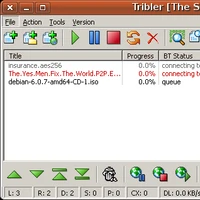
Catalyzed by the popularity of blockchain technology, there has recently been a renewed interest in the design, implementation and evaluation of decentralized systems. Most of these systems are intended to be deployed at scale and in heterogeneous environments with real users and unpredictable workloads. Nevertheless, most research in this field evaluates such systems in controlled environments that poorly reflect the complex conditions of real-world environments. In this work, we argue that deployment is crucial to understanding decentralized mechanisms in a real-world environment and an enabler to building more robust and sustainable systems. We highlight the merits of deployment by comparing this approach with other experimental setups and show how our lab applied a deployment-first methodology. We then outline how we use Tribler, our peer-to-peer file-sharing application, to deploy and monitor decentralized mechanisms at scale. We illustrate the application of our methodology by describing a deployment trial in experimental tokenomics. Finally, we summarize four lessons learned from multiple deployment trials where we applied our methodology.

Problematic Tokens: Tokenizer Bias in Large Language Models
Recent advancements in large language models(LLMs), such as GPT-4 and GPT-4o, have shown exceptional performance, especially in languages with abundant resources like English, thanks to extensive datasets that ensure robust training. Conversely, these models exhibit limitations when processing under-resourced languages such as Chinese and Korean, where issues including hallucinatory responses remain prevalent. This paper traces the roots of these disparities to the tokenization process inherent to these models. Specifically, it explores how the tokenizers vocabulary, often used to speed up the tokenization process and reduce tokens but constructed independently of the actual model training data, inadequately represents non-English languages. This misrepresentation results in the propagation of under-trained or untrained tokens, which perpetuate biases and pose serious concerns related to data security and ethical standards. We aim to dissect the tokenization mechanics of GPT-4o, illustrating how its simplified token-handling methods amplify these risks and offer strategic solutions to mitigate associated security and ethical issues. Through this study, we emphasize the critical need to rethink tokenization frameworks to foster more equitable and secure AI technologies. The code and data are available at https://github.com/yeyimilk/LLMGPT4o

TokenVerse: Versatile Multi-concept Personalization in Token Modulation Space
We present TokenVerse -- a method for multi-concept personalization, leveraging a pre-trained text-to-image diffusion model. Our framework can disentangle complex visual elements and attributes from as little as a single image, while enabling seamless plug-and-play generation of combinations of concepts extracted from multiple images. As opposed to existing works, TokenVerse can handle multiple images with multiple concepts each, and supports a wide-range of concepts, including objects, accessories, materials, pose, and lighting. Our work exploits a DiT-based text-to-image model, in which the input text affects the generation through both attention and modulation (shift and scale). We observe that the modulation space is semantic and enables localized control over complex concepts. Building on this insight, we devise an optimization-based framework that takes as input an image and a text description, and finds for each word a distinct direction in the modulation space. These directions can then be used to generate new images that combine the learned concepts in a desired configuration. We demonstrate the effectiveness of TokenVerse in challenging personalization settings, and showcase its advantages over existing methods. project's webpage in https://token-verse.github.io/


Back to Bytes: Revisiting Tokenization Through UTF-8
We present UTF8Tokenizer, a minimalist byte-level tokenizer that maps text exactly to IDs corresponding to the bytes underlying the text's UTF-8 encoding (e.g., byte x09 is token ID 9). Unlike prior byte-level approaches (Xue et al., 2021; Pagnoni et al., 2025), our implementation never introduces out-of-range IDs (i.e. there is no token ID 256) or auxiliary tokens: all special behavior (e.g., padding, boundaries, conversation structure, attention segments, tool calling, "thinking" spans, etc.) is encoded using C0 control bytes - just as ASCII was originally designed to embed control information alongside printable text. These design principles yield practical benefits: (1) faster tokenization (14x) and significantly lower host-device transfer (8x less than int64); (2) simple, shareable 256*d embedding tables that can be aligned across models; and (3) a training-time enhancement via bit-biased embeddings, which exposes per-byte bit structure and can be added to the embedding table post-training, removing inference costs. Our HuggingFace-compatible implementation improves language modeling convergence.
Boundless Byte Pair Encoding: Breaking the Pre-tokenization Barrier
Pre-tokenization, the initial step in many modern tokenization pipelines, segments text into smaller units called pretokens, typically splitting on whitespace and punctuation. While this process encourages having full, individual words as tokens, it introduces a fundamental limitation in most tokenization algorithms such as Byte Pair Encoding (BPE). Specifically, pre-tokenization causes the distribution of tokens in a corpus to heavily skew towards common, full-length words. This skewed distribution limits the benefits of expanding to larger vocabularies, since the additional tokens appear with progressively lower counts. To overcome this barrier, we propose BoundlessBPE, a modified BPE algorithm that relaxes the pretoken boundary constraint. Our approach selectively merges two complete pretokens into a larger unit we term a superword. Superwords are not necessarily semantically cohesive. For example, the pretokens " of" and " the" might be combined to form the superword " of the". This merging strategy results in a substantially more uniform distribution of tokens across a corpus than standard BPE, and compresses text more effectively, with an approximate 20% increase in bytes per token.
Deeper Insights into Weight Sharing in Neural Architecture Search
With the success of deep neural networks, Neural Architecture Search (NAS) as a way of automatic model design has attracted wide attention. As training every child model from scratch is very time-consuming, recent works leverage weight-sharing to speed up the model evaluation procedure. These approaches greatly reduce computation by maintaining a single copy of weights on the super-net and share the weights among every child model. However, weight-sharing has no theoretical guarantee and its impact has not been well studied before. In this paper, we conduct comprehensive experiments to reveal the impact of weight-sharing: (1) The best-performing models from different runs or even from consecutive epochs within the same run have significant variance; (2) Even with high variance, we can extract valuable information from training the super-net with shared weights; (3) The interference between child models is a main factor that induces high variance; (4) Properly reducing the degree of weight sharing could effectively reduce variance and improve performance.

Deep Leakage from Gradients
Exchanging gradients is a widely used method in modern multi-node machine learning system (e.g., distributed training, collaborative learning). For a long time, people believed that gradients are safe to share: i.e., the training data will not be leaked by gradient exchange. However, we show that it is possible to obtain the private training data from the publicly shared gradients. We name this leakage as Deep Leakage from Gradient and empirically validate the effectiveness on both computer vision and natural language processing tasks. Experimental results show that our attack is much stronger than previous approaches: the recovery is pixel-wise accurate for images and token-wise matching for texts. We want to raise people's awareness to rethink the gradient's safety. Finally, we discuss several possible strategies to prevent such deep leakage. The most effective defense method is gradient pruning.


Explaining and Mitigating Crosslingual Tokenizer Inequities
The number of tokens it takes to encode parallel text in different languages is known to vary. These disparities are called token premiums. Having high token premiums leads to less throughput during training and increases costs at inference. In this paper, we show that even after controlling for dataset size, vocabulary size, and data content, monolingual tokenizers exhibit a wide range of token premiums across languages. To understand the cross-linguistic differences that cause these token premiums, we train a suite of approximately 7,000 comparable monolingual tokenizers for 97 languages, manipulating tokenization algorithm, vocabulary size, and dataset size. We measure token premiums and test for a relationship between factors such as data similarity (between tokenizer training and evaluation), vocabulary size, and pre-tokenization. We also investigate the role of language-specific features such as writing system and word length. We find that similarity between training and test data does not impact token premiums, but vocabulary size and pre-tokenization do. While simply increasing vocabulary size does not lead to reduced token premium effects, we can determine an ``optimal'' vocabulary size for each language to achieve significantly reduced token premium effects. We also train superword tokenizers which allow merges over whitespaces, and we find that they both reduce token premium effects and improve compression overall. Thus, intervening on the vocabulary size or the pre-tokenizer significantly reduces crosslingual token premium effects.

Fast, Expressive SE(n) Equivariant Networks through Weight-Sharing in Position-Orientation Space
Based on the theory of homogeneous spaces we derive geometrically optimal edge attributes to be used within the flexible message-passing framework. We formalize the notion of weight sharing in convolutional networks as the sharing of message functions over point-pairs that should be treated equally. We define equivalence classes of point-pairs that are identical up to a transformation in the group and derive attributes that uniquely identify these classes. Weight sharing is then obtained by conditioning message functions on these attributes. As an application of the theory, we develop an efficient equivariant group convolutional network for processing 3D point clouds. The theory of homogeneous spaces tells us how to do group convolutions with feature maps over the homogeneous space of positions R^3, position and orientations R^3 {times} S^2, and the group SE(3) itself. Among these, R^3 {times} S^2 is an optimal choice due to the ability to represent directional information, which R^3 methods cannot, and it significantly enhances computational efficiency compared to indexing features on the full SE(3) group. We support this claim with state-of-the-art results -- in accuracy and speed -- on five different benchmarks in 2D and 3D, including interatomic potential energy prediction, trajectory forecasting in N-body systems, and generating molecules via equivariant diffusion models.

Large Content And Behavior Models To Understand, Simulate, And Optimize Content And Behavior
Shannon, in his seminal paper introducing information theory, divided the communication into three levels: technical, semantic, and effectivenss. While the technical level is concerned with accurate reconstruction of transmitted symbols, the semantic and effectiveness levels deal with the inferred meaning and its effect on the receiver. Thanks to telecommunications, the first level problem has produced great advances like the internet. Large Language Models (LLMs) make some progress towards the second goal, but the third level still remains largely untouched. The third problem deals with predicting and optimizing communication for desired receiver behavior. LLMs, while showing wide generalization capabilities across a wide range of tasks, are unable to solve for this. One reason for the underperformance could be a lack of "behavior tokens" in LLMs' training corpora. Behavior tokens define receiver behavior over a communication, such as shares, likes, clicks, purchases, retweets, etc. While preprocessing data for LLM training, behavior tokens are often removed from the corpora as noise. Therefore, in this paper, we make some initial progress towards reintroducing behavior tokens in LLM training. The trained models, other than showing similar performance to LLMs on content understanding tasks, show generalization capabilities on behavior simulation, content simulation, behavior understanding, and behavior domain adaptation. Using a wide range of tasks on two corpora, we show results on all these capabilities. We call these models Large Content and Behavior Models (LCBMs). Further, to spur more research on LCBMs, we release our new Content Behavior Corpus (CBC), a repository containing communicator, message, and corresponding receiver behavior.


PaSS: Parallel Speculative Sampling
Scaling the size of language models to tens of billions of parameters has led to impressive performance on a wide range of tasks. At generation, these models are used auto-regressively, requiring a forward pass for each generated token, and thus reading the full set of parameters from memory. This memory access forms the primary bottleneck for generation and it worsens as the model size increases. Moreover, executing a forward pass for multiple tokens in parallel often takes nearly the same time as it does for just one token. These two observations lead to the development of speculative sampling, where a second smaller model is used to draft a few tokens, that are then validated or rejected using a single forward pass of the large model. Unfortunately, this method requires two models that share the same tokenizer and thus limits its adoption. As an alternative, we propose to use parallel decoding as a way to draft multiple tokens from a single model with no computational cost, nor the need for a second model. Our approach only requires an additional input token that marks the words that will be generated simultaneously. We show promising performance (up to 30% speed-up) while requiring only as few as O(d_{emb}) additional parameters.
Cross-Tokenizer Distillation via Approximate Likelihood Matching
Distillation has shown remarkable success in transferring knowledge from a Large Language Model (LLM) teacher to a student LLM. However, current distillation methods predominantly require the same tokenizer between the teacher and the student, restricting their applicability to only a small subset of teacher-student pairs. In this work, we develop a cross-tokenizer distillation method to solve this crucial deficiency. Our method is the first to enable cross-tokenizer distillation without a next-token prediction loss as the main objective, instead purely maximizing the student predictions' similarity to the teacher's predictions (known as pure distillation), while also being robust to large mismatches between the teacher and the student tokenizer function and vocabulary. Empirically, our method enables substantially improved performance as tested on two use cases. First, we show that viewing tokenizer transfer as self-distillation enables unprecedently effective transfer across tokenizers. We transfer (subword-level) Llama and Gemma models to byte-level tokenization more effectively than prior methods transfer to a similar subword tokenizer under a comparable training budget. Transferring different base models to the same tokenizer also enables ensembling them (e.g., via averaging their predicted probabilities) which boosts performance. Second, we use our cross-tokenizer distillation method to distil a large maths-specialized LLM into a smaller model, achieving competitive maths problem-solving performance. Overall, our results make substantial strides toward better adaptability and enhanced interaction between different LLMs.


Weight-Entanglement Meets Gradient-Based Neural Architecture Search
Weight sharing is a fundamental concept in neural architecture search (NAS), enabling gradient-based methods to explore cell-based architecture spaces significantly faster than traditional blackbox approaches. In parallel, weight entanglement has emerged as a technique for intricate parameter sharing among architectures within macro-level search spaces. %However, the macro structure of such spaces poses compatibility challenges for gradient-based NAS methods. %As a result, blackbox optimization methods have been commonly employed, particularly in conjunction with supernet training, to maintain search efficiency. %Due to the inherent differences in the structure of these search spaces, these Since weight-entanglement poses compatibility challenges for gradient-based NAS methods, these two paradigms have largely developed independently in parallel sub-communities. This paper aims to bridge the gap between these sub-communities by proposing a novel scheme to adapt gradient-based methods for weight-entangled spaces. This enables us to conduct an in-depth comparative assessment and analysis of the performance of gradient-based NAS in weight-entangled search spaces. Our findings reveal that this integration of weight-entanglement and gradient-based NAS brings forth the various benefits of gradient-based methods (enhanced performance, improved supernet training properties and superior any-time performance), while preserving the memory efficiency of weight-entangled spaces. The code for our work is openly accessible https://anonymous.4open.science/r/TangleNAS-527C{here}
Byte Pair Encoding for Symbolic Music
When used with deep learning, the symbolic music modality is often coupled with language model architectures. To do so, the music needs to be tokenized, i.e. converted into a sequence of discrete tokens. This can be achieved by different approaches, as music can be composed of simultaneous tracks, of simultaneous notes with several attributes. Until now, the proposed tokenizations rely on small vocabularies of tokens describing the note attributes and time events, resulting in fairly long token sequences, and a sub-optimal use of the embedding space of language models. Recent research has put efforts on reducing the overall sequence length by merging embeddings or combining tokens. In this paper, we show that Byte Pair Encoding, a compression technique widely used for natural language, significantly decreases the sequence length while increasing the vocabulary size. By doing so, we leverage the embedding capabilities of such models with more expressive tokens, resulting in both better results and faster inference in generation and classification tasks. The source code is shared on Github, along with a companion website. Finally, BPE is directly implemented in MidiTok, allowing the reader to easily benefit from this method.

Multi-Draft Speculative Sampling: Canonical Architectures and Theoretical Limits
We consider multi-draft speculative sampling, where the proposal sequences are sampled independently from different draft models. At each step, a token-level draft selection scheme takes a list of valid tokens as input and produces an output token whose distribution matches that of the target model. Previous works have demonstrated that the optimal scheme (which maximizes the probability of accepting one of the input tokens) can be cast as a solution to a linear program. In this work we show that the optimal scheme can be decomposed into a two-step solution: in the first step an importance sampling (IS) type scheme is used to select one intermediate token; in the second step (single-draft) speculative sampling is applied to generate the output token. For the case of two identical draft models we further 1) establish a necessary and sufficient condition on the distributions of the target and draft models for the acceptance probability to equal one and 2) provide an explicit expression for the optimal acceptance probability. Our theoretical analysis also motives a new class of token-level selection scheme based on weighted importance sampling. Our experimental results demonstrate consistent improvements in the achievable block efficiency and token rates over baseline schemes in a number of scenarios.

Parity-Aware Byte-Pair Encoding: Improving Cross-lingual Fairness in Tokenization
Tokenization is the first -- and often least scrutinized -- step of most NLP pipelines. Standard algorithms for learning tokenizers rely on frequency-based objectives, which favor languages dominant in the training data and consequently leave lower-resource languages with tokenizations that are disproportionately longer, morphologically implausible, or even riddled with <UNK> placeholders. This phenomenon ultimately amplifies computational and financial inequalities between users from different language backgrounds. To remedy this, we introduce Parity-aware Byte Pair Encoding (BPE), a variant of the widely-used BPE algorithm. At every merge step, Parity-aware BPE maximizes the compression gain of the currently worst-compressed language, trading a small amount of global compression for cross-lingual parity. We find empirically that Parity-aware BPE leads to more equitable token counts across languages, with negligible impact on global compression rate and no substantial effect on language-model performance in downstream tasks.

Drastically Reducing the Number of Trainable Parameters in Deep CNNs by Inter-layer Kernel-sharing
Deep convolutional neural networks (DCNNs) have become the state-of-the-art (SOTA) approach for many computer vision tasks: image classification, object detection, semantic segmentation, etc. However, most SOTA networks are too large for edge computing. Here, we suggest a simple way to reduce the number of trainable parameters and thus the memory footprint: sharing kernels between multiple convolutional layers. Kernel-sharing is only possible between ``isomorphic" layers, i.e.layers having the same kernel size, input and output channels. This is typically the case inside each stage of a DCNN. Our experiments on CIFAR-10 and CIFAR-100, using the ConvMixer and SE-ResNet architectures show that the number of parameters of these models can drastically be reduced with minimal cost on accuracy. The resulting networks are appealing for certain edge computing applications that are subject to severe memory constraints, and even more interesting if leveraging "frozen weights" hardware accelerators. Kernel-sharing is also an efficient regularization method, which can reduce overfitting. The codes are publicly available at https://github.com/AlirezaAzadbakht/kernel-sharing.
Jasper-Token-Compression-600M Technical Report
This technical report presents the training methodology and evaluation results of the open-source Jasper-Token-Compression-600M model, released in November 2025. Building on previous distillation-based recipes from the English Stella and Jasper models, we successfully extend this approach to a bilingual (English and Chinese) domain, further enhancing model performance through the incorporation of contrastive learning. A key innovation of our model is the introduction of a one-dimensional convolution-based token compression module. We dynamically adjust the compression rate during training, enabling the model to learn more robust and efficient compressed text representations. By combining knowledge distillation with token compression techniques, we achieve significant improvements in both embedding quality and inference efficiency. Our model performs with higher efficiency than a traditional 0.6B model while achieving performance comparable to that of an 8B model. For more information on the model release, visit: https://huggingface.co/infgrad/Jasper-Token-Compression-600M.
Simpler Fast Vision Transformers with a Jumbo CLS Token
We introduce a simple enhancement of vision transformers (ViTs) to improve accuracy while maintaining throughput. Our approach, Jumbo, creates a wider CLS token, which is split to match the patch token width before attention, processed with self-attention, and reassembled. After attention, Jumbo applies a dedicated, wider FFN to this token. Since there is only one Jumbo token, its cost is minimal, and because we share this FFN across layers, its parameter count is controlled. Jumbo significantly improves over ViT+Registers on ImageNet-1K and ImageNet-21K. These gains are largest at small sizes / high speeds, e.g., ViT-nano+Jumbo outperforms ViT-nano+Registers by 13%. In fact, our Jumbo models are so efficient that they outperform specialized compute-efficient models while preserving the architectural advantages of plain ViTs, such as support for token dropping and other modalities. Accordingly, we demonstrate that Jumbo excels in these two settings via masked autoencoding and on a suite of time series benchmarks. Code and weights available: https://github.com/antofuller/jumbo
Fair and efficient contribution valuation for vertical federated learning
Federated learning is a popular technology for training machine learning models on distributed data sources without sharing data. Vertical federated learning or feature-based federated learning applies to the cases that different data sources share the same sample ID space but differ in feature space. To ensure the data owners' long-term engagement, it is critical to objectively assess the contribution from each data source and recompense them accordingly. The Shapley value (SV) is a provably fair contribution valuation metric originated from cooperative game theory. However, computing the SV requires extensively retraining the model on each subset of data sources, which causes prohibitively high communication costs in federated learning. We propose a contribution valuation metric called vertical federated Shapley value (VerFedSV) based on SV. We show that VerFedSV not only satisfies many desirable properties for fairness but is also efficient to compute, and can be adapted to both synchronous and asynchronous vertical federated learning algorithms. Both theoretical analysis and extensive experimental results verify the fairness, efficiency, and adaptability of VerFedSV.
A Token-level Text Image Foundation Model for Document Understanding
In recent years, general visual foundation models (VFMs) have witnessed increasing adoption, particularly as image encoders for popular multi-modal large language models (MLLMs). However, without semantically fine-grained supervision, these models still encounter fundamental prediction errors in the context of downstream text-image-related tasks, i.e., perception, understanding and reasoning with images containing small and dense texts. To bridge this gap, we develop TokenOCR, the first token-level visual foundation model specifically tailored for text-image-related tasks, designed to support a variety of traditional downstream applications. To facilitate the pretraining of TokenOCR, we also devise a high-quality data production pipeline that constructs the first token-level image text dataset, TokenIT, comprising 20 million images and 1.8 billion token-mask pairs. Furthermore, leveraging this foundation with exceptional image-as-text capability, we seamlessly replace previous VFMs with TokenOCR to construct a document-level MLLM, TokenVL, for VQA-based document understanding tasks. Finally, extensive experiments demonstrate the effectiveness of TokenOCR and TokenVL. Code, datasets, and weights will be available at https://token-family.github.io/TokenOCR_project.

Large Language Models can Share Images, Too!
This paper explores the image-sharing capability of Large Language Models (LLMs), such as InstructGPT, ChatGPT, and GPT-4, in a zero-shot setting, without the help of visual foundation models. Inspired by the two-stage process of image-sharing in human dialogues, we propose a two-stage framework that allows LLMs to predict potential image-sharing turns and generate related image descriptions using our effective restriction-based prompt template. With extensive experiments, we unlock the image-sharing capability of LLMs in zero-shot prompting, with GPT-4 achieving the best performance. Additionally, we uncover the emergent image-sharing ability in zero-shot prompting, demonstrating the effectiveness of restriction-based prompts in both stages of our framework. Based on this framework, we augment the PhotoChat dataset with images generated by Stable Diffusion at predicted turns, namely PhotoChat++. To our knowledge, this is the first study to assess the image-sharing ability of LLMs in a zero-shot setting without visual foundation models. The source code and the dataset will be released after publication.


Neural Parameter Allocation Search
Training neural networks requires increasing amounts of memory. Parameter sharing can reduce memory and communication costs, but existing methods assume networks have many identical layers and utilize hand-crafted sharing strategies that fail to generalize. We introduce Neural Parameter Allocation Search (NPAS), a novel task where the goal is to train a neural network given an arbitrary, fixed parameter budget. NPAS covers both low-budget regimes, which produce compact networks, as well as a novel high-budget regime, where additional capacity can be added to boost performance without increasing inference FLOPs. To address NPAS, we introduce Shapeshifter Networks (SSNs), which automatically learn where and how to share parameters in a network to support any parameter budget without requiring any changes to the architecture or loss function. NPAS and SSNs provide a complete framework for addressing generalized parameter sharing, and can also be combined with prior work for additional performance gains. We demonstrate the effectiveness of our approach using nine network architectures across four diverse tasks, including ImageNet classification and transformers.
Tutela: An Open-Source Tool for Assessing User-Privacy on Ethereum and Tornado Cash
A common misconception among blockchain users is that pseudonymity guarantees privacy. The reality is almost the opposite. Every transaction one makes is recorded on a public ledger and reveals information about one's identity. Mixers, such as Tornado Cash, were developed to preserve privacy through "mixing" transactions with those of others in an anonymity pool, making it harder to link deposits and withdrawals from the pool. Unfortunately, it is still possible to reveal information about those in the anonymity pool if users are not careful. We introduce Tutela, an application built on expert heuristics to report the true anonymity of an Ethereum address. In particular, Tutela has three functionalities: first, it clusters together Ethereum addresses based on interaction history such that for an Ethereum address, we can identify other addresses likely owned by the same entity; second, it shows Ethereum users their potentially compromised transactions; third, Tutela computes the true size of the anonymity pool of each Tornado Cash mixer by excluding potentially compromised transactions. A public implementation of Tutela can be found at https://github.com/TutelaLabs/tutela-app. To use Tutela, visit https://www.tutela.xyz.
Efficiently Serving Large Multimodal Models Using EPD Disaggregation
Large Multimodal Models (LMMs) extend Large Language Models (LLMs) by handling diverse inputs such as images, audio, and video, but at the cost of adding a multimodal encoding stage that increases both computational and memory overhead. This step negatively affects key Service Level Objectives (SLOs), such as time to first token (TTFT) and time per output token (TPOT). We introduce Encode-Prefill-Decode (EPD) Disaggregation, a novel framework that separates the encoding, prefill, and decode stages onto dedicated resources. Unlike current systems, which bundle encoding and prefill together, our approach decouples these steps, unlocking new opportunities and optimizations. These include a mechanism to cache multimedia tokens for efficient transfer, a novel way to parallelize the encoding load within a request, a module for optimal resource allocation for disaggregated serving, and a novel role-switching method to handle changing workload characteristics. Experimental evaluations with popular LMMs show substantial gains in memory efficiency (up to 15x lower peak memory utilization), batch sizes (up to 22x larger), 10x more images per request, and 2.2x larger KV caches. Furthermore, it leads to significant improvements in SLO attainment (up to 90-100% improvement) and TTFT (up to 71% reduction), compared to systems that do not disaggregate. The code is available at https://github.com/vbdi/epdserve.

UniCTokens: Boosting Personalized Understanding and Generation via Unified Concept Tokens
Personalized models have demonstrated remarkable success in understanding and generating concepts provided by users. However, existing methods use separate concept tokens for understanding and generation, treating these tasks in isolation. This may result in limitations for generating images with complex prompts. For example, given the concept langle borangle, generating "langle borangle wearing its hat" without additional textual descriptions of its hat. We call this kind of generation \textbf{personalized attribute-reasoning generation}. To address the limitation, we present UniCTokens, a novel framework that effectively integrates personalized information into a unified vision language model (VLM) for understanding and generation. UniCTokens trains a set of unified concept tokens to leverage complementary semantics, boosting two personalized tasks. Moreover, we propose a progressive training strategy with three stages: understanding warm-up, bootstrapping generation from understanding, and deepening understanding from generation to enhance mutual benefits between both tasks. To quantitatively evaluate the unified VLM personalization, we present UnifyBench, the first benchmark for assessing concept understanding, concept generation, and attribute-reasoning generation. Experimental results on UnifyBench indicate that UniCTokens shows competitive performance compared to leading methods in concept understanding, concept generation, and achieving state-of-the-art results in personalized attribute-reasoning generation. Our research demonstrates that enhanced understanding improves generation, and the generation process can yield valuable insights into understanding. Our code and dataset will be released at: https://github.com/arctanxarc/UniCTokens{https://github.com/arctanxarc/UniCTokens}.
Proof-of-Contribution-Based Design for Collaborative Machine Learning on Blockchain
We consider a project (model) owner that would like to train a model by utilizing the local private data and compute power of interested data owners, i.e., trainers. Our goal is to design a data marketplace for such decentralized collaborative/federated learning applications that simultaneously provides i) proof-of-contribution based reward allocation so that the trainers are compensated based on their contributions to the trained model; ii) privacy-preserving decentralized model training by avoiding any data movement from data owners; iii) robustness against malicious parties (e.g., trainers aiming to poison the model); iv) verifiability in the sense that the integrity, i.e., correctness, of all computations in the data market protocol including contribution assessment and outlier detection are verifiable through zero-knowledge proofs; and v) efficient and universal design. We propose a blockchain-based marketplace design to achieve all five objectives mentioned above. In our design, we utilize a distributed storage infrastructure and an aggregator aside from the project owner and the trainers. The aggregator is a processing node that performs certain computations, including assessing trainer contributions, removing outliers, and updating hyper-parameters. We execute the proposed data market through a blockchain smart contract. The deployed smart contract ensures that the project owner cannot evade payment, and honest trainers are rewarded based on their contributions at the end of training. Finally, we implement the building blocks of the proposed data market and demonstrate their applicability in practical scenarios through extensive experiments.

TokenWeave: Efficient Compute-Communication Overlap for Distributed LLM Inference
Distributed inference of large language models (LLMs) can introduce overheads of up to 20% even over GPUs connected via high-speed interconnects such as NVLINK. Multiple techniques have been proposed to mitigate these overheads by decomposing computations into finer-grained tasks and overlapping communication with sub-tasks as they complete. However, fine-grained decomposition of a large computation into many smaller computations on GPUs results in overheads. Further, the communication itself uses many streaming multiprocessors (SMs), adding to the overhead. We present TokenWeave to address these challenges. TokenWeave proposes a Token-Splitting technique that divides the tokens in the inference batch into two approximately equal subsets in a wave-aware manner. The computation of one subset is then overlapped with the communication of the other. In addition, TokenWeave optimizes the order of the layer normalization computation with respect to communication operations and implements a novel fused AllReduce-RMSNorm kernel carefully leveraging Multimem instruction support available on NVIDIA Hopper GPUs. These optimizations allow TokenWeave to perform communication and RMSNorm using only 2-8 SMs. Moreover, our kernel enables the memory bound RMSNorm to be overlapped with the other batch's computation, providing additional gains. Our evaluations demonstrate up to 29% latency gains and up to 26% throughput gains across multiple models and workloads. In several settings, TokenWeave results in better performance compared to an equivalent model with all communication removed.
Lessons from the AdKDD'21 Privacy-Preserving ML Challenge
Designing data sharing mechanisms providing performance and strong privacy guarantees is a hot topic for the Online Advertising industry. Namely, a prominent proposal discussed under the Improving Web Advertising Business Group at W3C only allows sharing advertising signals through aggregated, differentially private reports of past displays. To study this proposal extensively, an open Privacy-Preserving Machine Learning Challenge took place at AdKDD'21, a premier workshop on Advertising Science with data provided by advertising company Criteo. In this paper, we describe the challenge tasks, the structure of the available datasets, report the challenge results, and enable its full reproducibility. A key finding is that learning models on large, aggregated data in the presence of a small set of unaggregated data points can be surprisingly efficient and cheap. We also run additional experiments to observe the sensitivity of winning methods to different parameters such as privacy budget or quantity of available privileged side information. We conclude that the industry needs either alternate designs for private data sharing or a breakthrough in learning with aggregated data only to keep ad relevance at a reasonable level.
R2R: Efficiently Navigating Divergent Reasoning Paths with Small-Large Model Token Routing
Large Language Models (LLMs) achieve impressive reasoning capabilities at the cost of substantial inference overhead, posing substantial deployment challenges. Although distilled Small Language Models (SLMs) significantly enhance efficiency, their performance suffers as they fail to follow LLMs' reasoning paths. Luckily, we reveal that only a small fraction of tokens genuinely diverge reasoning paths between LLMs and SLMs. Most generated tokens are either identical or exhibit neutral differences, such as minor variations in abbreviations or expressions. Leveraging this insight, we introduce **Roads to Rome (R2R)**, a neural token routing method that selectively utilizes LLMs only for these critical, path-divergent tokens, while leaving the majority of token generation to the SLM. We also develop an automatic data generation pipeline that identifies divergent tokens and generates token-level routing labels to train the lightweight router. We apply R2R to combine R1-1.5B and R1-32B models from the DeepSeek family, and evaluate on challenging math, coding, and QA benchmarks. With an average activated parameter size of 5.6B, R2R surpasses the average accuracy of R1-7B by 1.6x, outperforming even the R1-14B model. Compared to R1-32B, it delivers a 2.8x wall-clock speedup with comparable performance, advancing the Pareto frontier of test-time scaling efficiency. Our code is available at https://github.com/thu-nics/R2R.



An Empirical Study of Tokenization Strategies for Various Korean NLP Tasks
Typically, tokenization is the very first step in most text processing works. As a token serves as an atomic unit that embeds the contextual information of text, how to define a token plays a decisive role in the performance of a model.Even though Byte Pair Encoding (BPE) has been considered the de facto standard tokenization method due to its simplicity and universality, it still remains unclear whether BPE works best across all languages and tasks. In this paper, we test several tokenization strategies in order to answer our primary research question, that is, "What is the best tokenization strategy for Korean NLP tasks?" Experimental results demonstrate that a hybrid approach of morphological segmentation followed by BPE works best in Korean to/from English machine translation and natural language understanding tasks such as KorNLI, KorSTS, NSMC, and PAWS-X. As an exception, for KorQuAD, the Korean extension of SQuAD, BPE segmentation turns out to be the most effective.

NFT1000: A Visual Text Dataset For Non-Fungible Token Retrieval
With the rise of 'Metaverse' and 'Web3.0', NFT ( Non-Fungible Token ) has emerged as a kind of pivotal digital asset, garnering significant attention. By the end of November 2023, more than 1.4 billion NFT tokens have been minted across various blockchain platforms. To effectively locate a satisfactory NFT token, conducting searches within the extensive array of NFT data is essential. The challenge in NFT retrieval is heightened due to the high degree of similarity among different NFT tokens, in terms of regional and semantic aspects. Achieving accurate and efficient retrieval within the large-scale, highly similar NFT data presents a formidable challenge for both the academic and industrial communities. In this paper, we will introduce a dataset named 'NFT Top1000 Visual Text Dataset'(henceforth, NFT1000), containing 7.56 million image-text pairs, and being collected from 1000 most famous PFP NFT collections by sales volume on the Ethereum blockchain. Based on the dataset, we test the CLIP (Contrastive Language-Image Pretraining) models as a baseline. Additionally, we also propose a concept of Comprehensive Variance Index (CVI in short), which is a robust metric designed to assess the similarity and retrieval difficulty of visual-text pairs data.

Fair Federated Medical Image Segmentation via Client Contribution Estimation
How to ensure fairness is an important topic in federated learning (FL). Recent studies have investigated how to reward clients based on their contribution (collaboration fairness), and how to achieve uniformity of performance across clients (performance fairness). Despite achieving progress on either one, we argue that it is critical to consider them together, in order to engage and motivate more diverse clients joining FL to derive a high-quality global model. In this work, we propose a novel method to optimize both types of fairness simultaneously. Specifically, we propose to estimate client contribution in gradient and data space. In gradient space, we monitor the gradient direction differences of each client with respect to others. And in data space, we measure the prediction error on client data using an auxiliary model. Based on this contribution estimation, we propose a FL method, federated training via contribution estimation (FedCE), i.e., using estimation as global model aggregation weights. We have theoretically analyzed our method and empirically evaluated it on two real-world medical datasets. The effectiveness of our approach has been validated with significant performance improvements, better collaboration fairness, better performance fairness, and comprehensive analytical studies.
Improving Fairness for Data Valuation in Horizontal Federated Learning
Federated learning is an emerging decentralized machine learning scheme that allows multiple data owners to work collaboratively while ensuring data privacy. The success of federated learning depends largely on the participation of data owners. To sustain and encourage data owners' participation, it is crucial to fairly evaluate the quality of the data provided by the data owners and reward them correspondingly. Federated Shapley value, recently proposed by Wang et al. [Federated Learning, 2020], is a measure for data value under the framework of federated learning that satisfies many desired properties for data valuation. However, there are still factors of potential unfairness in the design of federated Shapley value because two data owners with the same local data may not receive the same evaluation. We propose a new measure called completed federated Shapley value to improve the fairness of federated Shapley value. The design depends on completing a matrix consisting of all the possible contributions by different subsets of the data owners. It is shown under mild conditions that this matrix is approximately low-rank by leveraging concepts and tools from optimization. Both theoretical analysis and empirical evaluation verify that the proposed measure does improve fairness in many circumstances.
AdapterHub: A Framework for Adapting Transformers
The current modus operandi in NLP involves downloading and fine-tuning pre-trained models consisting of millions or billions of parameters. Storing and sharing such large trained models is expensive, slow, and time-consuming, which impedes progress towards more general and versatile NLP methods that learn from and for many tasks. Adapters -- small learnt bottleneck layers inserted within each layer of a pre-trained model -- ameliorate this issue by avoiding full fine-tuning of the entire model. However, sharing and integrating adapter layers is not straightforward. We propose AdapterHub, a framework that allows dynamic "stitching-in" of pre-trained adapters for different tasks and languages. The framework, built on top of the popular HuggingFace Transformers library, enables extremely easy and quick adaptations of state-of-the-art pre-trained models (e.g., BERT, RoBERTa, XLM-R) across tasks and languages. Downloading, sharing, and training adapters is as seamless as possible using minimal changes to the training scripts and a specialized infrastructure. Our framework enables scalable and easy access to sharing of task-specific models, particularly in low-resource scenarios. AdapterHub includes all recent adapter architectures and can be found at https://AdapterHub.ml.

Learning to Branch for Multi-Task Learning
Training multiple tasks jointly in one deep network yields reduced latency during inference and better performance over the single-task counterpart by sharing certain layers of a network. However, over-sharing a network could erroneously enforce over-generalization, causing negative knowledge transfer across tasks. Prior works rely on human intuition or pre-computed task relatedness scores for ad hoc branching structures. They provide sub-optimal end results and often require huge efforts for the trial-and-error process. In this work, we present an automated multi-task learning algorithm that learns where to share or branch within a network, designing an effective network topology that is directly optimized for multiple objectives across tasks. Specifically, we propose a novel tree-structured design space that casts a tree branching operation as a gumbel-softmax sampling procedure. This enables differentiable network splitting that is end-to-end trainable. We validate the proposed method on controlled synthetic data, CelebA, and Taskonomy.

TokenFlow: Unified Image Tokenizer for Multimodal Understanding and Generation
We present TokenFlow, a novel unified image tokenizer that bridges the long-standing gap between multimodal understanding and generation. Prior research attempt to employ a single reconstruction-targeted Vector Quantization (VQ) encoder for unifying these two tasks. We observe that understanding and generation require fundamentally different granularities of visual information. This leads to a critical trade-off, particularly compromising performance in multimodal understanding tasks. TokenFlow addresses this challenge through an innovative dual-codebook architecture that decouples semantic and pixel-level feature learning while maintaining their alignment via a shared mapping mechanism. This design enables direct access to both high-level semantic representations crucial for understanding tasks and fine-grained visual features essential for generation through shared indices. Our extensive experiments demonstrate TokenFlow's superiority across multiple dimensions. Leveraging TokenFlow, we demonstrate for the first time that discrete visual input can surpass LLaVA-1.5 13B in understanding performance, achieving a 7.2\% average improvement. For image reconstruction, we achieve a strong FID score of 0.63 at 384*384 resolution. Moreover, TokenFlow establishes state-of-the-art performance in autoregressive image generation with a GenEval score of 0.55 at 256*256 resolution, achieving comparable results to SDXL.



A Construction of Evolving k-threshold Secret Sharing Scheme over A Polynomial Ring
The threshold secret sharing scheme allows the dealer to distribute the share to every participant such that the secret is correctly recovered from a certain amount of shares. The traditional (k, n)-threshold secret sharing scheme requests that the number of participants n is known in advance. In contrast, the evolving secret sharing scheme allows that n can be uncertain and even ever-growing. In this paper, we consider the evolving secret sharing scenario. Using the prefix codes and the properties of the polynomial ring, we propose a brand-new construction of evolving k-threshold secret sharing scheme for an ell-bit secret over a polynomial ring, with correctness and perfect security. The proposed schemes establish the connection between prefix codes and the evolving schemes for kgeq2, and are also first evolving k-threshold secret sharing schemes by generalizing Shamir's scheme onto a polynomial ring. Specifically, the proposal also provides an unified mathematical decryption for prior evolving 2-threshold secret sharing schemes. Besides, the analysis of the proposed schemes show that the size of the t-th share is (k-1)(ell_t-1)+ell bits, where ell_t denotes the length of a binary prefix code of encoding integer t. In particular, when delta code is chosen as the prefix code, the share size achieves (k-1)lfloorlg trfloor+2(k-1)lfloorlg ({lfloorlg trfloor+1}) rfloor+ell, which improves the prior best result (k-1)lg t+6k^4elllg tcdotlg {lg t}+ 7k^4elllg k, where lg denotes the binary logarithm. When k=2, the proposed scheme also achieves the minimal share size for single-bit secret, which is the same as the best known scheme.
Strip-MLP: Efficient Token Interaction for Vision MLP
Token interaction operation is one of the core modules in MLP-based models to exchange and aggregate information between different spatial locations. However, the power of token interaction on the spatial dimension is highly dependent on the spatial resolution of the feature maps, which limits the model's expressive ability, especially in deep layers where the feature are down-sampled to a small spatial size. To address this issue, we present a novel method called Strip-MLP to enrich the token interaction power in three ways. Firstly, we introduce a new MLP paradigm called Strip MLP layer that allows the token to interact with other tokens in a cross-strip manner, enabling the tokens in a row (or column) to contribute to the information aggregations in adjacent but different strips of rows (or columns). Secondly, a Cascade Group Strip Mixing Module (CGSMM) is proposed to overcome the performance degradation caused by small spatial feature size. The module allows tokens to interact more effectively in the manners of within-patch and cross-patch, which is independent to the feature spatial size. Finally, based on the Strip MLP layer, we propose a novel Local Strip Mixing Module (LSMM) to boost the token interaction power in the local region. Extensive experiments demonstrate that Strip-MLP significantly improves the performance of MLP-based models on small datasets and obtains comparable or even better results on ImageNet. In particular, Strip-MLP models achieve higher average Top-1 accuracy than existing MLP-based models by +2.44\% on Caltech-101 and +2.16\% on CIFAR-100. The source codes will be available at~https://github.com/Med-Process/Strip_MLP{https://github.com/Med-Process/Strip\_MLP.
KL3M Tokenizers: A Family of Domain-Specific and Character-Level Tokenizers for Legal, Financial, and Preprocessing Applications
We present the KL3M tokenizers, a family of specialized tokenizers for legal, financial, and governmental text. Despite established work on tokenization, specialized tokenizers for professional domains remain understudied. Our paper offers two main contributions to this area. First, we introduce domain-specific BPE tokenizers for legal, financial, and governmental text. Our kl3m-004-128k-cased tokenizer uses 9-17% fewer tokens than GPT-4o and Llama3 for domain-specific documents, despite having a smaller vocabulary. For specialized terminology, our cased tokenizer is even more efficient, using up to 83% fewer tokens for legal terms and 39% fewer tokens for financial terms. Second, we develop character-level BPE tokenizers (4K, 8K, and 16K vocabulary sizes) for text correction tasks like OCR post-processing. These tokenizers keep consistent token boundaries between error-containing and correct text, making it easier for models to learn correction patterns. These tokenizers help professional applications by fitting more text in context windows, reducing computational needs, and preserving the meaning of domain-specific terms. Our analysis shows these efficiency gains directly benefit the processing of long legal and financial documents. We release all tokenizers and code through GitHub and Hugging Face to support further research in specialized tokenization.

SOC: hunting the underground inside story of the ethereum Social-network Opinion and Comment
The cryptocurrency is attracting more and more attention because of the blockchain technology. Ethereum is gaining a significant popularity in blockchain community, mainly due to the fact that it is designed in a way that enables developers to write smart contracts and decentralized applications (Dapps). There are many kinds of cryptocurrency information on the social network. The risks and fraud problems behind it have pushed many countries including the United States, South Korea, and China to make warnings and set up corresponding regulations. However, the security of Ethereum smart contracts has not gained much attention. Through the Deep Learning approach, we propose a method of sentiment analysis for Ethereum's community comments. In this research, we first collected the users' cryptocurrency comments from the social network and then fed to our LSTM + CNN model for training. Then we made prediction through sentiment analysis. With our research result, we have demonstrated that both the precision and the recall of sentiment analysis can achieve 0.80+. More importantly, we deploy our sentiment analysis1 on RatingToken and Coin Master (mobile application of Cheetah Mobile Blockchain Security Center23). We can effectively provide detail information to resolve the risks of being fake and fraud problems.


Blockchain-empowered Federated Learning: Benefits, Challenges, and Solutions
Federated learning (FL) is a distributed machine learning approach that protects user data privacy by training models locally on clients and aggregating them on a parameter server. While effective at preserving privacy, FL systems face limitations such as single points of failure, lack of incentives, and inadequate security. To address these challenges, blockchain technology is integrated into FL systems to provide stronger security, fairness, and scalability. However, blockchain-empowered FL (BC-FL) systems introduce additional demands on network, computing, and storage resources. This survey provides a comprehensive review of recent research on BC-FL systems, analyzing the benefits and challenges associated with blockchain integration. We explore why blockchain is applicable to FL, how it can be implemented, and the challenges and existing solutions for its integration. Additionally, we offer insights on future research directions for the BC-FL system.
An Empirical Study of Safetensors' Usage Trends and Developers' Perceptions
Developers are sharing pre-trained Machine Learning (ML) models through a variety of model sharing platforms, such as Hugging Face, in an effort to make ML development more collaborative. To share the models, they must first be serialized. While there are many methods of serialization in Python, most of them are unsafe. To tame this insecurity, Hugging Face released safetensors as a way to mitigate the threats posed by unsafe serialization formats. In this context, this paper investigates developer's shifts towards using safetensors on Hugging Face in an effort to understand security practices in the ML development community, as well as how developers react to new methods of serialization. Our results find that more developers are adopting safetensors, and many safetensor adoptions were made by automated conversions of existing models by Hugging Face's conversion tool. We also found, however, that a majority of developers ignore the conversion tool's pull requests, and that while many developers are facing issues with using safetensors, they are eager to learn about and adapt the format.
AlphaNet: Improved Training of Supernets with Alpha-Divergence
Weight-sharing neural architecture search (NAS) is an effective technique for automating efficient neural architecture design. Weight-sharing NAS builds a supernet that assembles all the architectures as its sub-networks and jointly trains the supernet with the sub-networks. The success of weight-sharing NAS heavily relies on distilling the knowledge of the supernet to the sub-networks. However, we find that the widely used distillation divergence, i.e., KL divergence, may lead to student sub-networks that over-estimate or under-estimate the uncertainty of the teacher supernet, leading to inferior performance of the sub-networks. In this work, we propose to improve the supernet training with a more generalized alpha-divergence. By adaptively selecting the alpha-divergence, we simultaneously prevent the over-estimation or under-estimation of the uncertainty of the teacher model. We apply the proposed alpha-divergence based supernets training to both slimmable neural networks and weight-sharing NAS, and demonstrate significant improvements. Specifically, our discovered model family, AlphaNet, outperforms prior-art models on a wide range of FLOPs regimes, including BigNAS, Once-for-All networks, and AttentiveNAS. We achieve ImageNet top-1 accuracy of 80.0% with only 444M FLOPs. Our code and pretrained models are available at https://github.com/facebookresearch/AlphaNet.

Real-Time Community Detection in Large Social Networks on a Laptop
For a broad range of research, governmental and commercial applications it is important to understand the allegiances, communities and structure of key players in society. One promising direction towards extracting this information is to exploit the rich relational data in digital social networks (the social graph). As social media data sets are very large, most approaches make use of distributed computing systems for this purpose. Distributing graph processing requires solving many difficult engineering problems, which has lead some researchers to look at single-machine solutions that are faster and easier to maintain. In this article, we present a single-machine real-time system for large-scale graph processing that allows analysts to interactively explore graph structures. The key idea is that the aggregate actions of large numbers of users can be compressed into a data structure that encapsulates user similarities while being robust to noise and queryable in real-time. We achieve single machine real-time performance by compressing the neighbourhood of each vertex using minhash signatures and facilitate rapid queries through Locality Sensitive Hashing. These techniques reduce query times from hours using industrial desktop machines operating on the full graph to milliseconds on standard laptops. Our method allows exploration of strongly associated regions (i.e. communities) of large graphs in real-time on a laptop. It has been deployed in software that is actively used by social network analysts and offers another channel for media owners to monetise their data, helping them to continue to provide free services that are valued by billions of people globally.

SHARE: Shared Memory-Aware Open-Domain Long-Term Dialogue Dataset Constructed from Movie Script
Shared memories between two individuals strengthen their bond and are crucial for facilitating their ongoing conversations. This study aims to make long-term dialogue more engaging by leveraging these shared memories. To this end, we introduce a new long-term dialogue dataset named SHARE, constructed from movie scripts, which are a rich source of shared memories among various relationships. Our dialogue dataset contains the summaries of persona information and events of two individuals, as explicitly revealed in their conversation, along with implicitly extractable shared memories. We also introduce EPISODE, a long-term dialogue framework based on SHARE that utilizes shared experiences between individuals. Through experiments using SHARE, we demonstrate that shared memories between two individuals make long-term dialogues more engaging and sustainable, and that EPISODE effectively manages shared memories during dialogue. Our new dataset is publicly available at https://anonymous.4open.science/r/SHARE-AA1E/SHARE.json.
FAIR Jupyter: a knowledge graph approach to semantic sharing and granular exploration of a computational notebook reproducibility dataset
The way in which data are shared can affect their utility and reusability. Here, we demonstrate how data that we had previously shared in bulk can be mobilized further through a knowledge graph that allows for much more granular exploration and interrogation. The original dataset is about the computational reproducibility of GitHub-hosted Jupyter notebooks associated with biomedical publications. It contains rich metadata about the publications, associated GitHub repositories and Jupyter notebooks, and the notebooks' reproducibility. We took this dataset, converted it into semantic triples and loaded these into a triple store to create a knowledge graph, FAIR Jupyter, that we made accessible via a web service. This enables granular data exploration and analysis through queries that can be tailored to specific use cases. Such queries may provide details about any of the variables from the original dataset, highlight relationships between them or combine some of the graph's content with materials from corresponding external resources. We provide a collection of example queries addressing a range of use cases in research and education. We also outline how sets of such queries can be used to profile specific content types, either individually or by class. We conclude by discussing how such a semantically enhanced sharing of complex datasets can both enhance their FAIRness, i.e., their findability, accessibility, interoperability, and reusability, and help identify and communicate best practices, particularly with regards to data quality, standardization, automation and reproducibility.
TokenButler: Token Importance is Predictable
Large Language Models (LLMs) rely on the Key-Value (KV) Cache to store token history, enabling efficient decoding of tokens. As the KV-Cache grows, it becomes a major memory and computation bottleneck, however, there is an opportunity to alleviate this bottleneck, especially because prior research has shown that only a small subset of tokens contribute meaningfully to each decoding step. A key challenge in finding these critical tokens is that they are dynamic, and heavily input query-dependent. Existing methods either risk quality by evicting tokens permanently, or retain the full KV-Cache but rely on retrieving chunks (pages) of tokens at generation, failing at dense, context-rich tasks. Additionally, many existing KV-Cache sparsity methods rely on inaccurate proxies for token importance. To address these limitations, we introduce TokenButler, a high-granularity, query-aware predictor that learns to identify these critical tokens. By training a light-weight predictor with less than 1.2% parameter overhead, TokenButler prioritizes tokens based on their contextual, predicted importance. This improves perplexity & downstream accuracy by over 8% relative to SoTA methods for estimating token importance. We evaluate TokenButler on a novel synthetic small-context co-referential retrieval task, demonstrating near-oracle accuracy. Code, models and benchmarks: https://github.com/abdelfattah-lab/TokenButler


MLKV: Multi-Layer Key-Value Heads for Memory Efficient Transformer Decoding
Auto-regressive inference of transformers benefit greatly from Key-Value (KV) caching, but can lead to major memory bottlenecks as model size, batch size, and sequence length grow at scale. We introduce Multi-Layer Key-Value (MLKV) sharing, a novel approach extending KV sharing across transformer layers to reduce memory usage beyond what was possible with Multi-Query Attention (MQA) and Grouped-Query Attention (GQA). Evaluations on various NLP benchmarks and inference metrics using uptrained Pythia-160M variants demonstrate that MLKV significantly reduces memory usage with minimal performance loss, reducing KV cache size down to a factor of 6x compared to MQA. These results highlight MLKV's potential for efficient deployment of transformer models at scale. We provide code at https://github.com/zaydzuhri/pythia-mlkv


Tokenization Constraints in LLMs: A Study of Symbolic and Arithmetic Reasoning Limits
Tokenization is the first - and often underappreciated - layer of computation in language models. While Chain-of-Thought (CoT) prompting enables transformer models to approximate recurrent computation by externalizing intermediate steps, we show that the success of such reasoning is fundamentally bounded by the structure of tokenized inputs. This work presents a theoretical and empirical investigation into how tokenization schemes, particularly subword-based methods like byte-pair encoding (BPE), impede symbolic computation by merging or obscuring atomic reasoning units. We introduce the notion of Token Awareness to formalize how poor token granularity disrupts logical alignment and prevents models from generalizing symbolic procedures. Through systematic evaluation on arithmetic and symbolic tasks, we demonstrate that token structure dramatically affect reasoning performance, causing failure even with CoT, while atomically-aligned formats unlock strong generalization, allowing small models (e.g., GPT-4o-mini) to outperform larger systems (e.g., o1) in structured reasoning. Our findings reveal that symbolic reasoning ability in LLMs is not purely architectural, but deeply conditioned on token-level representations.



A Large-Scale Exploit Instrumentation Study of AI/ML Supply Chain Attacks in Hugging Face Models
The development of machine learning (ML) techniques has led to ample opportunities for developers to develop and deploy their own models. Hugging Face serves as an open source platform where developers can share and download other models in an effort to make ML development more collaborative. In order for models to be shared, they first need to be serialized. Certain Python serialization methods are considered unsafe, as they are vulnerable to object injection. This paper investigates the pervasiveness of these unsafe serialization methods across Hugging Face, and demonstrates through an exploitation approach, that models using unsafe serialization methods can be exploited and shared, creating an unsafe environment for ML developers. We investigate to what extent Hugging Face is able to flag repositories and files using unsafe serialization methods, and develop a technique to detect malicious models. Our results show that Hugging Face is home to a wide range of potentially vulnerable models.
TokenVerse: Towards Unifying Speech and NLP Tasks via Transducer-based ASR
In traditional conversational intelligence from speech, a cascaded pipeline is used, involving tasks such as voice activity detection, diarization, transcription, and subsequent processing with different NLP models for tasks like semantic endpointing and named entity recognition (NER). Our paper introduces TokenVerse, a single Transducer-based model designed to handle multiple tasks. This is achieved by integrating task-specific tokens into the reference text during ASR model training, streamlining the inference and eliminating the need for separate NLP models. In addition to ASR, we conduct experiments on 3 different tasks: speaker change detection, endpointing, and NER. Our experiments on a public and a private dataset show that the proposed method improves ASR by up to 7.7% in relative WER while outperforming the cascaded pipeline approach in individual task performance. Our code is publicly available: https://github.com/idiap/tokenverse-unifying-speech-nlp

Rethinking Token Reduction for State Space Models
Recent advancements in State Space Models (SSMs) have attracted significant interest, particularly in models optimized for parallel training and handling long-range dependencies. Architectures like Mamba have scaled to billions of parameters with selective SSM. To facilitate broader applications using Mamba, exploring its efficiency is crucial. While token reduction techniques offer a straightforward post-training strategy, we find that applying existing methods directly to SSMs leads to substantial performance drops. Through insightful analysis, we identify the reasons for this failure and the limitations of current techniques. In response, we propose a tailored, unified post-training token reduction method for SSMs. Our approach integrates token importance and similarity, thus taking advantage of both pruning and merging, to devise a fine-grained intra-layer token reduction strategy. Extensive experiments show that our method improves the average accuracy by 5.7% to 13.1% on six benchmarks with Mamba-2 compared to existing methods, while significantly reducing computational demands and memory requirements.


FAIR-BFL: Flexible and Incentive Redesign for Blockchain-based Federated Learning
Vanilla Federated learning (FL) relies on the centralized global aggregation mechanism and assumes that all clients are honest. This makes it a challenge for FL to alleviate the single point of failure and dishonest clients. These impending challenges in the design philosophy of FL call for blockchain-based federated learning (BFL) due to the benefits of coupling FL and blockchain (e.g., democracy, incentive, and immutability). However, one problem in vanilla BFL is that its capabilities do not follow adopters' needs in a dynamic fashion. Besides, vanilla BFL relies on unverifiable clients' self-reported contributions like data size because checking clients' raw data is not allowed in FL for privacy concerns. We design and evaluate a novel BFL framework, and resolve the identified challenges in vanilla BFL with greater flexibility and incentive mechanism called FAIR-BFL. In contrast to existing works, FAIR-BFL offers unprecedented flexibility via the modular design, allowing adopters to adjust its capabilities following business demands in a dynamic fashion. Our design accounts for BFL's ability to quantify each client's contribution to the global learning process. Such quantification provides a rational metric for distributing the rewards among federated clients and helps discover malicious participants that may poison the global model.
Deployment of a Blockchain-Based Self-Sovereign Identity
Digital identity is unsolved: after many years of research there is still no trusted communication over the Internet. To provide identity within the context of mutual distrust, this paper presents a blockchain-based digital identity solution. Without depending upon a single trusted third party, the proposed solution achieves passport-level legally valid identity. This solution for making identities Self-Sovereign, builds on a generic provable claim model for which attestations of truth from third parties need to be collected. The claim model is then shown to be both blockchain structure and proof method agnostic. Four different implementations in support of these two claim model properties are shown to offer sub-second performance for claim creation and claim verification. Through the properties of Self-Sovereign Identity, legally valid status and acceptable performance, our solution is considered to be fit for adoption by the general public.
Just One Byte (per gradient): A Note on Low-Bandwidth Decentralized Language Model Finetuning Using Shared Randomness
Language model training in distributed settings is limited by the communication cost of gradient exchanges. In this short note, we extend recent work from Malladi et al. (2023), using shared randomness to perform distributed fine-tuning with low bandwidth. The method is a natural decentralized extension of memory-efficient Simultaneous Perturbation Stochastic Approximation (SPSA). Each iteration, each machine seeds a Random Number Generator (RNG) to perform local reproducible perturbations on model weights and calculate and exchange scalar projected gradients, which are then used to update each model. By using a (machine, sample) identifier as the random seed, each model can regenerate one another's perturbations. As machines only exchange single-byte projected gradients, this is highly communication efficient. There are also potential privacy benefits, as projected gradients may be calculated on different training data, and models never access the other's data. Our approach not only drastically reduces communication bandwidth requirements but also accommodates dynamic addition or removal of machines during the training process and retains the memory-efficient and inference-only advantages of recent work. We perform proof-of-concept experiments to demonstrate the potential usefulness of this method, building off of rich literature on distributed optimization and memory-efficient training.


Is open source software culture enough to make AI a common ?
Language models (LM or LLM) are increasingly deployed in the field of artificial intelligence (AI) and its applications, but the question arises as to whether they can be a common resource managed and maintained by a community of users. Indeed, the dominance of private companies with exclusive access to massive data and language processing resources can create inequalities and biases in LM, as well as obstacles to innovation for those who do not have the same resources necessary for their implementation. In this contribution, we examine the concept of the commons and its relevance for thinking about LM. We highlight the potential benefits of treating the data and resources needed to create LMs as commons, including increased accessibility, equity, and transparency in the development and use of AI technologies. Finally, we present a case study centered on the Hugging Face platform, an open-source platform for deep learning designed to encourage collaboration and sharing among AI designers.
Achieving Tokenizer Flexibility in Language Models through Heuristic Adaptation and Supertoken Learning
Pretrained language models (LLMs) are often constrained by their fixed tokenization schemes, leading to inefficiencies and performance limitations, particularly for multilingual or specialized applications. This tokenizer lock-in presents significant challenges. standard methods to overcome this often require prohibitive computational resources. Although tokenizer replacement with heuristic initialization aims to reduce this burden, existing methods often require exhaustive residual fine-tuning and still may not fully preserve semantic nuances or adequately address the underlying compression inefficiencies. Our framework introduces two innovations: first, Tokenadapt, a model-agnostic tokenizer transplantation method, and second, novel pre-tokenization learning for multi-word Supertokens to enhance compression and reduce fragmentation. Tokenadapt initializes new unique token embeddings via a hybrid heuristic that combines two methods: a local estimate based on subword decomposition using the old tokenizer, and a global estimate utilizing the top-k semantically similar tokens from the original vocabulary. This methodology aims to preserve semantics while significantly minimizing retraining requirements. Empirical investigations validate both contributions: the transplantation heuristic successfully initializes unique tokens, markedly outperforming conventional baselines and sophisticated methods including Transtokenizer and ReTok, while our Supertokens achieve notable compression gains. Our zero-shot perplexity results demonstrate that the TokenAdapt hybrid initialization consistently yields lower perplexity ratios compared to both ReTok and TransTokenizer baselines across different base models and newly trained target tokenizers. TokenAdapt typically reduced the overall perplexity ratio significantly compared to ReTok, yielding at least a 2-fold improvement in these aggregate scores.


FEDZIP: A Compression Framework for Communication-Efficient Federated Learning
Federated Learning marks a turning point in the implementation of decentralized machine learning (especially deep learning) for wireless devices by protecting users' privacy and safeguarding raw data from third-party access. It assigns the learning process independently to each client. First, clients locally train a machine learning model based on local data. Next, clients transfer local updates of model weights and biases (training data) to a server. Then, the server aggregates updates (received from clients) to create a global learning model. However, the continuous transfer between clients and the server increases communication costs and is inefficient from a resource utilization perspective due to the large number of parameters (weights and biases) used by deep learning models. The cost of communication becomes a greater concern when the number of contributing clients and communication rounds increases. In this work, we propose a novel framework, FedZip, that significantly decreases the size of updates while transferring weights from the deep learning model between clients and their servers. FedZip implements Top-z sparsification, uses quantization with clustering, and implements compression with three different encoding methods. FedZip outperforms state-of-the-art compression frameworks and reaches compression rates up to 1085x, and preserves up to 99% of bandwidth and 99% of energy for clients during communication.


Self-Evolution Knowledge Distillation for LLM-based Machine Translation
Knowledge distillation (KD) has shown great promise in transferring knowledge from larger teacher models to smaller student models. However, existing KD strategies for large language models often minimize output distributions between student and teacher models indiscriminately for each token. This overlooks the imbalanced nature of tokens and their varying transfer difficulties. In response, we propose a distillation strategy called Self-Evolution KD. The core of this approach involves dynamically integrating teacher distribution and one-hot distribution of ground truth into the student distribution as prior knowledge, which promotes the distillation process. It adjusts the ratio of prior knowledge based on token learning difficulty, fully leveraging the teacher model's potential. Experimental results show our method brings an average improvement of approximately 1.4 SacreBLEU points across four translation directions in the WMT22 test sets. Further analysis indicates that the improvement comes from better knowledge transfer from teachers, confirming our hypothesis.

Improving Federated Learning Communication Efficiency with Global Momentum Fusion for Gradient Compression Schemes
Communication costs within Federated learning hinder the system scalability for reaching more data from more clients. The proposed FL adopts a hub-and-spoke network topology. All clients communicate through the central server. Hence, reducing communication overheads via techniques such as data compression has been proposed to mitigate this issue. Another challenge of federated learning is unbalanced data distribution, data on each client are not independent and identically distributed (non-IID) in a typical federated learning setting. In this paper, we proposed a new compression compensation scheme called Global Momentum Fusion (GMF) which reduces communication overheads between FL clients and the server and maintains comparable model accuracy in the presence of non-IID data. GitHub repository: https://github.com/tony92151/global-momentum-fusion-fl
Cross-Layer Cache Aggregation for Token Reduction in Ultra-Fine-Grained Image Recognition
Ultra-fine-grained image recognition (UFGIR) is a challenging task that involves classifying images within a macro-category. While traditional FGIR deals with classifying different species, UFGIR goes beyond by classifying sub-categories within a species such as cultivars of a plant. In recent times the usage of Vision Transformer-based backbones has allowed methods to obtain outstanding recognition performances in this task but this comes at a significant cost in terms of computation specially since this task significantly benefits from incorporating higher resolution images. Therefore, techniques such as token reduction have emerged to reduce the computational cost. However, dropping tokens leads to loss of essential information for fine-grained categories, specially as the token keep rate is reduced. Therefore, to counteract the loss of information brought by the usage of token reduction we propose a novel Cross-Layer Aggregation Classification Head and a Cross-Layer Cache mechanism to recover and access information from previous layers in later locations. Extensive experiments covering more than 2000 runs across diverse settings including 5 datasets, 9 backbones, 7 token reduction methods, 5 keep rates, and 2 image sizes demonstrate the effectiveness of the proposed plug-and-play modules and allow us to push the boundaries of accuracy vs cost for UFGIR by reducing the kept tokens to extremely low ratios of up to 10\% while maintaining a competitive accuracy to state-of-the-art models. Code is available at: https://github.com/arkel23/CLCA
DiffMoE: Dynamic Token Selection for Scalable Diffusion Transformers
Diffusion models have demonstrated remarkable success in various image generation tasks, but their performance is often limited by the uniform processing of inputs across varying conditions and noise levels. To address this limitation, we propose a novel approach that leverages the inherent heterogeneity of the diffusion process. Our method, DiffMoE, introduces a batch-level global token pool that enables experts to access global token distributions during training, promoting specialized expert behavior. To unleash the full potential of the diffusion process, DiffMoE incorporates a capacity predictor that dynamically allocates computational resources based on noise levels and sample complexity. Through comprehensive evaluation, DiffMoE achieves state-of-the-art performance among diffusion models on ImageNet benchmark, substantially outperforming both dense architectures with 3x activated parameters and existing MoE approaches while maintaining 1x activated parameters. The effectiveness of our approach extends beyond class-conditional generation to more challenging tasks such as text-to-image generation, demonstrating its broad applicability across different diffusion model applications. Project Page: https://shiml20.github.io/DiffMoE/





SemToken: Semantic-Aware Tokenization for Efficient Long-Context Language Modeling
Tokenization plays a critical role in language modeling, yet existing approaches such as Byte-Pair Encoding (BPE) or WordPiece operate purely on frequency statistics, ignoring the underlying semantic structure of text. This leads to over-tokenization of semantically redundant spans and underutilization of contextual coherence, particularly in long-context scenarios. In this work, we propose SemToken, a semantic-aware tokenization framework that jointly reduces token redundancy and improves computation efficiency. SemToken first extracts contextual semantic embeddings via lightweight encoders and performs local semantic clustering to merge semantically equivalent tokens. Then, it allocates heterogeneous token granularity based on semantic density, allowing finer-grained tokenization in content-rich regions and coarser compression in repetitive or low-entropy spans. SemToken can be seamlessly integrated with modern language models and attention acceleration methods. Experiments on long-context language modeling benchmarks such as WikiText-103 and LongBench show that SemToken achieves up to 2.4times reduction in token count and 1.9times speedup, with negligible or no degradation in perplexity and downstream accuracy. Our findings suggest that semantic structure offers a promising new axis for optimizing tokenization and computation in large language models.
Process-Supervised LLM Recommenders via Flow-guided Tuning
While large language models (LLMs) are increasingly adapted for recommendation systems via supervised fine-tuning (SFT), this approach amplifies popularity bias due to its likelihood maximization objective, compromising recommendation diversity and fairness. To address this, we present Flow-guided fine-tuning recommender (Flower), which replaces SFT with a Generative Flow Network (GFlowNet) framework that enacts process supervision through token-level reward propagation. Flower's key innovation lies in decomposing item-level rewards into constituent token rewards, enabling direct alignment between token generation probabilities and their reward signals. This mechanism achieves three critical advancements: (1) popularity bias mitigation and fairness enhancement through empirical distribution matching, (2) preservation of diversity through GFlowNet's proportional sampling, and (3) flexible integration of personalized preferences via adaptable token rewards. Experiments demonstrate Flower's superior distribution-fitting capability and its significant advantages over traditional SFT in terms of fairness, diversity, and accuracy, highlighting its potential to improve LLM-based recommendation systems. The implementation is available via https://github.com/Mr-Peach0301/Flower
Mixture-of-Supernets: Improving Weight-Sharing Supernet Training with Architecture-Routed Mixture-of-Experts
Weight-sharing supernet has become a vital component for performance estimation in the state-of-the-art (SOTA) neural architecture search (NAS) frameworks. Although supernet can directly generate different subnetworks without retraining, there is no guarantee for the quality of these subnetworks because of weight sharing. In NLP tasks such as machine translation and pre-trained language modeling, we observe that given the same model architecture, there is a large performance gap between supernet and training from scratch. Hence, supernet cannot be directly used and retraining is necessary after finding the optimal architectures. In this work, we propose mixture-of-supernets, a generalized supernet formulation where mixture-of-experts (MoE) is adopted to enhance the expressive power of the supernet model, with negligible training overhead. In this way, different subnetworks do not share the model weights directly, but through an architecture-based routing mechanism. As a result, model weights of different subnetworks are customized towards their specific architectures and the weight generation is learned by gradient descent. Compared to existing weight-sharing supernet for NLP, our method can minimize the retraining time, greatly improving training efficiency. In addition, the proposed method achieves the SOTA performance in NAS for building fast machine translation models, yielding better latency-BLEU tradeoff compared to HAT, state-of-the-art NAS for MT. We also achieve the SOTA performance in NAS for building memory-efficient task-agnostic BERT models, outperforming NAS-BERT and AutoDistil in various model sizes.




Learning Explainable Dense Reward Shapes via Bayesian Optimization
Current reinforcement learning from human feedback (RLHF) pipelines for large language model (LLM) alignment typically assign scalar rewards to sequences, using the final token as a surrogate indicator for the quality of the entire sequence. However, this leads to sparse feedback and suboptimal token-level credit assignment. In this work, we frame reward shaping as an optimization problem focused on token-level credit assignment. We propose a reward-shaping function leveraging explainability methods such as SHAP and LIME to estimate per-token rewards from the reward model. To learn parameters of this shaping function, we employ a bilevel optimization framework that integrates Bayesian Optimization and policy training to handle noise from the token reward estimates. Our experiments show that achieving a better balance of token-level reward attribution leads to performance improvements over baselines on downstream tasks and finds an optimal policy faster during training. Furthermore, we show theoretically that explainability methods that are feature additive attribution functions maintain the optimal policy as the original reward.



Splitwise: Efficient generative LLM inference using phase splitting
Recent innovations in generative large language models (LLMs) have made their applications and use-cases ubiquitous. This has led to large-scale deployments of these models, using complex, expensive, and power-hungry AI accelerators, most commonly GPUs. These developments make LLM inference efficiency an important challenge. Based on our extensive characterization, we find that there are two main phases during an LLM inference request: a compute-intensive prompt computation, and a memory-intensive token generation, each with distinct latency, throughput, memory, and power characteristics. Despite state-of-the-art batching and scheduling, the token generation phase underutilizes compute resources. Specifically, unlike compute-intensive prompt computation phases, token generation phases do not require the compute capability of the latest GPUs, and can be run with lower power and cost. With Splitwise, we propose splitting the two phases of a LLM inference request on to separate machines. This allows us to use hardware that is well-suited for each phase, and provision resources independently per phase. However, splitting an inference request across machines requires state transfer from the machine running prompt computation over to the machine generating tokens. We implement and optimize this state transfer using the fast back-plane interconnects available in today's GPU clusters. We use the Splitwise technique to design LLM inference clusters using the same or different types of machines for the prompt computation and token generation phases. Our clusters are optimized for three key objectives: throughput, cost, and power. In particular, we show that we can achieve 1.4x higher throughput at 20% lower cost than current designs. Alternatively, we can achieve 2.35x more throughput with the same cost and power budgets.
BASE Layers: Simplifying Training of Large, Sparse Models
We introduce a new balanced assignment of experts (BASE) layer for large language models that greatly simplifies existing high capacity sparse layers. Sparse layers can dramatically improve the efficiency of training and inference by routing each token to specialized expert modules that contain only a small fraction of the model parameters. However, it can be difficult to learn balanced routing functions that make full use of the available experts; existing approaches typically use routing heuristics or auxiliary expert-balancing loss functions. In contrast, we formulate token-to-expert allocation as a linear assignment problem, allowing an optimal assignment in which each expert receives an equal number of tokens. This optimal assignment scheme improves efficiency by guaranteeing balanced compute loads, and also simplifies training by not requiring any new hyperparameters or auxiliary losses. Code is publicly released at https://github.com/pytorch/fairseq/

INFNet: A Task-aware Information Flow Network for Large-Scale Recommendation Systems
Feature interaction has long been a cornerstone of ranking models in large-scale recommender systems due to its proven effectiveness in capturing complex dependencies among features. However, existing feature interaction strategies face two critical challenges in industrial applications: (1) The vast number of categorical and sequential features makes exhaustive interaction computationally prohibitive, often resulting in optimization difficulties. (2) Real-world recommender systems typically involve multiple prediction objectives, yet most current approaches apply feature interaction modules prior to the multi-task learning layers. This late-fusion design overlooks task-specific feature dependencies and inherently limits the capacity of multi-task modeling. To address these limitations, we propose the Information Flow Network (INFNet), a task-aware architecture designed for large-scale recommendation scenarios. INFNet distinguishes features into three token types, categorical tokens, sequence tokens, and task tokens, and introduces a novel dual-flow design comprising heterogeneous and homogeneous alternating information blocks. For heterogeneous information flow, we employ a cross-attention mechanism with proxy that facilitates efficient cross-modal token interaction with balanced computational cost. For homogeneous flow, we design type-specific Proxy Gated Units (PGUs) to enable fine-grained intra-type feature processing. Extensive experiments on multiple offline benchmarks confirm that INFNet achieves state-of-the-art performance. Moreover, INFNet has been successfully deployed in a commercial online advertising system, yielding significant gains of +1.587% in Revenue (REV) and +1.155% in Click-Through Rate (CTR).
Bitcoin as an Interplanetary Monetary Standard with Proof-of-Transit Timestamping
We explore the feasibility of deploying Bitcoin as the shared monetary standard between Earth and Mars, accounting for physical constraints of interplanetary communication. We introduce a novel primitive, Proof-of-Transit Timestamping (PoTT), to provide cryptographic, tamper-evident audit trails for Bitcoin data across high-latency, intermittently-connected links. Leveraging Delay/Disruption-Tolerant Networking (DTN) and optical low-Earth-orbit (LEO) mesh constellations, we propose an architecture for header-first replication, long-horizon Lightning channels with planetary watchtowers, and secure settlement through federated sidechains or blind-merge-mined (BMM) commit chains. We formalize PoTT, analyze its security model, and show how it measurably improves reliability and accountability without altering Bitcoin consensus or its monetary base. Near-term deployments favor strong federations for local settlement; longer-term, blind-merge-mined commit chains (if adopted) provide an alternative. The Earth L1 monetary base remains unchanged, while Mars can operate a pegged commit chain or strong federation with 1:1 pegged assets for local block production. For transparency, if both time-beacon regimes are simultaneously compromised, PoTT-M2 (and PoTT generally) reduces to administrative assertions rather than cryptographic time-anchoring.

Tokenization Is More Than Compression
Tokenization is a foundational step in Natural Language Processing (NLP) tasks, bridging raw text and language models. Existing tokenization approaches like Byte-Pair Encoding (BPE) originate from the field of data compression, and it has been suggested that the effectiveness of BPE stems from its ability to condense text into a relatively small number of tokens. We test the hypothesis that fewer tokens lead to better downstream performance by introducing PathPiece, a new tokenizer that segments a document's text into the minimum number of tokens for a given vocabulary. Through extensive experimentation we find this hypothesis not to be the case, casting doubt on the understanding of the reasons for effective tokenization. To examine which other factors play a role, we evaluate design decisions across all three phases of tokenization: pre-tokenization, vocabulary construction, and segmentation, offering new insights into the design of effective tokenizers. Specifically, we illustrate the importance of pre-tokenization and the benefits of using BPE to initialize vocabulary construction. We train 64 language models with varying tokenization, ranging in size from 350M to 2.4B parameters, all of which are made publicly available.
Fairness Concepts for Indivisible Items with Externalities
We study a fair allocation problem of indivisible items under additive externalities in which each agent also receives values from items that are assigned to other agents. We propose several new fairness concepts. We extend the well-studied envy-freeness up to one item (EF1) and envy-freeness up to any item (EFX) to this setting, and we propose a new fairness concept called general fair share (GFS). We undertake a detailed study and present algorithms for finding fair allocations.
Benchmarking Recommendation, Classification, and Tracing Based on Hugging Face Knowledge Graph
The rapid growth of open source machine learning (ML) resources, such as models and datasets, has accelerated IR research. However, existing platforms like Hugging Face do not explicitly utilize structured representations, limiting advanced queries and analyses such as tracing model evolution and recommending relevant datasets. To fill the gap, we construct HuggingKG, the first large-scale knowledge graph built from the Hugging Face community for ML resource management. With 2.6 million nodes and 6.2 million edges, HuggingKG captures domain-specific relations and rich textual attributes. It enables us to further present HuggingBench, a multi-task benchmark with three novel test collections for IR tasks including resource recommendation, classification, and tracing. Our experiments reveal unique characteristics of HuggingKG and the derived tasks. Both resources are publicly available, expected to advance research in open source resource sharing and management.

MeritRank: Sybil Tolerant Reputation for Merit-based Tokenomics
Decentralized reputation schemes present a promising area of experimentation in blockchain applications. These solutions aim to overcome the shortcomings of simple monetary incentive mechanisms of naive tokenomics. However, there is a significant research gap regarding the limitations and benefits of such solutions. We formulate these trade-offs as a conjecture on the irreconcilability of three desirable properties of the reputation system in this context. Such a system can not be simultaneously generalizable, trustless, and Sybil resistant. To handle the limitations of this trilemma, we propose MeritRank: Sybil tolerant feedback aggregation mechanism for reputation. Instead of preventing Sybil attacks, our approach successfully bounds the benefits of these attacks. Using a dataset of participants' interactions in MakerDAO, we run experiments to demonstrate Sybil tolerance of MeritRank. Decay parameters of reputation in MeritRank: transitivity decay and connectivity decay, allow for a fine-tuning of desirable levels of reputation utility and Sybil tolerance in different use contexts.
The ShareLM Collection and Plugin: Contributing Human-Model Chats for the Benefit of the Community
Human-model conversations provide a window into users' real-world scenarios, behavior, and needs, and thus are a valuable resource for model development and research. While for-profit companies collect user data through the APIs of their models, using it internally to improve their own models, the open source and research community lags behind. We introduce the ShareLM collection, a unified set of human conversations with large language models, and its accompanying plugin, a Web extension for voluntarily contributing user-model conversations. Where few platforms share their chats, the ShareLM plugin adds this functionality, thus, allowing users to share conversations from most platforms. The plugin allows the user to rate their conversations, both at the conversation and the response levels, and delete conversations they prefer to keep private before they ever leave the user's local storage. We release the plugin conversations as part of the ShareLM collection, and call for more community effort in the field of open human-model data. The code, plugin, and data are available.

ASLoRA: Adaptive Sharing Low-Rank Adaptation Across Layers
As large language models (LLMs) grow in size, traditional full fine-tuning becomes increasingly impractical due to its high computational and storage costs. Although popular parameter-efficient fine-tuning methods, such as LoRA, have significantly reduced the number of tunable parameters, there is still room for further optimization. In this work, we propose ASLoRA, a cross-layer parameter-sharing strategy combining global sharing with partial adaptive sharing. Specifically, we share the low-rank matrix A across all layers and adaptively merge matrix B during training. This sharing mechanism not only mitigates overfitting effectively but also captures inter-layer dependencies, significantly enhancing the model's representational capability. We conduct extensive experiments on various NLP tasks, showing that ASLoRA outperforms LoRA while using less than 25% of the parameters, highlighting its flexibility and superior parameter efficiency. Furthermore, in-depth analyses of the adaptive sharing strategy confirm its significant advantages in enhancing both model flexibility and task adaptability.
Tree Cross Attention
Cross Attention is a popular method for retrieving information from a set of context tokens for making predictions. At inference time, for each prediction, Cross Attention scans the full set of O(N) tokens. In practice, however, often only a small subset of tokens are required for good performance. Methods such as Perceiver IO are cheap at inference as they distill the information to a smaller-sized set of latent tokens L < N on which cross attention is then applied, resulting in only O(L) complexity. However, in practice, as the number of input tokens and the amount of information to distill increases, the number of latent tokens needed also increases significantly. In this work, we propose Tree Cross Attention (TCA) - a module based on Cross Attention that only retrieves information from a logarithmic O(log(N)) number of tokens for performing inference. TCA organizes the data in a tree structure and performs a tree search at inference time to retrieve the relevant tokens for prediction. Leveraging TCA, we introduce ReTreever, a flexible architecture for token-efficient inference. We show empirically that Tree Cross Attention (TCA) performs comparable to Cross Attention across various classification and uncertainty regression tasks while being significantly more token-efficient. Furthermore, we compare ReTreever against Perceiver IO, showing significant gains while using the same number of tokens for inference.
Topological Components in a Community Currency Network
Transaction data from digital payment systems can be used to study economic processes at such a detail that was not possible previously. Here, we analyse the data from Sarafu token network, a community inclusion currency in Kenya. During the COVID-19 emergency, the Sarafu was disbursed as part of a humanitarian aid project. In this work, the transactions are analysed using network science. A topological categorisation is defined to identify cyclic and acyclic components. Furthermore, temporal aspects of circulation taking place within these components are considered. The significant presence of different types of strongly connected components as compared to randomized null models shows the importance of cycles in this economic network. Especially, indicating their key role in currency recirculation. In some acyclic components, the most significant triad suggests the presence of a group of users collecting currency from accounts active only once, hinting at a misuse of the system. In some other acyclic components, small isolated groups of users were active only once, suggesting the presence of users only interested in trying out the system. The methods used in this paper can answer specific questions related to user activities, currency design, and assessment of monetary interventions. Our methodology provides a general quantitative tool for analysing the behaviour of users in a currency network.
TrueChain: Highly Performant Decentralized Public Ledger
In this paper we present the initial design of Minerva consensus protocol for Truechain and other technical details. Currently, it is widely believed in the blockchain community that a public chain cannot simultaneously achieve high performance, decentralization and security. This is true in the case of a Nakamoto chain (low performance) or a delegated proof of stake chain (partially centralized), which are the most popular block chain solutions at time of writing. Our consensus design enjoys the same consistency, liveness, transaction finality and security guarantee, a de-facto with the Hybrid Consensus. We go on to propose the idea of a new virtual machine on top of Ethereum which adds permissioned-chain based transaction processing capabilities in a permissionless setting. We also use the idea of data sharding and speculative transactions, and evaluation of smart contracts in a sharding friendly virtual machine. Finally, we will briefly discuss our fundamentally ASIC resistant mining algorithm, Truehash.

Order-agnostic Identifier for Large Language Model-based Generative Recommendation
Leveraging Large Language Models (LLMs) for generative recommendation has attracted significant research interest, where item tokenization is a critical step. It involves assigning item identifiers for LLMs to encode user history and generate the next item. Existing approaches leverage either token-sequence identifiers, representing items as discrete token sequences, or single-token identifiers, using ID or semantic embeddings. Token-sequence identifiers face issues such as the local optima problem in beam search and low generation efficiency due to step-by-step generation. In contrast, single-token identifiers fail to capture rich semantics or encode Collaborative Filtering (CF) information, resulting in suboptimal performance. To address these issues, we propose two fundamental principles for item identifier design: 1) integrating both CF and semantic information to fully capture multi-dimensional item information, and 2) designing order-agnostic identifiers without token dependency, mitigating the local optima issue and achieving simultaneous generation for generation efficiency. Accordingly, we introduce a novel set identifier paradigm for LLM-based generative recommendation, representing each item as a set of order-agnostic tokens. To implement this paradigm, we propose SETRec, which leverages CF and semantic tokenizers to obtain order-agnostic multi-dimensional tokens. To eliminate token dependency, SETRec uses a sparse attention mask for user history encoding and a query-guided generation mechanism for simultaneous token generation. We instantiate SETRec on T5 and Qwen (from 1.5B to 7B). Extensive experiments demonstrate its effectiveness under various scenarios (e.g., full ranking, warm- and cold-start ranking, and various item popularity groups). Moreover, results validate SETRec's superior efficiency and show promising scalability on cold-start items as model sizes increase.
Double Jeopardy and Climate Impact in the Use of Large Language Models: Socio-economic Disparities and Reduced Utility for Non-English Speakers
Artificial Intelligence (AI), particularly large language models (LLMs), holds the potential to bridge language and information gaps, which can benefit the economies of developing nations. However, our analysis of FLORES-200, FLORES+, Ethnologue, and World Development Indicators data reveals that these benefits largely favor English speakers. Speakers of languages in low-income and lower-middle-income countries face higher costs when using OpenAI's GPT models via APIs because of how the system processes the input -- tokenization. Around 1.5 billion people, speaking languages primarily from lower-middle-income countries, could incur costs that are 4 to 6 times higher than those faced by English speakers. Disparities in LLM performance are significant, and tokenization in models priced per token amplifies inequalities in access, cost, and utility. Moreover, using the quality of translation tasks as a proxy measure, we show that LLMs perform poorly in low-resource languages, presenting a ``double jeopardy" of higher costs and poor performance for these users. We also discuss the direct impact of fragmentation in tokenizing low-resource languages on climate. This underscores the need for fairer algorithm development to benefit all linguistic groups.


Follow the Flow: On Information Flow Across Textual Tokens in Text-to-Image Models
Text-to-Image (T2I) models often suffer from issues such as semantic leakage, incorrect feature binding, and omissions of key concepts in the generated image. This work studies these phenomena by looking into the role of information flow between textual token representations. To this end, we generate images by applying the diffusion component on a subset of contextual token representations in a given prompt and observe several interesting phenomena. First, in many cases, a word or multiword expression is fully represented by one or two tokens, while other tokens are redundant. For example, in "San Francisco's Golden Gate Bridge", the token "gate" alone captures the full expression. We demonstrate the redundancy of these tokens by removing them after textual encoding and generating an image from the resulting representation. Surprisingly, we find that this process not only maintains image generation performance but also reduces errors by 21\% compared to standard generation. We then show that information can also flow between different expressions in a sentence, which often leads to semantic leakage. Based on this observation, we propose a simple, training-free method to mitigate semantic leakage: replacing the leaked item's representation after the textual encoding with its uncontextualized representation. Remarkably, this simple approach reduces semantic leakage by 85\%. Overall, our work provides a comprehensive analysis of information flow across textual tokens in T2I models, offering both novel insights and practical benefits.
zkBridge: Trustless Cross-chain Bridges Made Practical
Blockchains have seen growing traction with cryptocurrencies reaching a market cap of over 1 trillion dollars, major institution investors taking interests, and global impacts on governments, businesses, and individuals. Also growing significantly is the heterogeneity of the ecosystem where a variety of blockchains co-exist. Cross-chain bridge is a necessary building block in this multi-chain ecosystem. Existing solutions, however, either suffer from performance issues or rely on trust assumptions of committees that significantly lower the security. Recurring attacks against bridges have cost users more than 1.5 billion USD. In this paper, we introduce zkBridge, an efficient cross-chain bridge that guarantees strong security without external trust assumptions. With succinct proofs, zkBridge not only guarantees correctness, but also significantly reduces on-chain verification cost. We propose novel succinct proof protocols that are orders-of-magnitude faster than existing solutions for workload in zkBridge. With a modular design, zkBridge enables a broad spectrum of use cases and capabilities, including message passing, token transferring, and other computational logic operating on state changes from different chains. To demonstrate the practicality of zkBridge, we implemented a prototype bridge from Cosmos to Ethereum, a particularly challenging direction that involves large proof circuits that existing systems cannot efficiently handle. Our evaluation shows that zkBridge achieves practical performance: proof generation takes less than 20 seconds, while verifying proofs on-chain costs less than 230K gas. For completeness, we also implemented and evaluated the direction from Ethereum to other EVM-compatible chains (such as BSC) which involves smaller circuits and incurs much less overhead.

Token Pooling in Vision Transformers
Despite the recent success in many applications, the high computational requirements of vision transformers limit their use in resource-constrained settings. While many existing methods improve the quadratic complexity of attention, in most vision transformers, self-attention is not the major computation bottleneck, e.g., more than 80% of the computation is spent on fully-connected layers. To improve the computational complexity of all layers, we propose a novel token downsampling method, called Token Pooling, efficiently exploiting redundancies in the images and intermediate token representations. We show that, under mild assumptions, softmax-attention acts as a high-dimensional low-pass (smoothing) filter. Thus, its output contains redundancy that can be pruned to achieve a better trade-off between the computational cost and accuracy. Our new technique accurately approximates a set of tokens by minimizing the reconstruction error caused by downsampling. We solve this optimization problem via cost-efficient clustering. We rigorously analyze and compare to prior downsampling methods. Our experiments show that Token Pooling significantly improves the cost-accuracy trade-off over the state-of-the-art downsampling. Token Pooling is a simple and effective operator that can benefit many architectures. Applied to DeiT, it achieves the same ImageNet top-1 accuracy using 42% fewer computations.
Turning Trash into Treasure: Accelerating Inference of Large Language Models with Token Recycling
The rapid growth in the parameters of large language models (LLMs) has made inference latency a fundamental bottleneck, limiting broader application of LLMs. Speculative decoding represents a lossless approach to accelerate inference through a guess-and-verify paradigm, leveraging the parallel capabilities of modern hardware. Some speculative decoding methods rely on additional structures to guess draft tokens, such as small models or parameter-efficient architectures, which need extra training before use. Alternatively, retrieval-based train-free techniques build libraries from pre-existing corpora or by n-gram generation. However, they face challenges like large storage requirements, time-consuming retrieval, and limited adaptability. Observing that candidate tokens generated during the decoding process are likely to reoccur in future sequences, we propose Token Recycling. This approach stores candidate tokens in an adjacency matrix and employs a breadth-first search (BFS)-like algorithm on the matrix to construct a draft tree. The tree is then validated through tree attention. New candidate tokens from the decoding process are then used to update the matrix. Token Recycling requires \textless2MB of additional storage and achieves approximately 2x speedup across all sizes of LLMs. It significantly outperforms existing train-free methods by 30\% and even a training method by 25\%. It can be directly applied to any existing LLMs and tasks without the need for adaptation.
Language Model Tokenizers Introduce Unfairness Between Languages
Recent language models have shown impressive multilingual performance, even when not explicitly trained for it. Despite this, there are concerns about the quality of their outputs across different languages. In this paper, we show how disparity in the treatment of different languages arises at the tokenization stage, well before a model is even invoked. The same text translated into different languages can have drastically different tokenization lengths, with differences up to 15 times in some cases. These disparities persist even for tokenizers that are intentionally trained for multilingual support. Character-level and byte-level models also exhibit over 4 times the difference in the encoding length for some language pairs. This induces unfair treatment for some language communities in regard to the cost of accessing commercial language services, the processing time and latency, as well as the amount of content that can be provided as context to the models. Therefore, we make the case that we should train future language models using multilingually fair subword tokenizers.
Logits are All We Need to Adapt Closed Models
Many commercial Large Language Models (LLMs) are often closed-source, limiting developers to prompt tuning for aligning content generation with specific applications. While these models currently do not provide access to token logits, we argue that if such access were available, it would enable more powerful adaptation techniques beyond prompt engineering. In this paper, we propose a token-level probability reweighting framework that, given access to logits and a small amount of task-specific data, can effectively steer black-box LLMs toward application-specific content generation. Our approach views next-token prediction through the lens of supervised classification. We show that aligning black-box LLMs with task-specific data can be formulated as a label noise correction problem, leading to Plugin model -- an autoregressive probability reweighting model that operates solely on logits. We provide theoretical justification for why reweighting logits alone is sufficient for task adaptation. Extensive experiments with multiple datasets, LLMs, and reweighting models demonstrate the effectiveness of our method, advocating for broader access to token logits in closed-source models.
Maximin Fair Allocation of Indivisible Items under Cost Utilities
We study the problem of fairly allocating indivisible goods among a set of agents. Our focus is on the existence of allocations that give each agent their maximin fair share--the value they are guaranteed if they divide the goods into as many bundles as there are agents, and receive their lowest valued bundle. An MMS allocation is one where every agent receives at least their maximin fair share. We examine the existence of such allocations when agents have cost utilities. In this setting, each item has an associated cost, and an agent's valuation for an item is the cost of the item if it is useful to them, and zero otherwise. Our main results indicate that cost utilities are a promising restriction for achieving MMS. We show that for the case of three agents with cost utilities, an MMS allocation always exists. We also show that when preferences are restricted slightly further--to what we call laminar set approvals--we can guarantee MMS allocations for any number of agents. Finally, we explore if it is possible to guarantee each agent their maximin fair share while using a strategyproof mechanism.
TokensGen: Harnessing Condensed Tokens for Long Video Generation
Generating consistent long videos is a complex challenge: while diffusion-based generative models generate visually impressive short clips, extending them to longer durations often leads to memory bottlenecks and long-term inconsistency. In this paper, we propose TokensGen, a novel two-stage framework that leverages condensed tokens to address these issues. Our method decomposes long video generation into three core tasks: (1) inner-clip semantic control, (2) long-term consistency control, and (3) inter-clip smooth transition. First, we train To2V (Token-to-Video), a short video diffusion model guided by text and video tokens, with a Video Tokenizer that condenses short clips into semantically rich tokens. Second, we introduce T2To (Text-to-Token), a video token diffusion transformer that generates all tokens at once, ensuring global consistency across clips. Finally, during inference, an adaptive FIFO-Diffusion strategy seamlessly connects adjacent clips, reducing boundary artifacts and enhancing smooth transitions. Experimental results demonstrate that our approach significantly enhances long-term temporal and content coherence without incurring prohibitive computational overhead. By leveraging condensed tokens and pre-trained short video models, our method provides a scalable, modular solution for long video generation, opening new possibilities for storytelling, cinematic production, and immersive simulations. Please see our project page at https://vicky0522.github.io/tokensgen-webpage/ .


Partition Generative Modeling: Masked Modeling Without Masks
We introduce ``Partition Generative Models'' (PGMs), a novel approach to masked generative modeling (MGMs), particularly effective for masked diffusion language modeling (MDLMs). PGM divides tokens into two distinct groups and employs sparse attention patterns to prevent cross-group information exchange. Hence, the model is trained to predict tokens in one group based solely on information from the other group. This partitioning strategy eliminates the need for MASK tokens entirely. While traditional MGMs inefficiently process MASK tokens during generation, PGMs achieve greater computational efficiency by operating exclusively on unmasked tokens. Our experiments on OpenWebText with a context length of 1024 tokens demonstrate that PGMs deliver at least 5x improvements in both latency and throughput compared to MDLM when using the same number of sampling steps, while generating samples with better generative perplexity than MDLM. Finally, we show that PGMs can be distilled with Self-Distillation Through Time (SDTT), a method originally devised for MDLM, in order to achieve further inference gains.